Quick Facts:
- Topic: How to fix a squeaky door: hinges, rubs, and latches
- Skill level: Beginner
- Time required: 2 to 15 minutes per door
- Tools needed: Screwdriver, hammer, nail or punch, clean rag
- Materials: White lithium grease or silicone spray, bar soap
- Cost: $6 to $9
- Best for: Any hinged interior or exterior door
8 min read
Written by Alex Schult. Alex grew up around construction, plumbing, and electrical work, then built custom homes during his college years. After graduation he worked as a remodeling electrician in California, and for the past 30 years he has handled his own repairs, woodworking, and upgrades at home.
Editorial disclosure: recommendations are based on hands-on experience. Amazon affiliate links support DIYTalk at no extra cost to you.
In This Guide
- Why Doors Squeak: Find the Source First
- Squeaky Door Fixes at a Glance
- How to Fix Squeaky Door Hinges Without Removing the Pin
- The Permanent Fix: Clean and Grease the Hinge Pins
- How to Fix Squeaky Door Edges and Latches
- Sagging Doors: When the Squeak Warns of a Bigger Problem
- Silicone vs. Classic WD-40 vs. White Lithium Grease: Which Should You Use?
- Quick Spray Fix: Pros and Cons
- Final Verdict
- Frequently Asked Questions
Why Doors Squeak: Find the Source First
A squeaking door announces every trip to the kitchen at 2 a.m. Here is the good news. Once you know how to fix squeaky door problems at the source, most repairs take five minutes or less. The typical fix costs under $10 and needs no special skills, because everything comes down to friction in one of four spots.
I hung a lot of doors during my college homebuilding years, first as a framer and later on finish work. Squeaks follow patterns once you know where to listen. Before any product comes out, spend 30 seconds finding your pattern.
Swing the door slowly while a helper presses one finger against each hinge in turn. Vibration under a finger identifies the noisy hinge. Working alone? Hold each hinge yourself while pulling the door with your free hand. However, if the sound appears only near full close, inspect the latch and the frame edge instead. Depending on the lubricant you choose afterward, the fix lasts either a weekend or years.
Squeaky Door Fixes at a Glance
| Source of Squeak | Fix | Time |
|---|---|---|
| Hinge pin friction | Spray lubricant into the hinge barrel | 2 minutes |
| Squeak keeps returning | Remove pin, clean it, coat with white lithium grease | 15 minutes |
| Wood rubbing the frame | Tighten hinge screws, rub bar soap on the contact edge | 10 minutes |
| Latch click or chirp | Lubricate the latch bolt and strike plate | 3 minutes |
| Sagging door | Replace one top-hinge screw with a 3-inch screw | 10 minutes |
How to Fix Squeaky Door Hinges Without Removing the Pin
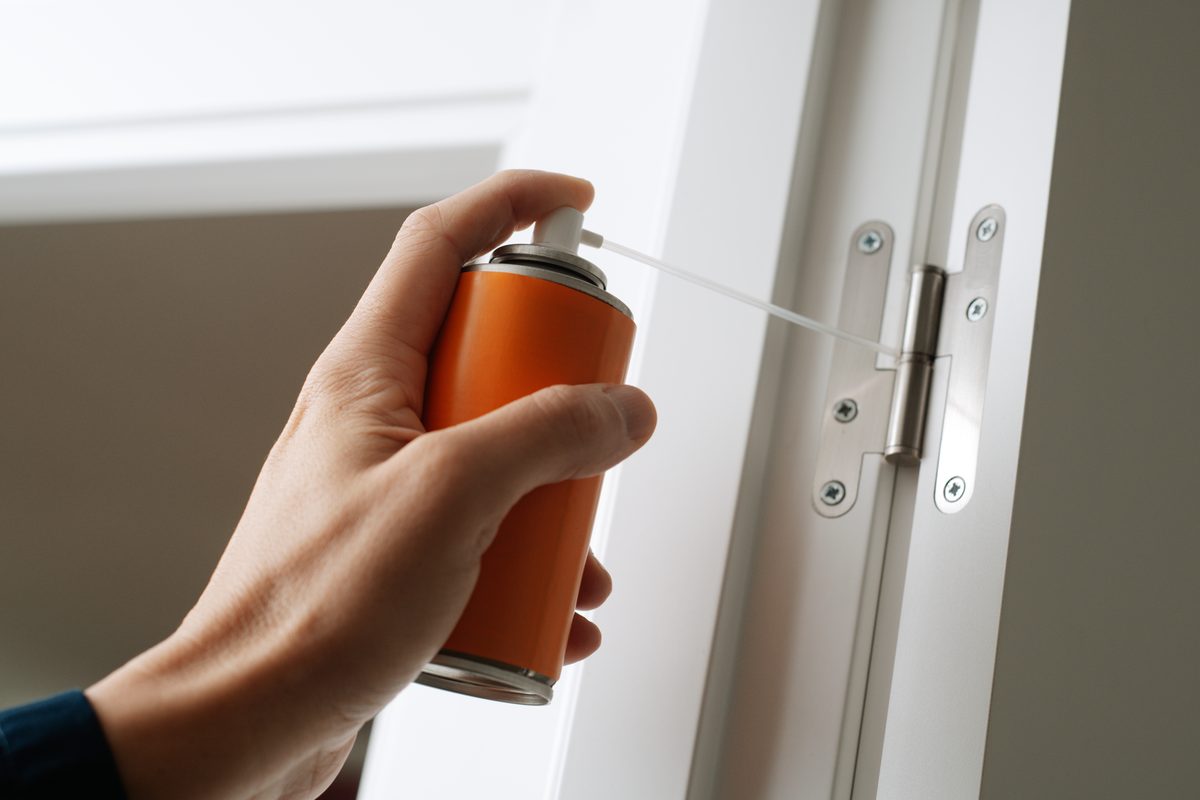
A squeaky door hinge sounds dramatic, yet the two-minute fix handles most cases. Metal-on-metal friction inside the hinge barrel creates the noise, so your goal is getting lubricant to the pin without making a mess.
Open the door halfway so each hinge sits under a light load. Aim the spray straw at the top of each hinge barrel and give one short burst. Swing the door open and closed five or six times to work the lubricant down the pin. Then wipe every drip with a rag before it reaches the floor.
Interior doors typically hang on two or three hinges, and exterior doors on three or four. Treat all of them, because the quiet hinges carry extra load once the noisy one seizes. Silence within a few swings confirms the diagnosis. A squeak surviving fresh lubricant points instead to a dirty pin or a sagging door. The next two sections handle both.
The Permanent Fix: Clean and Grease the Hinge Pins
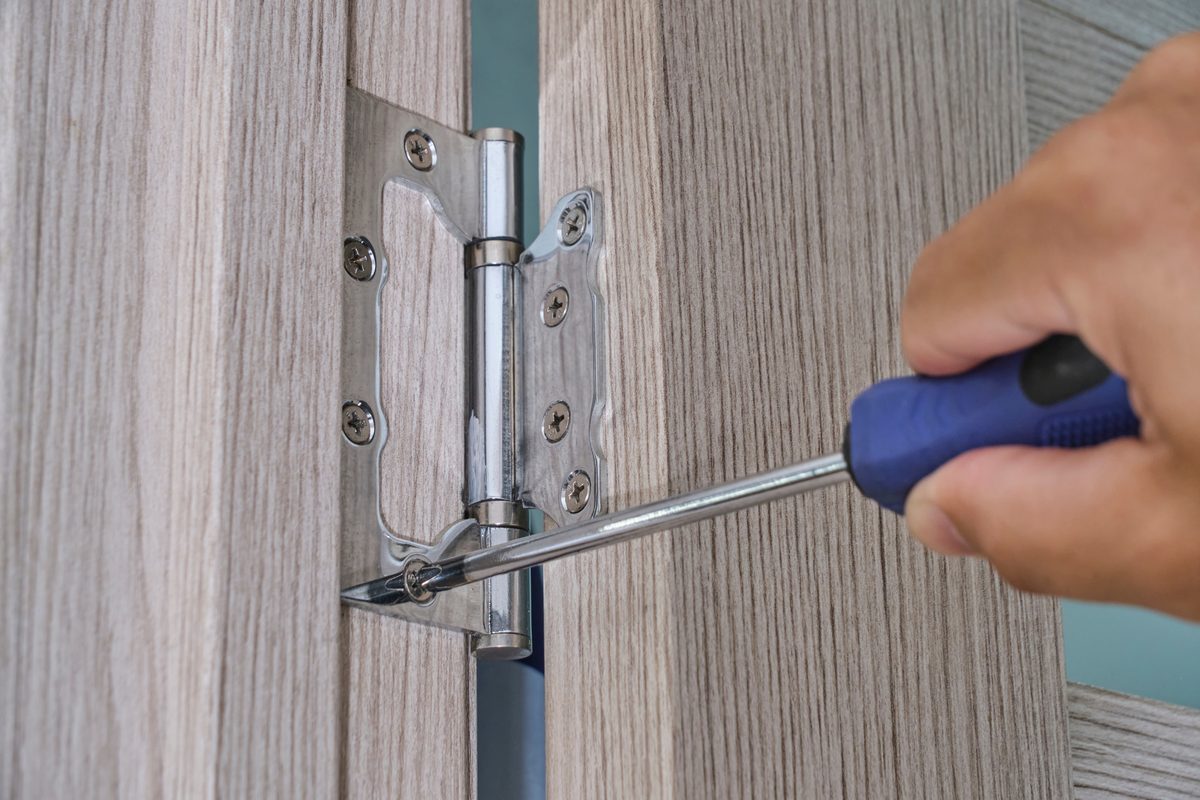
Spray fixes fade because light oils evaporate and drain off the pin. A cleaned and greased pin ends the noise at its source. The whole job takes about 15 minutes for a three-hinge door.
Work one hinge at a time so the door never leaves its frame. Place a nail or punch under the pin’s bottom knuckle. Tap upward with a hammer until the pin lifts free. Wipe the pin with a clean rag, and rub off any rust with fine steel wool. A blackened rag shows exactly why the squeak kept returning: dirty metal grinding inside the barrel.
Now coat the pin with a thin layer of white lithium grease, slide it back into the barrel, and tap it home. Repeat for each hinge. Grease clings where oil drains away, and it repels the moisture behind rust. Doors treated this way tend to stay silent for years, not weeks.
The Fix-It-Once Lubricant
WD-40 Specialist White Lithium Grease
A single 10-ounce spray covers every hinge in your house and outlasts light-oil fixes.
How to Fix Squeaky Door Edges and Latches
Not every squeak lives in the hinge. Wood rubbing against the frame produces a groan near full close, while a worn latch makes a sharp chirp in the final inch of travel. Each gets its own fix.
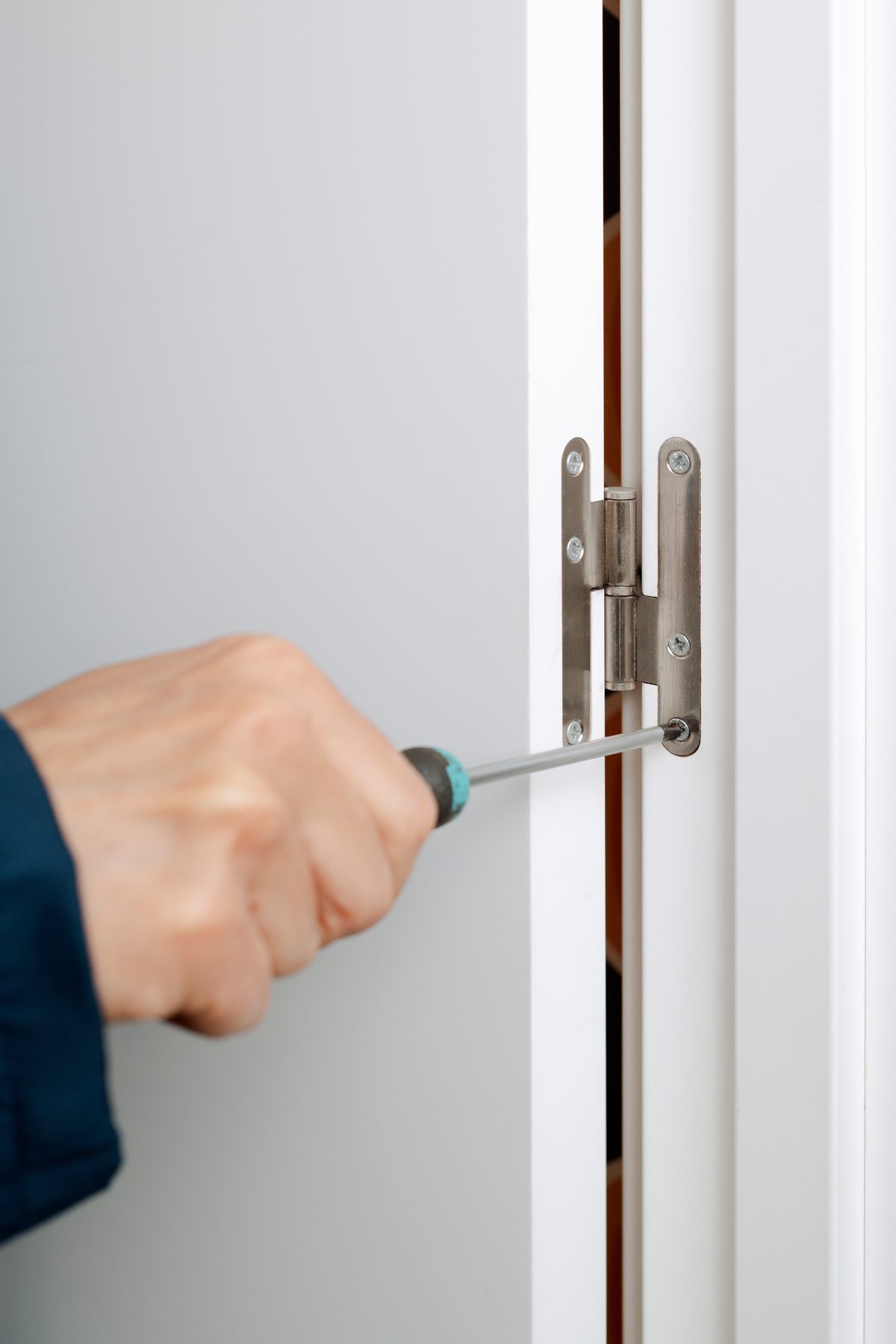
For wood rub, look for a shiny or worn patch along the door edge and the frame. Thirty years of home projects, furniture builds included, taught me to blame humidity first. Wood swells in damp months and shrinks in dry ones. As a result, a door rubbing in July often clears the frame by October. Before sanding anything, snug every hinge screw a quarter turn, since loose screws let the door shift into the frame. Then rub plain bar soap or paraffin wax on the shiny contact spot. Both fill the wood pores and cut friction without staining paint.
For latch noise, the spring-loaded bolt is grinding inside its housing or scraping the strike plate. Put a small dab of grease on the latch bolt. Work it in by turning the handle several times, then wipe the excess. Add a thin smear on the strike plate edge where the bolt lands.
Sagging Doors: When the Squeak Warns of a Bigger Problem
Rubbing at the top latch-side corner, paired with a squeak, signals a sagging door. No lubricant cures gravity. The top hinge carries most of the door’s weight. Over time, its screws lose grip in the jamb, letting the whole door tip away from the frame.
The fix costs one screw. Remove the short screw closest to the door stop in the top hinge and drive a 3-inch screw in its place. A screw this length passes through the jamb and bites into the wall stud behind it. As it tightens, it pulls the hinge and the door back into square. Tighten the remaining screws afterward.
Catching sag early keeps the repair small. Check your doors each spring, and our spring home maintenance checklist covers all 20 spring tasks, doors included, in one afternoon plan.
Silicone vs. Classic WD-40 vs. White Lithium Grease: Which Should You Use?
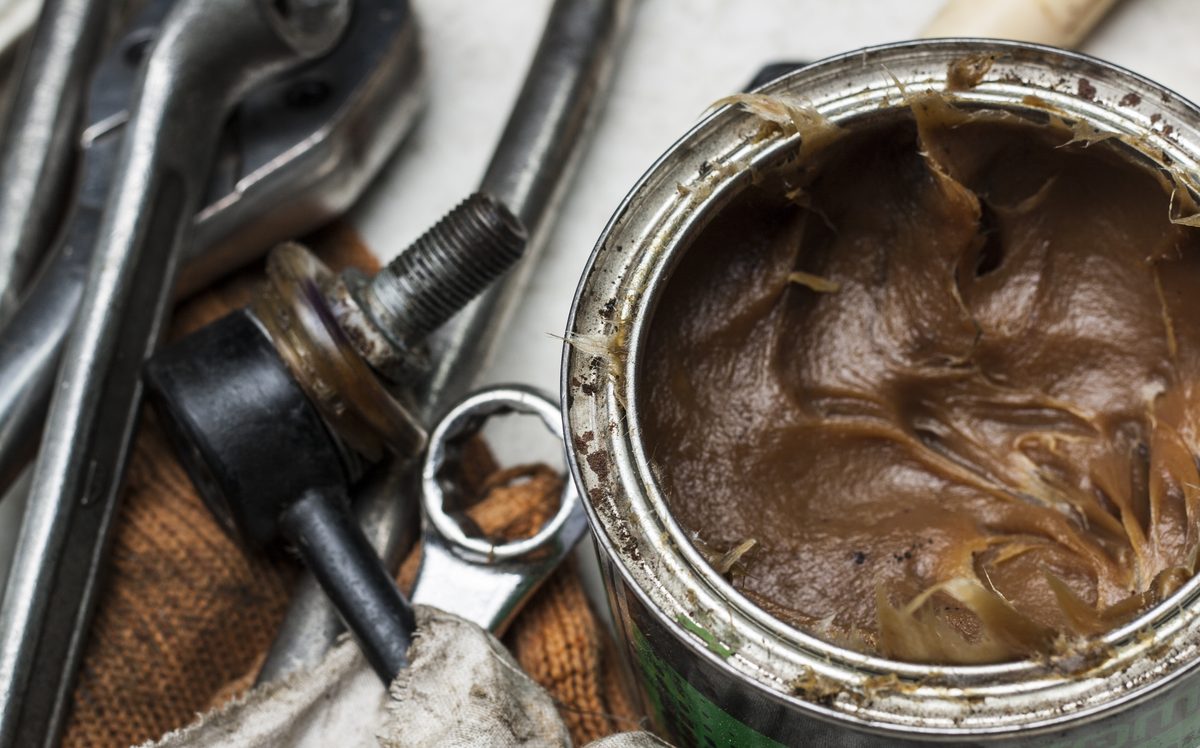
Product choice decides how long the silence lasts, and the differences are bigger than the labels suggest.
Classic WD-40 is a light penetrating oil, excellent at displacing water and freeing stuck parts. It silences a hinge fast, although the thin formula evaporates and drains within weeks on a busy door. It earns a spot on our list of 23 tested uses for WD-40, where hinges appear as a short-term entry.
Silicone spray dries to a clean, non-staining film. It outlasts light oil on interior doors, plays well with paint, and attracts less dust than wet oils. Choose it for bedroom and bathroom doors near carpet or light paint.
White lithium grease, about $9 on Amazon, is the long-haul option. The thick formula clings to the pin, repels water, and shrugs off temperature swings. For exterior doors and garage hardware, it is the right call. The manufacturer’s own guidance positions white lithium grease for metal-on-metal jobs exactly like hinge pins. Skip powdered graphite here; it belongs in locks, and it leaves gray smudges on white trim.
Quick Spray Fix: Pros and Cons
Pros
- Silences most hinges in under 2 minutes
- No tools required; the door stays on its hinges
- One $6 to $9 spray treats every door in the house
- Straw applicator reaches the pin without disassembly
- Confirms the diagnosis before you commit to a bigger fix
Cons
- Light oils evaporate, so squeaks return within weeks
- Overspray stains paint, carpet, and hardwood
- Wet films collect dust inside the hinge barrel
- Masks the early warning sign of a sagging door
Final Verdict
Every squeaky door deserves the 30-second diagnosis before any product comes out. Once you know how to fix a squeaky door at its true source, the repair is fast, cheap, and permanent. Spraying blindly works often enough to feel like a win, yet it hides sagging hardware and guarantees a repeat performance.
My recommendation is simple. Use the quick spray on a hinge squeaking for the first time. When the noise returns, or when it comes from an exterior door, go straight to the pin. Pull it, clean it, grease it. The 15-minute version has ended squeaks in my own projects. White lithium grease also costs only a couple of dollars more than the spray-and-pray option.
Rubbing and latch noise respond to soap, wax, and a dab of grease. Top-corner rubbing means grab the 3-inch screw before anything else. None of these fixes requires more skill than hanging a picture.
Doors rarely squeak alone. The same neglect shows up in garage hardware. While the grease is out, give the big door five minutes too. Our garage door opener troubleshooting guide covers the lubrication schedule keeping the loudest door in the house quiet.
Frequently Asked Questions
Why does my door squeak in the first place?
Metal-on-metal friction inside the hinge causes most squeaks. Dust, rust, and dried-out lubricant let the steel pin grind against the hinge knuckles with every swing. Humidity swings, loose screws, and a sagging door create the remaining wood and latch noises.
Is classic WD-40 bad for door hinges?
No, it will not damage the hinge, and it silences a squeak within seconds. The catch: the light formula attracts dust and fades within weeks on a busy door. Treat it as a diagnostic tool and a short-term fix, then follow up with grease for lasting results.
What is the best lubricant for a squeaky door hinge?
White lithium grease wins for durability, especially on exterior doors, since it clings to the pin and repels moisture. Silicone spray is the runner-up for interior doors thanks to its clean, paint-safe film. Both outlast light penetrating oils.
Why does the squeak come back a few weeks after spraying?
Light oil evaporates and drains off the pin, and the dirt causing the friction never left. The lasting answer is removing each pin, wiping it clean, and reinstalling it with a thin coat of grease. Clean metal plus thick lubricant ends the repeat cycle.
How do I quiet a squeaky door without buying anything?
Tighten every hinge screw first. Then rub the pin and the shiny frame spots with plain bar soap or an unlit candle. Both work as dry lubricants. Even a drop of cooking oil quiets a hinge in an emergency. It collects dust quickly, though. Replace it with proper grease soon.
Leave a Reply