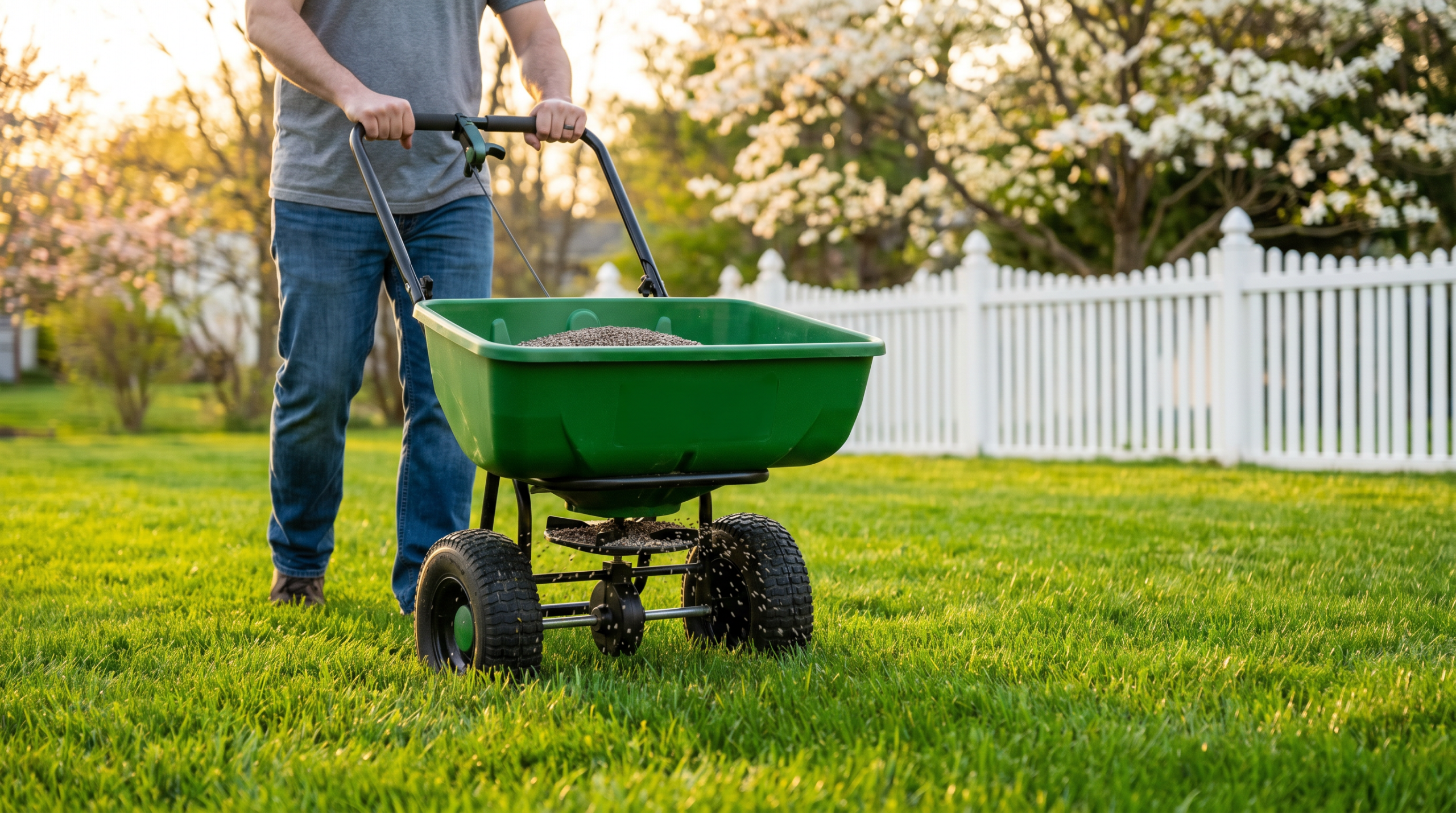
Quick Verdict: Early spring weed prevention rests on one number: soil temperature at 50 to 55 degrees Fahrenheit for five straight days. Apply a pre-emergent herbicide inside this window, water it in within 48 hours, and you block up to 90 percent of crabgrass and summer annual weeds for the season. Expect to spend 25 to 65 dollars per 5,000 square feet on product, plus a 12 dollar soil thermometer. Skip the timing and no amount of post-emergent spraying fixes the summer mess.
Last updated: April 2026 | 9 min read
In This Guide
- Why Early Spring Weed Prevention Works
- Key Timing Facts at a Glance
- Step 1: Gentle Winter Cleanup
- Step 2: Pre-Emergent Timing and Soil Temps
- Step 3: Refresh Mulch Beds
- Step 4: Overseeding Without Breaking the Barrier
- Step 5: Build Soil Health Now
- Cool-Season vs. Warm-Season Grass: Which Timing Applies to You
- Pros and Cons of DIY Early Spring Weed Prevention
- Final Verdict
- Frequently Asked Questions
Why Early Spring Weed Prevention Works
Early spring weed prevention works because weed seeds follow predictable biology. Crabgrass, foxtail, goosegrass, and most summer annuals germinate only after the top two inches of soil hold steady at 55 to 60 degrees Fahrenheit. Before the window opens, you still have time to lay down a chemical or physical barrier to stop seedlings from ever reaching the surface.
I ran a neighborhood lawn care business as a kid, and my brother and I spent every summer maintaining my parents’ oversized yard on top of our client lawns. Pulling crabgrass in hot July afternoons because someone missed the spring window by two weeks taught me one lesson early: timing beats brand every time. Fast forward, and I now manage my own properties with a fraction of the work. If you wait until you see weeds, you are already two months too late.
Spring weed prevention also saves money. A 15 pound bag of pre-emergent covers 5,000 square feet for about 40 dollars. Most national lawn services bill a comparable spring treatment visit in the 90 to 150 dollar range per application, based on quotes from TruGreen and local franchise operators in 2026. Do it yourself once, write down the soil-temp trigger date, and repeat the same week next year. You will spend less than a quarter of what a professional service charges while holding the same results.
Early spring also gives you cool, damp working conditions. Soil stays soft for hand-pulling any stray winter annuals like chickweed or henbit. Your back thanks you too, because weeds pulled in April come out root and all, while the same plant in July snaps off at the crown and regrows within a week. Fit this job in alongside the other outdoor tasks on your spring home maintenance checklist and the whole property comes alive at once.
Key Timing Facts at a Glance
| Factor | Target or Range |
|---|---|
| Soil temperature trigger | 50 to 55 °F for 5 consecutive days |
| Crabgrass germination threshold | 55 to 60 °F (2-inch soil depth) |
| Typical cool-season timing (North) | Late March to mid-April |
| Typical warm-season timing (South) | Mid-February to mid-March |
| Pre-emergent watering window | Within 48 hours of application |
| Mulch depth for weed block | 2 to 3 inches |
| Wait time before overseeding | 12 to 16 weeks after pre-emergent |
| Product cost (5,000 sq ft lawn) | 25 to 65 dollars |
Featured on Amazon
Pre-Emergent Crabgrass Preventer for Spring
Scotts Halts and Preen Extended Control both run about 40 dollars for 5,000 square feet. Apply once inside the soil-temperature window and block summer weeds for four months.
Step 1: Gentle Winter Cleanup
Before any herbicide touches the lawn, clear the debris left by winter. Rake out matted leaves, pick up fallen sticks, and cut back dead perennial stems in your beds. Leaves sitting on turf for more than two weeks of warm weather suffocate the crown and leave bare soil exactly where weeds want to sprout.
However, resist the urge to rake hard. Soft spring turf tears easily, and aggressive raking lifts tiny divots acting as open invitations to crabgrass seed. A spring-tine leaf rake with light pressure clears the surface without scalping the crown. For heavier thatch, wait until the grass is actively growing, then use a dethatching rake or a powered dethatcher rental at about 75 dollars per day.
Prune back ornamental grasses and cut dead perennial stalks to two inches above the crown. Pull any chickweed, henbit, or bittercress you see now. These winter annuals set seed by late spring, so every plant you remove in April saves you from thousands of seeds next winter.
Step 2: Pre-Emergent Timing and Soil Temps
Pre-emergent herbicide, often sold as crabgrass preventer, forms a chemical barrier in the top inch of soil. When a weed seed cracks open, the root absorbs the active ingredient and the seedling dies before it reaches daylight. Common active ingredients include prodiamine (Barricade), pendimethalin (Scotts Halts), and dithiopyr (Dimension) among the synthetics, plus corn gluten meal for organic gardeners.
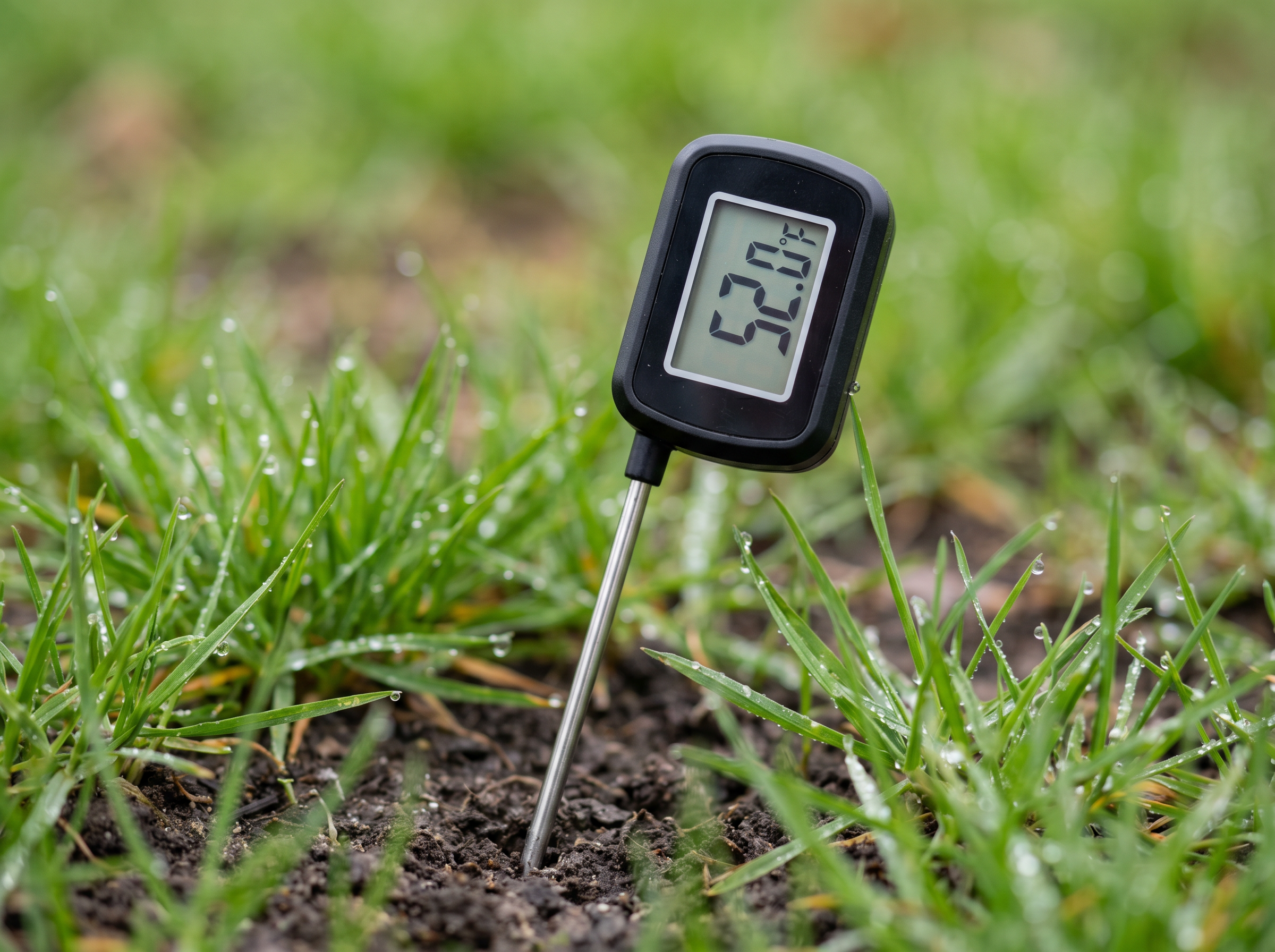
Knowing when to apply pre-emergent matters more than the product you choose. Wait for soil temperature at a two-inch depth to climb to 50 degrees Fahrenheit and hold there for five consecutive days. A 12 dollar soil thermometer pushed into the turf tells you exactly where you are. Air temperature lies, especially after a warm front, so trust the probe when deciding when to apply pre-emergent.
Once the window opens, load a calibrated broadcast spreader, walk the lawn in two perpendicular passes at half rate each, and water in with a quarter inch of irrigation within 48 hours. Skipping the water activation cuts effectiveness in half. For smaller beds under 500 square feet, a handheld shaker or a liquid spray tank works fine.
Tracking Soil Temps Without a Thermometer
If you do not own a probe, track local soil temperatures through your state extension service or the free Greencast tool from Syngenta. These sites publish daily two-inch soil readings by ZIP code. Also watch for forsythia blooms in cool-season regions. When the yellow flowers fully open, your soil is usually at the 50 degree threshold, and you have about two weeks before crabgrass germinates.
Featured on Amazon
Broadcast Spreader and Soil Thermometer Combo
A Scotts Elite or Earthway broadcast spreader covers 15,000 square feet per fill and pairs perfectly with a 12 dollar digital soil thermometer. Both tools pay for themselves the first season.
Step 3: Refresh Mulch Beds
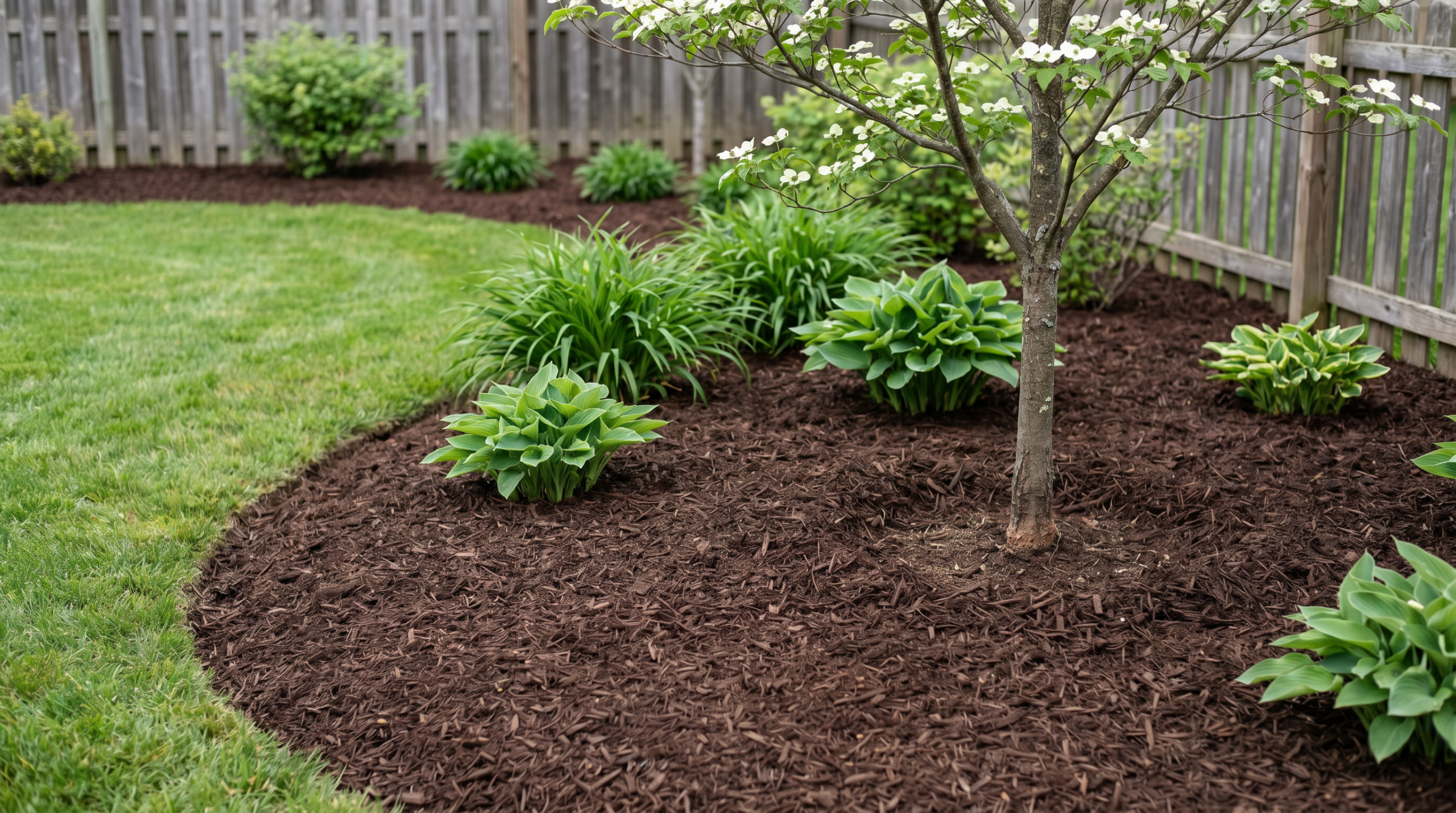
Mulch is the quiet hero of spring weed prevention in planting beds. A fresh 2 to 3 inch layer of shredded hardwood, pine fines, or cedar blocks sunlight from reaching weed seeds, smothers seedlings trying to emerge, and holds soil moisture through summer heat. Ground temperature under a proper mulch layer stays 8 to 12 degrees cooler than exposed soil.
However, more mulch is not better. Apply thicker than three inches and you trap moisture against stems, promote fungal growth, and starve the root zone of oxygen. Volcano mulching around tree trunks rots the bark and invites pests. Keep mulch three inches away from any trunk or crown and level the pile, never piled high.
For perennial beds where weeds already had a foothold last year, lay a sheet of unprinted newspaper (six sheets thick) or cardboard under the mulch. This biodegradable barrier blocks sunlight for a full season, then breaks down into organic matter by fall. Landscape fabric works too but tends to fail after two or three years as weed roots penetrate the weave. The same mulch-plus-barrier trick pairs nicely with a raised garden bed build if you are framing out new planting space this spring.
Step 4: Overseeding Without Breaking the Barrier
Here is where homeowners trip up. Pre-emergent herbicides block every small-seeded germination, including the grass seed you want. If you plan to overseed a thin lawn this spring, you have a conflict. Applying pre-emergent kills the new grass before it sprouts, so choose one strategy or the other.
For cool-season grasses (Kentucky bluegrass, tall fescue, perennial ryegrass), skip spring seeding entirely. Apply pre-emergent on schedule and save overseeding for late August through mid-September when soil temperatures drop back into the 60s. Fall seeding also avoids the summer heat, which routinely kills young cool-season grass.
For warm-season grasses (Bermuda, zoysia, St. Augustine, centipede), seed in late spring after the 12 to 16 week pre-emergent window closes. Most warm-season varieties need 65 to 70 degree soil anyway, so the natural timing works out. Read the pre-emergent label for the exact re-seeding interval, because products with prodiamine run longer than pendimethalin. If you are also planning the kitchen side of spring, the vegetables and herbs to plant in April guide covers what to drop in the raised beds while the lawn timer ticks.
Step 5: Build Soil Health Now
Dense turf crowds out weeds without chemicals, and spring aeration is the single fastest way to build the density of a healthy lawn. Aerating soon after pre-emergent application improves water penetration, so the quarter inch of activation water reaches the herbicide barrier instead of pooling on compacted ground. A core aerator pulls 2 to 3 inch plugs every four to six inches, relieving compaction and letting roots, oxygen, and water move freely. Rent a powered aerator for 50 to 85 dollars per day at Home Depot or Sunbelt, or buy a manual core aerator for 30 to 40 dollars if your lawn runs under 2,000 square feet.
After aeration, spread a quarter-inch topdressing of screened compost across the surface. Compost adds 2 to 4 percent organic matter over a season, feeds soil microbes, and improves water retention by 30 to 50 percent depending on your starting soil type. Clay soils benefit most because compost breaks up compaction; sandy soils gain moisture-holding capacity.
Finally, test your soil pH. A 15 dollar test kit or a free extension service sample tells you whether to add pelletized lime (for acidic soil below 6.0) or elemental sulfur (for alkaline soil above 7.2). Both amendments are available at any big-box garden center for 10 to 25 dollars. Grass grown in the correct pH range outcompetes weeds because turf absorbs nutrients efficiently while weeds struggle. With the five steps mapped out, the next question is when to run them, and the answer depends entirely on your grass type and location.
Cool-Season vs. Warm-Season Grass: Which Timing Applies to You
Your grass type dictates the exact calendar. Cool-season lawns north of the transition zone (roughly the 40th parallel, covering New England, the Great Lakes, the Upper Midwest, and the Pacific Northwest) hit the 50 degree soil-temp threshold any time from late March through the end of spring in northern states like Minnesota or Maine. Check local extension soil maps for your specific ZIP code.
Warm-season lawns south of the transition zone (the Southeast, Texas, the Gulf Coast, and Southern California) warm up fast. Atlanta typically hits the trigger in mid-February, while Dallas and Phoenix run even earlier. Miss the window by two weeks in the South and crabgrass is already past the barrier. Northern homeowners have more forgiveness because soil warms slowly.
Transition-zone homeowners (Virginia, Tennessee, Kentucky, Oklahoma, Kansas) face the hardest puzzle because both cool-season and warm-season weeds germinate there. Consequently, many transition-zone lawns benefit from a split application of crabgrass preventer: one light pre-emergent pass in late February and a second in early April. Read the product label for the split-rate schedule. Split timing is a core early spring weed prevention tactic in this climate band.
Pros and Cons of DIY Early Spring Weed Prevention
Pros
- Saves 100 to 400 dollars per year versus a lawn service contract
- Blocks up to 90 percent of crabgrass and summer annuals
- One application lasts 3 to 4 months
- Works on any lawn size from 1,000 to 20,000 square feet
- Granular products store for two seasons in a dry garage
- Builds long-term soil health when combined with aeration and compost
- Lets you control exactly what chemicals touch your yard and pets
Cons
- Timing window is narrow: miss by 2 weeks and effectiveness drops sharply
- Spring overseeding has to wait 12 to 16 weeks
- Requires a calibrated spreader and a soil thermometer
- Synthetic pre-emergents need water activation within 48 hours
- Does not kill existing perennial weeds like dandelions and clover
- Organic options (corn gluten) are less effective and cost more per square foot
Final Verdict
Early spring weed prevention delivers the single highest return on effort in the home lawn calendar. For the price of a bag of pre-emergent and a soil thermometer, you prevent four months of summer weeds and save yourself the misery of pulling crabgrass in August heat. Homeowners who maintain cool-season lawns in the North and warm-season lawns in the South both win here, although the calendar dates differ by a full six weeks.
The biggest trade-off is the overseed conflict. If your lawn has thin spots or bare patches, you have to choose between blocking weeds now and seeding new grass this spring. For cool-season lawns, fall overseeding is the clear winner, so the conflict resolves itself. With warm-season lawns, wait out the pre-emergent window and seed in late spring or early summer once the product has faded.
Cost Math and Program Choice
The math is one-sided. A 40 dollar bag of pre-emergent, a 12 dollar thermometer, and 20 dollars of mulch cover a typical suburban lot for under 75 dollars total. The same work through a lawn service runs 250 to 400 dollars per season, every season. Track your soil temp, walk the spreader, water it in, and mulch your beds.
If you want a turnkey shortcut, a four-step lawn program from Scotts or Jonathan Green bundles a crabgrass preventer, fertilizer, post-emergent, and fall winterizer for 150 to 290 dollars per year depending on lawn size and brand. Alternatively, assemble the same sequence yourself from individual bags for roughly half the cost and full control over ingredients. Either way, early spring weed prevention remains the load-bearing first step of the whole program.
Featured on Amazon
Complete Spring Lawn Prevention Kit
Grab a pre-emergent, spreader, soil thermometer, core aerator, and fresh mulch in a single shopping trip. Everything you need for a weed-free season, priced under 150 dollars for most suburban lawns.
Frequently Asked Questions
When should I apply pre-emergent in early spring?
Knowing when to apply pre-emergent starts with your soil probe. Apply pre-emergent the moment your soil temperature at two inches deep reaches 50 to 55 degrees Fahrenheit for five consecutive days. In northern cool-season regions, this typically lands between late March and mid-April. Across southern warm-season regions, the window opens from mid-February to early March. A 12 dollar soil thermometer removes the guesswork.
Is it safe to apply pre-emergent and grass seed together?
No. Most synthetic pre-emergent products block all small-seeded germination, including grass seed. Choose one strategy per spring. With cool-season lawns, apply pre-emergent now and overseed in early fall. For warm-season lawns, wait 12 to 16 weeks after pre-emergent before seeding, or seed first and delay the barrier.
What soil temperature activates pre-emergent herbicide?
Pre-emergent products work best when applied at a 50 to 55 degree ground temperature and activated by a quarter inch of water within 48 hours. Crabgrass itself germinates at 55 to 60 degrees, so applying at 50 degrees gives you a narrow but workable head start. Miss the window and you lose half your effectiveness for every week you wait.
Does mulch truly stop weeds from growing?
Yes, a 2 to 3 inch mulch layer blocks the sunlight weed seeds need to germinate. It also smothers young seedlings once they sprout. Depth matters: thinner than two inches leaks light, and thicker than three inches traps moisture, promotes fungus, and rots plant stems. Refresh mulch annually because microbial activity breaks it down over a season.
Is corn gluten an effective organic pre-emergent?
Corn gluten meal blocks roughly 50 to 65 percent of weed seeds at a 20 pound per 1,000 square foot rate, with results varying by application rate and soil moisture, compared to 85 to 95 percent for synthetic products. It costs 2 to 3 times more per square foot and adds nitrogen to the soil as a bonus. For homeowners avoiding synthetic chemicals, it works, though results take two to three seasons of consistent application to match synthetic performance.
What are the most common early spring weeds to watch for?
The main culprits in early spring are dandelions, clover, chickweed, henbit, and bittercress. Of these, dandelions and clover are perennial and need post-emergent treatment, while chickweed, henbit, and bittercress are winter annuals you pull before they seed. Crabgrass, foxtail, and goosegrass appear later when soil warms above 55 degrees, which is exactly why you apply pre-emergent before the soil hits the germination threshold.
Leave a Reply