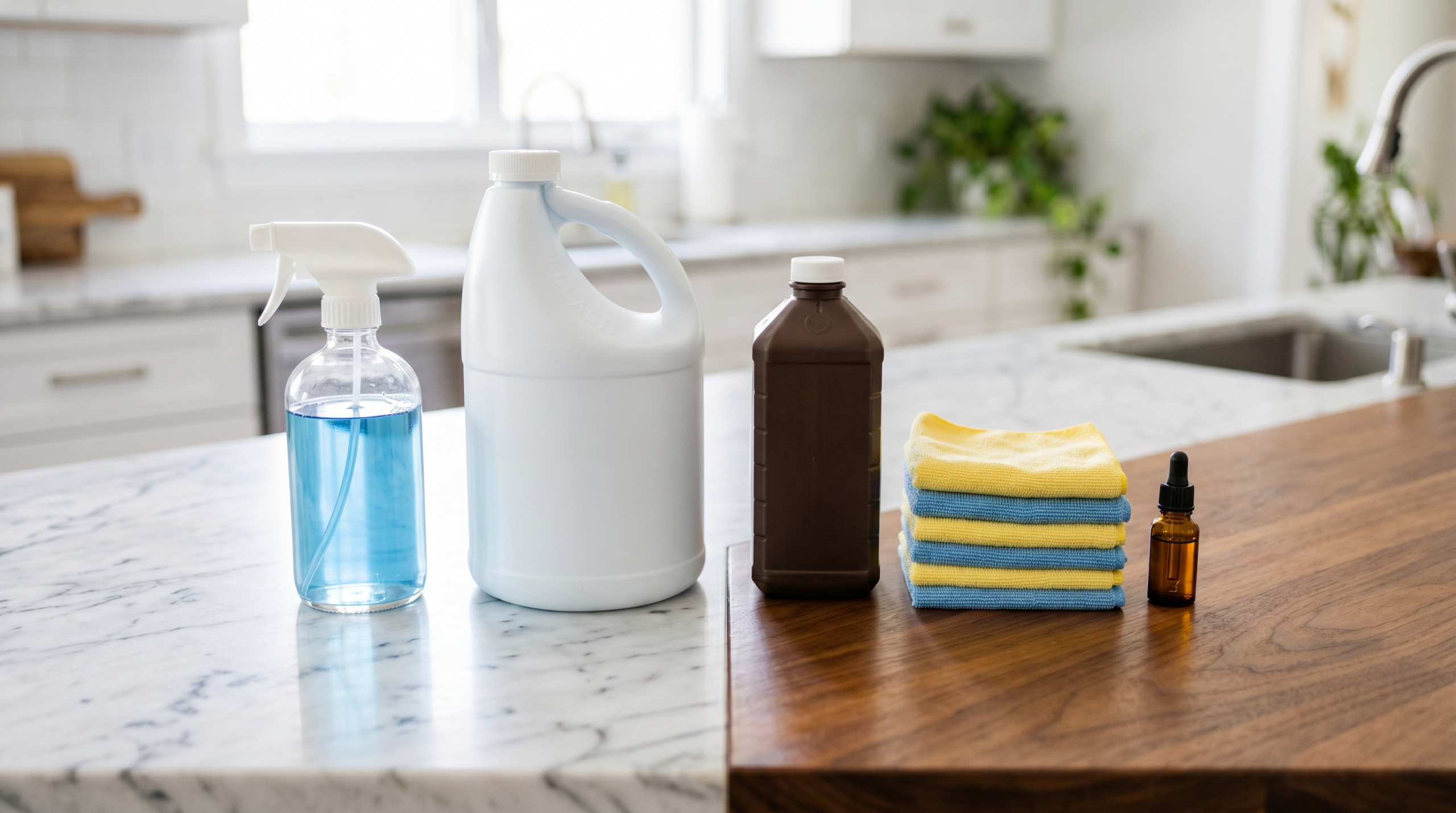
Quick Verdict: Seven common cleaning products quietly destroy the surfaces you spent the most money on. Bleach corrodes metal fixtures, ammonia blackens hardwood through a tannin reaction, and one splash of vinegar etches polished marble within 30 seconds. Skip these things to never use to clean your home, swap in microfiber towels, pH-neutral soap, and surface-specific cleaners, and you will protect your floors, counters, and furniture for decades.
Last updated: April 2026 | 12 min read
In This Guide
- Why Your Cleaning Cabinet Is Damaging Your Home
- Surface-by-Surface Risk Chart
- Disinfectant Wipes
- Paper Towels
- Undiluted Essential Oils
- Bleach for Everyday Cleaning
- Glass Cleaner Outside the Window
- Ammonia-Based Products
- Vinegar and Lemon on Natural Stone
- What I Use on Exotic Wood in My Own Home
- Chemical Cleaners vs. Pro-Approved Methods
- Pros and Cons of Surface-Specific Cleaning
- Final Verdict
- Frequently Asked Questions
Why Your Cleaning Cabinet Is Damaging Your Home
Most homeowners grab whichever spray sits closest when a mess hits the counter. However, cleaning pros agree on one quiet truth: the list of things to never use to clean your home overlaps almost perfectly with the bottles already under your sink. Bleach, ammonia, paper towels, vinegar on natural stone, and undiluted essential oils each do specific damage to specific surfaces, and the damage compounds invisibly over months.
You will not notice the etch from vinegar on marble the first time you spritz a homemade citrus mix. By the third or fourth pass, however, the polished gloss looks hazy under raking light. Likewise, ammonia damage to oak and walnut darkens the tannins so gradually you might blame the change on age. The point of this guide is to short-circuit those slow failures before they cost you a refinish bill.
I built custom residential homes during my college years and have spent more than 30 years on woodworking as a hands-on craft. Across that time, I have personally stripped, sanded, and refinished pieces ruined by well-meaning owners who followed bad cleaning advice. Below, you will find the seven cleaning products to avoid, the chemistry behind why each one fails on common surfaces, and the cheap swaps pros recommend in their place.
One angle gets less attention than it deserves: exotic wood furniture. If you own rosewood, mahogany, teak, or zebrawood pieces (I have several throughout my own home), the wrong product turns a $4,000 dining table into a refinishing project. I will cover this in its own section near the end.
Surface-by-Surface Risk Chart
| Surface | Product to Avoid | Safer Swap |
|---|---|---|
| Marble, granite, limestone, travertine | Vinegar, lemon juice, citrus cleaners | pH-neutral stone cleaner |
| Sealed and unsealed hardwood | Ammonia, bleach, undiluted vinegar | Murphy Oil Soap, damp microfiber |
| Exotic woods (rosewood, teak, mahogany) | Anything ammonia-based, oil soap on lacquer | Soft paste wax on a lint-free cloth |
| Painted walls and trim | Disinfectant wipes | Microfiber and a drop of dish soap |
| Upholstery | Bleach, disinfectant wipes | Fabric-specific upholstery cleaner |
| Stainless steel appliances | Bleach, abrasive sponges | Microfiber with mild detergent |
| Electronics and screens | Glass cleaner, paper towels | 70% isopropyl alcohol on microfiber |
Disinfectant Wipes
Disinfectant wipes feel like a one-handed miracle, but they were engineered for one job: killing germs on hard, non-porous surfaces. Outside its core lane, they leave problems behind. On painted walls, the alcohol and quaternary ammonium compounds in most wipes lift residue and leave streaks visible the moment afternoon sun hits the wall.
Upholstery suffers worse. The wipes saturate fabric with moisture and fragrance carriers, then the moisture wicks down into the foam beneath. Two weeks later, you smell mildew or notice a brown ring around the spot you cleaned. Allison Nelson, founder of Allison’s Cleanin’, told The Spruce in September 2025 wipes are “great at one thing: killing germs,” and not designed for general messes.
Here is the swap. For surfaces touched by raw chicken, kids’ hands, or pet messes, use a wipe and then rinse with a damp microfiber cloth. Everywhere else, skip the wipe entirely and reach for a flat-weave microfiber with a drop of dish soap. Microfiber towels hold 7 times their weight in water and trap particles down to 3 microns, while a paper-based wipe simply pushes them around.
Paper Towels
The average American household burns through more than 80 rolls of paper towels per year, which works out to roughly $200 annually for a brand-name two-ply. Worse, every roll leaves microscopic lint behind on glass, electronics, and stainless steel. Lint becomes a magnet for fingerprints and dust within hours.
Paper fibers also scratch soft finishes. On a polished granite counter, the difference shows after months of dry wiping; on a piano-black appliance bezel, the swirl marks appear within a week. For glass and mirrors specifically, microfiber cuts streaks by roughly 80% compared with paper towels, according to home-product testing labs.
Switch to a stack of 12 microfiber cloths color-coded by zone: yellow for kitchen, blue for glass, red for bathroom, green for general dusting. They wash clean for 300+ cycles before they degrade, so the upfront $25 investment replaces years of paper. Skip fabric softener in the wash, since it coats the fibers and kills their grip on dust.
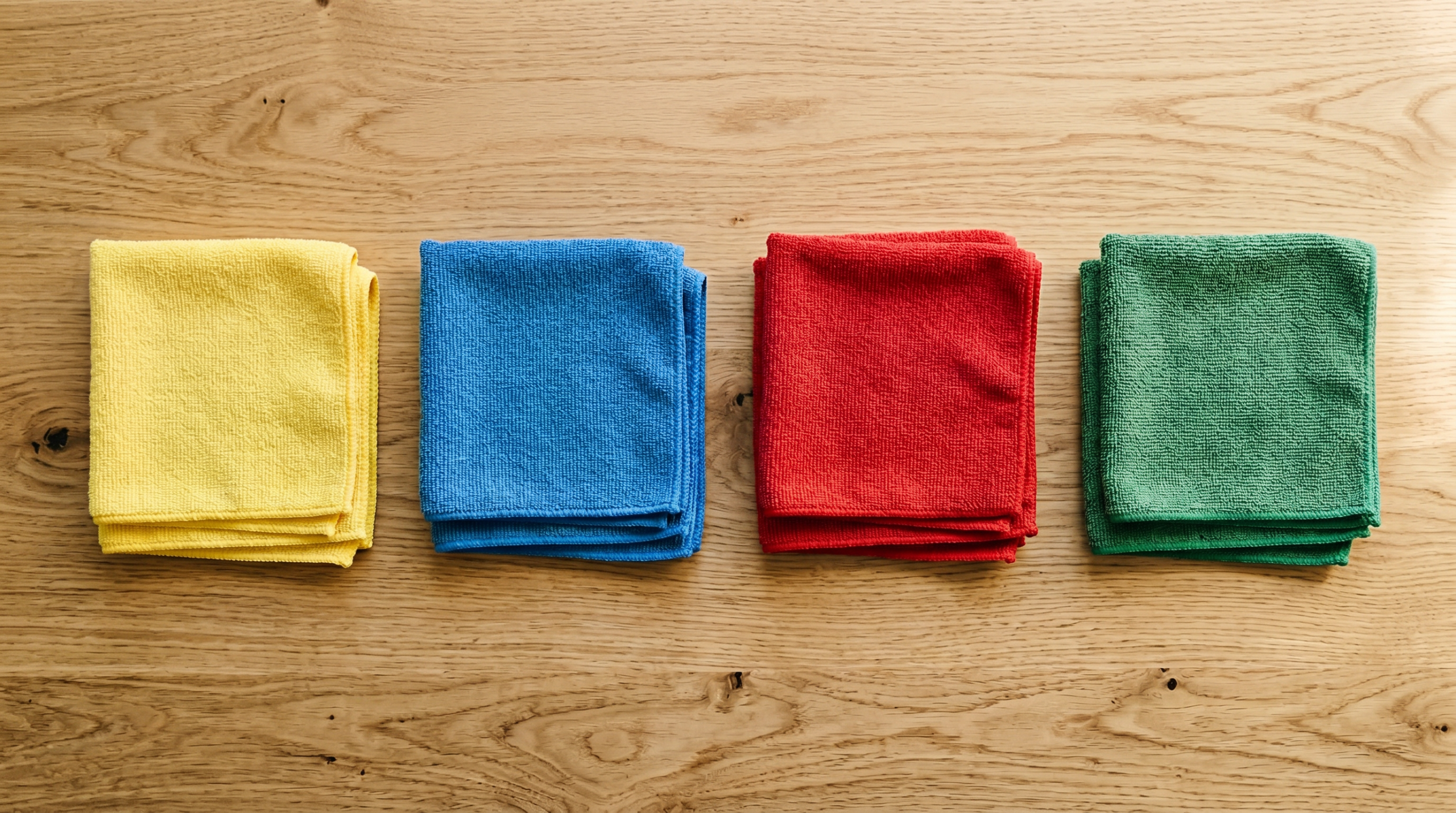
Microfiber also earns its keep during prep-heavy projects like wallpaper removal and wall cleanup, where residue control matters more than brute force.
Build Your Microfiber Kit in One Click
A color-coded 24-pack of premium microfiber cloths covers every zone in your home and lasts 300+ wash cycles. This is the single swap that eliminates paper towels, streaks, and most chemical cleaners.
Undiluted Essential Oils
Essential oils have earned a permanent shelf in the natural-cleaning movement. However, they are not interchangeable with surfactants or disinfectants. Tea tree, lavender, and lemon oils contain terpenes, which etch plastic, dissolve some sealers, and oxidize on wood finishes when applied straight from the bottle.
Pour a few drops of undiluted lemon oil on a polyurethane-finished oak floor, leave it overnight, and you will find a frosted ring the next morning. The terpenes break down the surface layer of the finish. Even on glass, undiluted oils streak and leave a sticky residue, which grabs dust within 24 hours.
For a usable cleaner, dilute 10 to 15 drops of essential oil into one cup of distilled water plus one tablespoon of a surfactant like castile soap or 3% hydrogen peroxide. The soap suspends the oil so it spreads evenly instead of pooling. Skip oils entirely on cured leather, untreated wood, and granite, since the carrier oils stain porous surfaces.
Bleach for Everyday Cleaning
Bleach kills bacteria and viruses with brutal efficiency, but it does not lift grease, dissolve soap scum, or remove organic film. Sodium hypochlorite (the active ingredient in household bleach at 5-6% concentration) corrodes brushed nickel, brass, and aluminum fixtures within minutes of contact. One drop on a colored bath towel leaves a permanent orange spot.
A bigger risk shows up in mixing. The CDC and the Washington State Department of Health both warn against combining bleach with ammonia, since the reaction produces chloramine gas. A 1999 New England Journal of Medicine case study documented a woman who developed severe lung injury after one home cleaning incident. Symptoms include chest pain, shortness of breath, and watery eyes within minutes; severe exposure causes pulmonary edema.
Reserve bleach for three specific jobs: treating mold on grout (use a 1:10 dilution with water), sanitizing white laundry, and disinfecting cutting boards after raw meat contact. For everything else, hydrogen peroxide at 3% kills the same household pathogens without the corrosive halogen bond. Pour it into a brown spray bottle, since light degrades it. If you find peeling or water-stained paint while cleaning, address the root cause first with our peeling paint repair guide before any disinfection pass.
Glass Cleaner Outside the Window
Most blue glass cleaners contain ammonia, isopropyl alcohol, and a surfactant. The formula was tuned for one job: streak-free shine on non-porous, non-coated glass. Spray it on a wood frame, a stone tile, or an LCD screen and you will damage the surface in different but predictable ways.
Sprayed on wood, the ammonia component reacts with the lignin and tannins in the grain, leaving dark streaks even on sealed pieces if the spray seeps into joints. On stone, the alkalinity dulls polished marble and granite over time. Across a TV or laptop screen, the alcohol strips the anti-glare coating and the ammonia clouds the polarizing layer permanently.
For each surface, the right tool is different. Glass and mirrors take a dedicated glass cleaner or distilled water with a flat-weave microfiber. Electronics take 70% isopropyl alcohol applied to a cloth (never sprayed onto the screen). Wood takes a pH-neutral wood cleaner. Stone takes a dedicated stone cleaner from brands like Granite Gold or StoneTech.
Ammonia-Based Products
Ammonia earned a place in mid-century cleaning routines because it cuts grease and lifts soap film. However, modern surfactants do the same job without the risks. Ammonia at 5-10% household concentration releases vapors heavy enough to trigger asthma attacks, and the chloramine gas reaction with bleach has hospitalized cleaning crews and homeowners alike.
The lesser-known ammonia damage hits hardwood. Ammonia is alkaline (pH around 11), and it reacts with the natural tannins in oak, walnut, cherry, and most exotic species. Trends Wood Finishing notes ammonia damage to wood causes the surface to darken, sometimes nearly to black, while also stripping shellac and water-based finishes outright. The reaction is the same one furniture makers use intentionally to “fume” oak. Done by accident, the result is a permanent stain you will not scrub out.
Replace ammonia with a citrus-free degreaser like Krud Kutter or a homemade mix of one tablespoon of dish soap, one tablespoon of baking soda, and two cups of warm water. For oven interiors specifically, a paste of baking soda and water left overnight lifts baked-on grease without any fume hazard. Reserve any ammonia work for outdoor use with full ventilation.
Vinegar and Lemon on Natural Stone
White distilled vinegar is the patron saint of green cleaning, but vinegar on marble performs the same chemical reaction as a science-fair volcano. The same goes for limestone, travertine, and onyx, all of which share a calcium-carbonate base. Acetic acid plus calcium carbonate produces calcium acetate, water, and carbon dioxide. The result is a dull, lighter-colored “etch” mark where the polish used to live.
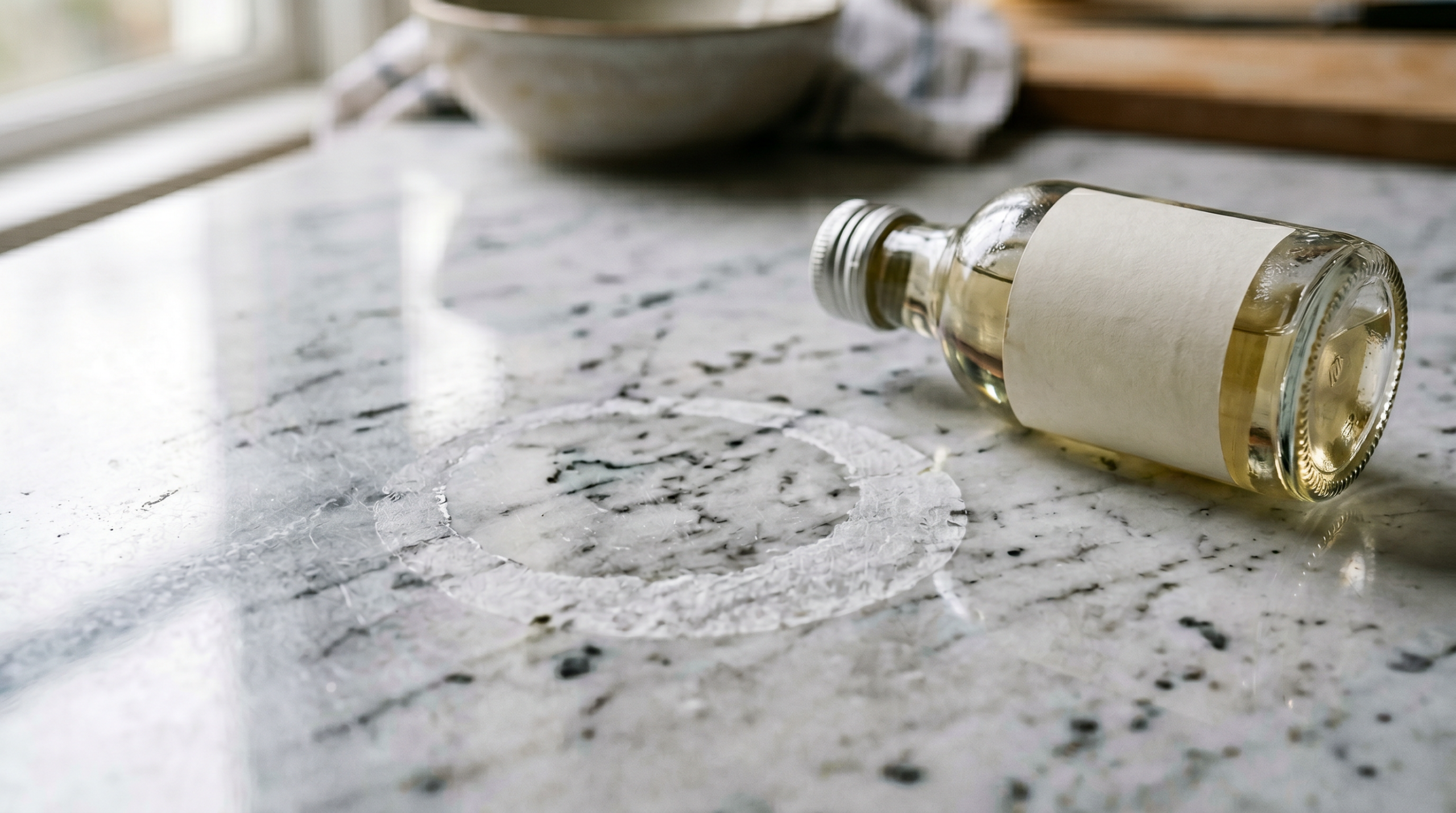
Slabwise, a stone fabricator industry resource, notes the etch happens on contact and within seconds. One splash of lemon juice wiped up within 30 seconds still leaves a visible mark on polished marble. Sealing does not help, since sealer sits in the pores below the surface and the etch occurs on top of the stone.
Granite is more acid-resistant than marble because of its quartz and feldspar content, but cheap granites with heavy carbonate veining still etch. The safer rule: assume any natural stone counter, floor, or backsplash is acid-sensitive until you confirm otherwise with a sealed test patch. For routine cleaning, use warm water and a drop of dish soap, or a stone-specific spray. Save the vinegar for a coffee maker descale or a bathroom showerhead soak.
What I Use on Exotic Wood in My Own Home
I have several exotic wood pieces throughout the house, including a Brazilian rosewood credenza, a Burmese teak coffee table, a Honduran mahogany desk, and a zebrawood bench in the entry. These pieces hold real value (the rosewood credenza alone appraised at $6,200 last year) and they each take different care than a standard oak or pine piece from a big-box store.
Three rules cover almost every situation. First, never spray any cleaner directly onto the wood. The mist drifts into joints, seams, and inlay, where moisture and chemicals collect and cause swelling or finish lift. Apply sparingly to a soft cotton or microfiber cloth instead, then wipe with the grain.
Second, identify the finish before you touch the wood. Most vintage rosewood pieces wear a clear nitrocellulose lacquer, which dissolves on contact with ammonia, alcohol, and most all-purpose sprays. Murphy Oil Soap is fine on lacquered finishes when diluted heavily, although it streaks modern catalyzed lacquers. Soft paste wax (Briwax or Renaissance Wax) renews the gloss on lacquered rosewood and protects it from minor scratches without leaving residue.
Third, accept exotic wood ages. Brazilian rosewood darkens with UV exposure regardless of how you clean it. Mahogany loses its red pigment when soaked, then turns gray. Teak grays outdoors within months and indoors within years if oils are not refreshed. Trying to scrub these changes away with strong cleaners is how you ruin a piece. Light dusting weekly with a barely damp microfiber, paste wax twice a year, and zero direct sunlight has kept my pieces in collector condition for over a decade. The same gentleness rule applies any time you are working on wood joinery or wood glue repair work on furniture pieces.
Annual Tung Oil Routine for the Burmese Teak Table
For the Burmese teak coffee table specifically, I oil it once per year with a 50/50 mix of pure tung oil and citrus solvent, applied with 0000 steel wool, then wiped off after 15 minutes. Oiling outdoor teak is a different conversation; on indoor furniture, light annual oiling keeps the figure rich without building a sticky film.
Protect Your Stone Counters for $12
A pH-neutral stone cleaner from Granite Gold or StoneTech prevents the etch damage vinegar and citrus cleaners cause in under 30 seconds. Pair with a soft paste wax for exotic wood furniture.
Chemical Cleaners vs. Pro-Approved Methods
The marketing for chemical cleaners promises kill rates and shine, while the marketing for natural methods promises safety and savings. Both sides over-promise. Among the cleaning products to avoid in everyday rotation, the worst offenders earn their spot through invisible damage rather than obvious problems. The honest comparison comes down to four variables: cost per use, surface compatibility, health risk, and time spent.
A bottle of bleach, a tub of disinfectant wipes, and a bottle of glass cleaner together run about $15 and cover roughly 200 cleaning passes. A starter kit of 12 microfiber cloths, a gallon of distilled water, a bottle of dish soap, a quart of 3% hydrogen peroxide, and a quart of 70% isopropyl alcohol runs about $35 and covers roughly 800 passes. The microfiber kit also avoids the chloramine-gas risk and the etch damage to stone and wood.
Time-wise, the chemical approach wins on speed for one-off jobs (grab a wipe, done in 30 seconds). However, the microfiber approach wins on whole-house cleaning sessions because you skip the rinse step on every surface. For a 2,000 square foot home, a Saturday morning clean takes 20 to 30 minutes less with the microfiber-led method. For surface prep questions beyond cleaning, our sandpaper grit chart covers the right abrasive for every wood and metal job.
Pros and Cons of Surface-Specific Cleaning
Pros
- Saves $150 to $400 per year on disposable wipes and paper towels
- Extends the life of stone counters by avoiding etch damage
- Eliminates chloramine-gas risk from accidental bleach-ammonia mixing
- Protects wood finishes (especially exotic species) from tannin darkening
- Microfiber traps particles down to 3 microns, outperforming paper
- Reduces single-use plastic and paper waste from the household
- Avoids the residue and streaks left by quaternary ammonium wipes
Cons
- Requires a $25 to $35 upfront investment in microfiber and concentrates
- Demands separate products for stone, wood, glass, and electronics
- Adds 1 to 2 wash cycles per week to launder microfiber cloths
- Takes time to learn which cleaner pairs with which surface
- Loses on speed for 30-second one-off messes versus a grab-and-toss wipe
- Hydrogen peroxide degrades in light, requiring brown bottles or cabinet storage
Final Verdict
If you own a home with hardwood floors, stone counters, painted walls, or any wood furniture worth keeping, retire the seven products above and rebuild your cleaning kit around microfiber, dish soap, hydrogen peroxide, isopropyl alcohol, and surface-specific stone and wood cleaners. The upfront cost runs about $35 and the ongoing savings hit roughly $150 to $400 per year depending on household size.
This list of things to never use to clean your home is shorter than the list of safe alternatives, which is the good news. Bleach has one role (mold and laundry whitening), ammonia has none indoors, vinegar belongs on glass and showerheads but never on stone, and disposable wipes earn a place only after raw-meat or pet-mess contact, followed by a damp rinse.
For exotic wood owners specifically, the cost of getting this wrong runs into thousands. A refinished Brazilian rosewood credenza runs $1,500 to $3,000 in the Bay Area, while a $15 tin of paste wax prevents the damage in the first place. The math writes itself.
Replace the bottles under your sink one at a time as they empty, and within 90 days your cleaning routine will be cheaper, safer, and gentler on every surface in the house. If you own granite or marble, a Granite Gold or StoneTech daily cleaner is the single best $12 you will spend this year.
Frequently Asked Questions
What is the safest all-purpose cleaner for my home?
A solution of one quart of warm water, one tablespoon of liquid dish soap, and one teaspoon of white vinegar covers most painted, sealed, and tile surfaces safely. Skip the vinegar entirely if you have natural stone in the room. For disinfection, switch to a separate spray bottle of 3% hydrogen peroxide, which kills E. coli, salmonella, and most household viruses within 60 seconds of contact. This single mix replaces several of the things to never use to clean your home, including disinfectant wipes and most blue glass cleaners.
Why does vinegar on marble cause permanent damage?
Marble, limestone, and travertine are made of calcium carbonate, which reacts on contact with acids like acetic acid (vinegar) and citric acid (lemon). The reaction dissolves a microscopic layer of stone and leaves a dull etch mark. Granite contains less carbonate but still etches in heavily veined stones. Use a pH-neutral stone-specific cleaner instead.
Are disinfectant wipes safe on wood floors?
No. Most wipes contain quaternary ammonium compounds and alcohol, both of which strip wood finishes over repeated use. Excess moisture also seeps into seams, causing swelling and lift at the edges of planks. Use a barely damp microfiber and a wood-specific cleaner like Bona or Murphy Oil Soap diluted per the label.
Is regular furniture polish safe for exotic wood pieces?
Most spray polishes contain silicone, which builds a sticky film on lacquered exotic woods like rosewood and mahogany. The film traps dust and complicates future refinishing. Instead, dust weekly with a dry microfiber, then apply a soft paste wax (Briwax, Renaissance Wax, or similar) twice per year on lacquered pieces. Confirm the finish type before you touch any antique or high-value piece.
What happens if I accidentally mix bleach and ammonia?
The reaction releases chloramine gas, which causes coughing, chest pain, and watery eyes within minutes. Severe exposure causes pulmonary edema and requires emergency care. If you mix them, leave the room immediately, open windows, and call Poison Control at 1-800-222-1222. Never store bleach and ammonia products near each other in a confined cabinet.
How long do microfiber cloths last before they need to be replaced?
Quality microfiber holds up through 300 to 500 wash cycles, which works out to about three years of weekly use per cloth. Skip fabric softener and bleach in the wash, since both kill the static charge making microfiber grab dust. Wash on warm, then tumble dry low or air dry.
Leave a Reply