Quick Verdict: The biggest things that make a living room look cheap are usually scale mistakes, flat lighting, short curtains, undersized rugs, and too many small decor pieces. Fixes start at $0 when you rearrange furniture, while larger rug and curtain upgrades often run $40 to $300. Start with layout, rug size, and lighting before buying more accessories.
Last updated: April 2026 | 10 min read
In This Article
Why a Cheap-Looking Living Room Is Usually an Easy Fix
Most cheap-looking living room problems have less to do with price and more to do with proportion, spacing, finish consistency, and light. A $2,000 sofa looks awkward on a 5-by-7 rug, while a thrifted table looks intentional when the layout, curtain height, and lighting work together.
This is good news for homeowners and renters. You do not need custom furniture or designer art to improve the room. Instead, you need a few measurable rules, such as a rug large enough for the front legs of seating to sit on it and a coffee table placed about 12 to 18 inches from the sofa.
Cheap-looking details also tend to stack. One small rug, one cold ceiling light, and one low curtain rod create a stronger negative effect than any single item alone.
This stacking effect is why things that make a living room look cheap need a whole-room fix instead of another cart full of small accessories.
Order matters. Start with the room shell, then the layout, then the lighting, then the decor. If you skip straight to pillows and vases, the room still feels unfinished because the big visual anchors never got fixed.
At DIYTalk, we approach living rooms the same way we approach furniture and woodworking projects: measure the anchors first, check alignment, then edit the finish details. The advice below follows a practical workflow, not a shopping-first mindset.
For DIYTalk readers, the best approach is practical: measure first, buy second, and choose upgrades with a clear visual payoff. These budget living room upgrades focus on the changes you will see immediately, especially in small homes, apartments, and builder-grade spaces.
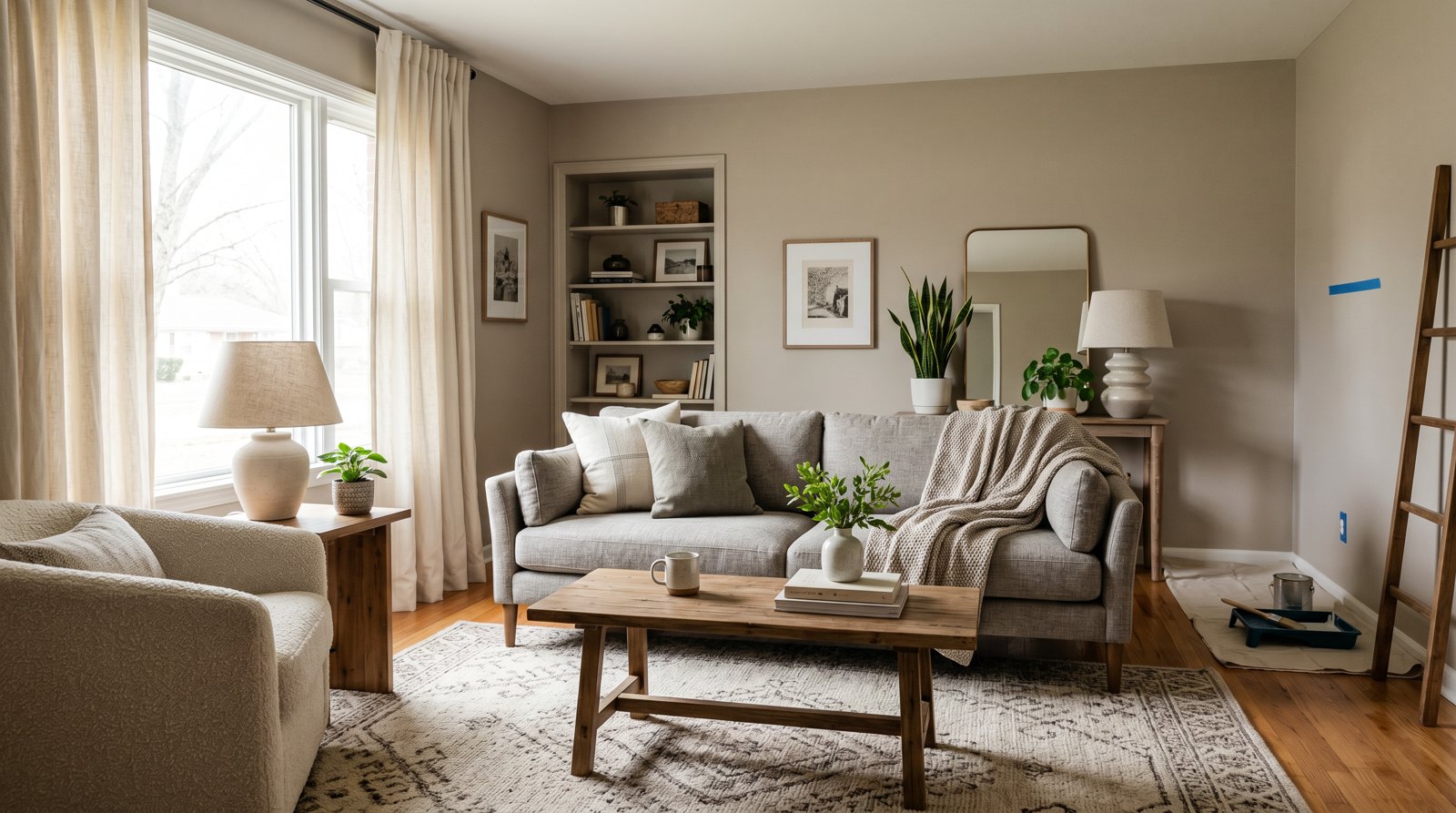
Before spending money, mark the sofa, rug, coffee table, and lamp locations with painter’s tape. This 15-minute test catches scale problems before boxes arrive. It also helps you decide whether the room needs a new purchase, a better placement, or a simple edit.
Keep the tape down overnight if the room handles family traffic, pets, or kids. Real movement patterns reveal clearance issues faster than a sketch.
Quick Fix Guide
| Mistake | Better Fix | Typical Cost |
|---|---|---|
| Furniture pushed to every wall | Pull seating into a conversation zone | $0 |
| Tiny rug floating under coffee table | Use front-legs-on placement or layer over jute | $80 to $300 |
| Curtains stop at the sill | Hang panels high, wide, and floor length | $40 to $180 |
| One overhead light | Add table, floor, and accent lighting | $35 to $250 |
| Too many small accessories | Group fewer pieces with varied height and texture | $0 to $75 |
Furniture Against Every Wall Makes the Room Feel Unfinished
Furniture pushed against every wall is one of the fastest ways to make a living room feel unfinished. The room gets a large empty center, the seating feels disconnected, and conversation becomes awkward. Your first fix costs nothing: move the pieces before buying anything new.
Start with the sofa, then build a conversation area around it. In a small room, even moving chairs 6 to 12 inches inward makes the seating group feel intentional. For the coffee table, aim for 12 to 18 inches from the front edge of the sofa so people reach drinks without blocking legroom, a range also recommended in current furniture-spacing guides from HOULTE and 2Modern.
Check traffic paths too. Leave at least one clear walking lane from the entry to the seating area. If a chair blocks a doorway or forces people to step around the coffee table, the room feels cramped even when the square footage is adequate.
Renter-friendly living room upgrades start here because layout changes require no drilling, no paint, and no permission. Take photos from the doorway before and after each layout test. The camera usually reveals balance problems faster than your eye does while standing in the room.
An Undersized Rug Shrinks the Entire Room
A rug too small for the seating area is one of the most common living room decorating mistakes to avoid. When only the coffee table sits on the rug, the seating pieces look separate from each other. As a result, the floor reads as a set of disconnected islands.
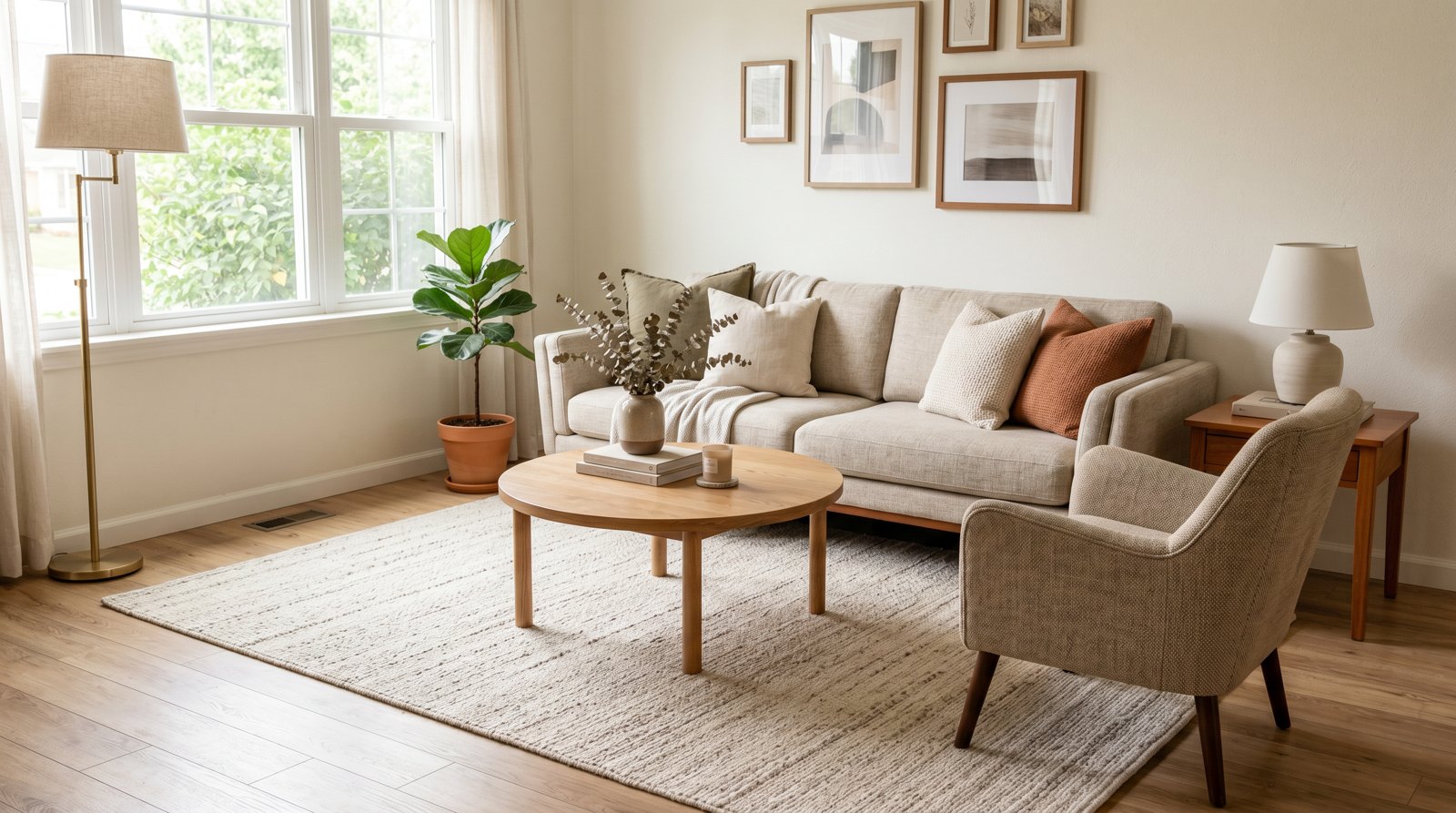
The simple rule: choose a rug large enough for at least the front legs of the sofa and chairs to sit on it. In practical terms, tape the rug footprint on the floor before ordering. If the front feet of the seating pieces land inside the taped area, the rug will read as part of the layout instead of a floating accent.
A full replacement is not the only fix. If your current rug has the right color but the wrong size, layer it over an 8-by-10 or 9-by-12 natural jute base. The larger base creates the correct footprint, while the smaller rug adds pattern without swallowing the budget.
For a standard sofa and two chairs, skip 5-by-7 rugs unless the room is tiny. In many living rooms, 8-by-10 is the practical minimum, while 9-by-12 works better for sectionals and open layouts. Besides, a larger rug often makes the room feel bigger because it defines one generous seating zone.
Low, Short Curtains Make Ceilings Feel Lower
Short curtains make a living room look cheap because they visually cut the wall at the window. The fix is simple: hang the rod higher and wider, then use floor-length panels. This creates a vertical line, which makes standard 8-foot ceilings feel taller.
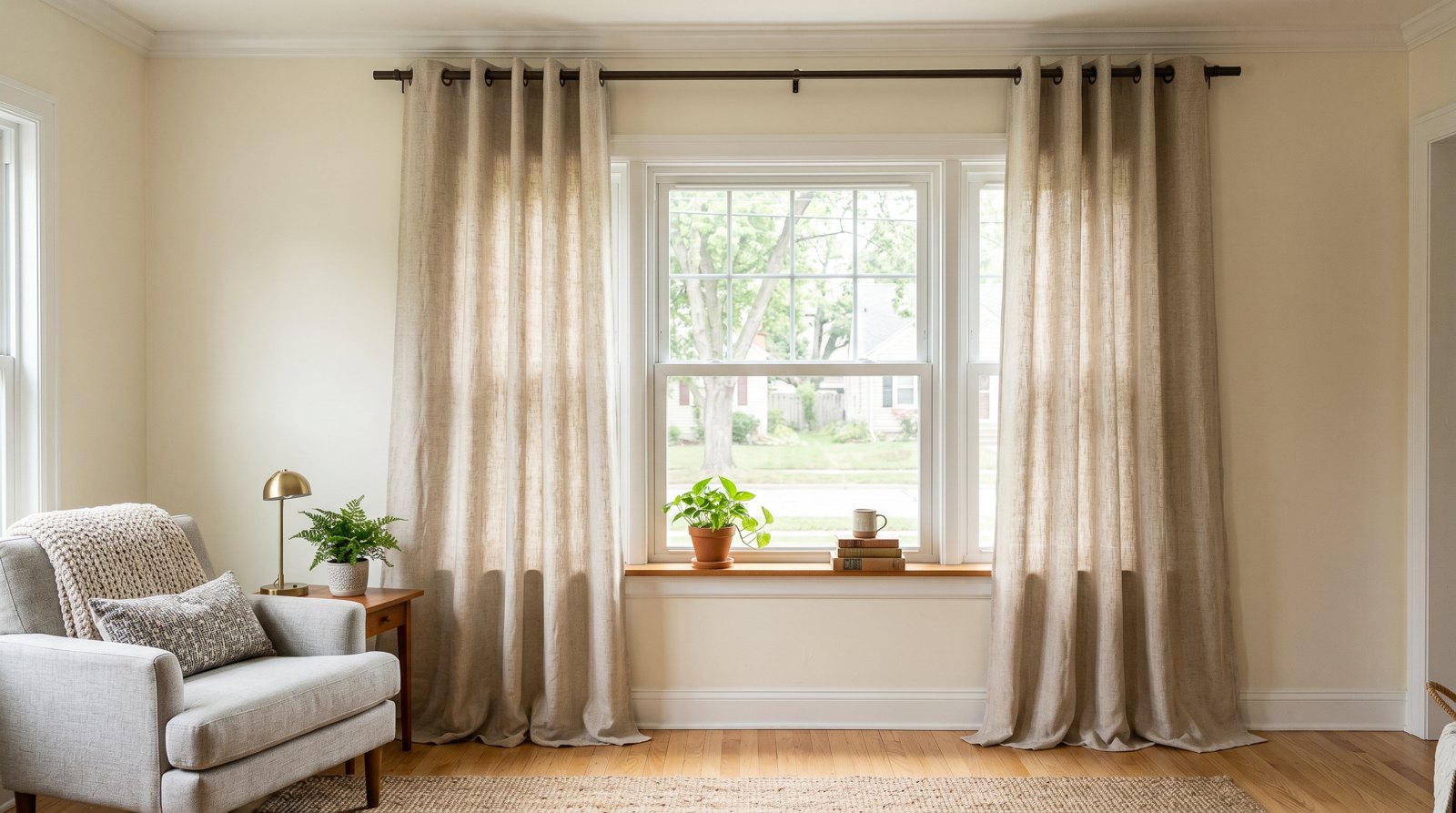
For most rooms, mount the rod 4 to 6 inches above the window frame or closer to the ceiling if your panel length allows it. Crate & Barrel recommends placing curtain rods above and outside the window molding, while Dunhill Homes recommends a 4-to-6-inch baseline above the frame and 6 to 12 inches of rod extension on each side.
The panels also need enough fullness. A pair of thin panels stretched flat across a wide window looks skimpy. Choose curtain width totaling about 1.5 to 2 times the window width for a fuller look, then let the fabric kiss the floor or hover no more than half an inch above it.
Renters have options too. Tension rods inside the frame rarely look high-end, but no-drill brackets, tap-in brackets, or damage-free curtain hardware improve the look without permanent holes. Still, keep the original blinds or hardware in a closet so move-out is easy.
Flat Lighting Makes Good Furniture Look Worse
One ceiling fixture rarely gives a living room enough depth. Overhead-only lighting creates harsh shadows, flattens texture, and makes paint colors look colder at night. Therefore, lighting is one of the highest-impact budget living room upgrades you will make.
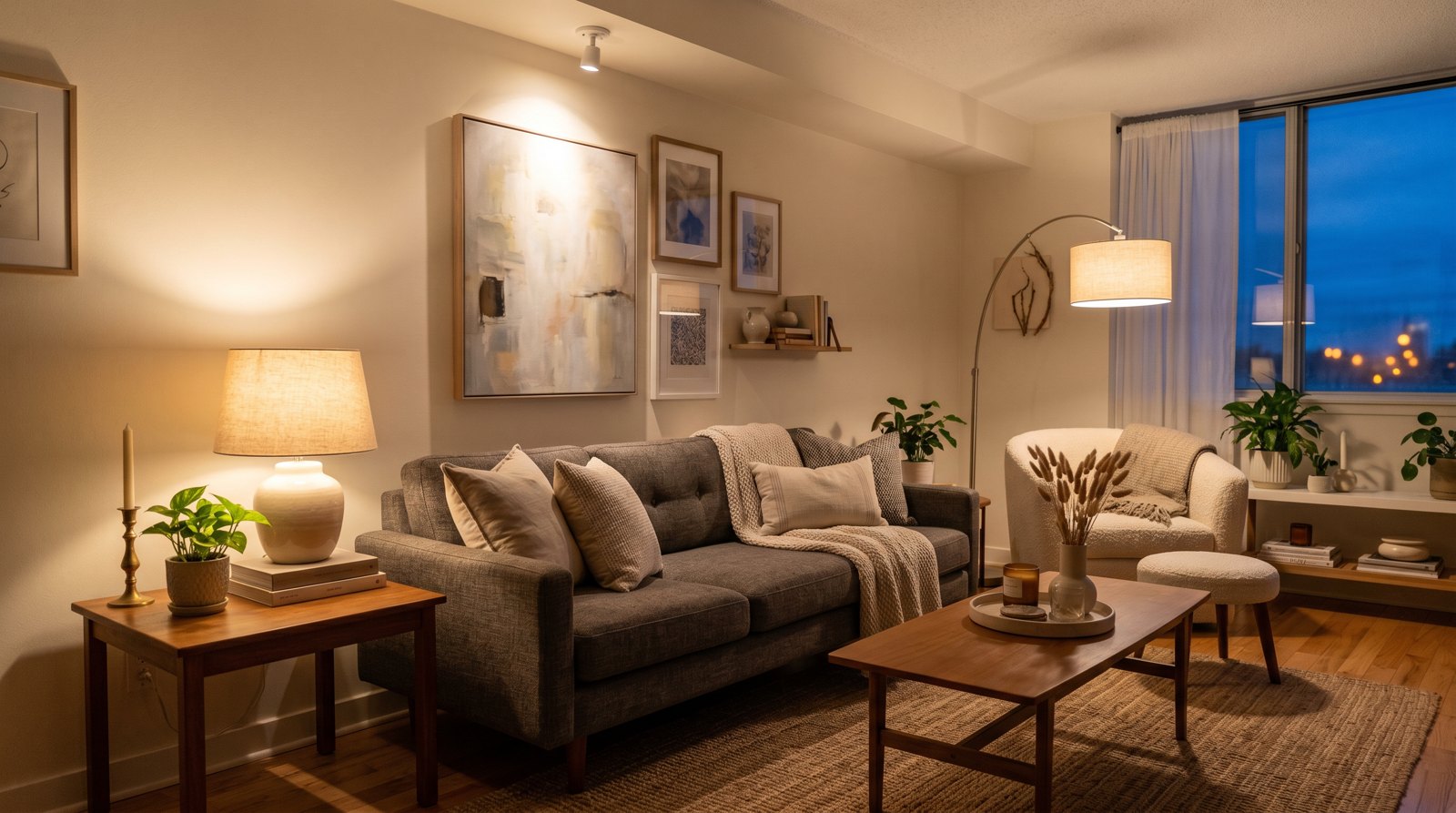
Use three layers: ambient light for overall brightness, task light for reading or games, and accent light for art, shelves, or plants. Start with one table lamp and one floor lamp on opposite sides of the room. Then add a plug-in picture light, battery sconce, or small uplight if the walls still feel flat.
Color temperature matters as much as fixture style. For living rooms, 2700K bulbs create a warm, relaxed glow, while 3000K reads a little cleaner and brighter. Current LED guides from Revolve LED and eufy describe 2700K as warm and suited to living spaces, with 3000K offering a brighter soft-white option.
Matching bulb temperatures matters as much as fixture style. A 2700K table lamp beside a 5000K ceiling bulb makes the space feel mismatched. If you are learning how to make a living room look more expensive on a budget, replacing four cold bulbs often beats buying another piece of decor.
Too Many Small Pieces Make Decor Look Random
Cheap-looking decor usually comes from quantity, not low prices. Ten small items scattered across a console look weaker than three pieces arranged with different heights and textures. Instead of filling every surface, edit the room until each piece has a reason to stay.
Use a simple test. Clear the coffee table, side tables, and console completely. Then add back one tray, one taller object, and one functional piece such as a lamp, book stack, or lidded box. If the surface looks better with 60 percent fewer items, clutter was the problem.
Avoid buying every accent from one display aisle. Matching pillow sets, identical metal finishes, and repeated faux plants create a showroom look. Mix linen, wood, ceramic, glass, and a small amount of metal instead. The goal is controlled variety, not chaos.
This is where DIY skills matter. Reframing thrift-store art, replacing hardware, or building a simple wall shelf gives the room character without adding visual noise. If a wood side table or console looks too heavy for the room, DIYTalk’s whitewash wood furniture guide shows three ways to lighten old furniture with $15 to $25 in supplies.
Paint also deserves restraint. If your living room opens into a kitchen or dining area, keep undertones consistent across the connected spaces. DIYTalk’s small-kitchen paint color guide explains why high-LRV warm whites and muted neutrals often make tight rooms feel brighter without looking sterile.
When you edit surfaces, treat things that make a living room look cheap as signals, not failures. The room usually needs fewer pieces, better scale, and one repeated finish, not a total redesign.
Cheap Look vs. Better Look: What to Change First
| Cheap Look | Better Look | First DIY Move |
|---|---|---|
| Furniture lines every wall | Seating forms a clear conversation zone | Tape the rug and table footprint on the floor |
| Small rug under coffee table only | Front legs of seating touch the rug | Layer current rug over a larger jute base |
| Short curtains mounted at the frame | Panels hang high, wide, and to the floor | Install a wider rod and longer panels |
| Cold overhead light only | Warm light from 3 levels | Add two lamps with matching 2700K bulbs |
The improved version reads better to the eye because the room becomes easier to understand. There is a seating zone, a vertical window line, a warm light plan, and fewer scattered accessories. Those changes explain how to make a living room look more expensive on a budget without pretending every room needs luxury furniture.
What to Prioritize, and What to Watch Out For
Prioritize
- Several fixes cost $0 because layout editing comes first
- Rug, curtain, and lighting changes improve the full room, not one corner
- Most of these upgrades require no permanent construction
- Warm 2700K to 3000K bulbs improve evening color and texture quickly
- Better scale makes older furniture look more intentional
- Editing decor reduces clutter without buying more storage
Watch Out For
- Large rugs cost more upfront than small accent rugs
- Longer curtains require careful measuring before purchase
- Fixture swaps should involve an electrician if wiring feels uncertain
- Open-plan rooms need more layout testing than small enclosed rooms
- Renter hardware options sometimes hold less weight than drilled brackets
Final Verdict
The most common things that make a living room look cheap are fixable because they come from spacing, scale, and light. Start by pulling furniture into a better conversation area, then size the rug around the seating zone instead of the coffee table.
Do not ignore the vertical plane either. Curtains hung too low and art placed too randomly make walls feel shorter and less finished. Raise the curtain rod, use floor-length panels, and group wall decor with intention.
If you have 30 minutes, move the furniture and mark a better rug footprint with painter’s tape. With $75, buy matching warm bulbs and add a lamp where the room feels flat. At $200 to $300, prioritize a larger rug or floor-length curtains before smaller decor.
If you want the room to look better this weekend, use this order: layout, rug, curtains, lighting, decor. This sequence handles the major living room decorating mistakes to avoid and keeps your budget focused on upgrades with the biggest visual return.
Frequently Asked Questions
Why does my living room look cheap even after decorating?
Your living room probably looks cheap because the large-scale pieces are not working together. Fix the layout, rug size, curtain height, and lighting before adding more pillows, art, or decorative objects.
Does a small rug make a living room look cheap?
Yes, a small rug often makes a living room look cheap because it fails to connect the seating area. At minimum, choose a rug large enough for the front legs of the sofa and chairs to rest on it.
How high should curtains be hung to avoid a cheap look?
Mount curtain rods about 4 to 6 inches above the window frame, or closer to the ceiling when panel length allows. In addition, extend the rod past the frame so open panels do not block the glass.
How do I make my living room look expensive without spending a lot?
Start with free changes: pull furniture inward, layer a larger rug base, hang curtains higher, and add two warm lamps. These steps show how to make a living room look more expensive on a budget without buying new furniture.
What furniture arrangement makes a living room look cheap?
Furniture pushed against every wall makes a living room look cheap because it leaves the center empty and disconnects the seating. Move seating inward, keep the coffee table 12 to 18 inches from the sofa, and preserve a clear walking path.
What are the best renter-friendly living room upgrades?
The best renter-friendly living room upgrades include rearranging furniture, layering rugs, using plug-in lamps, hanging curtains with no-drill brackets, replacing cold bulbs, and editing clutter. These upgrades improve the room without permanent construction.

Leave a Reply