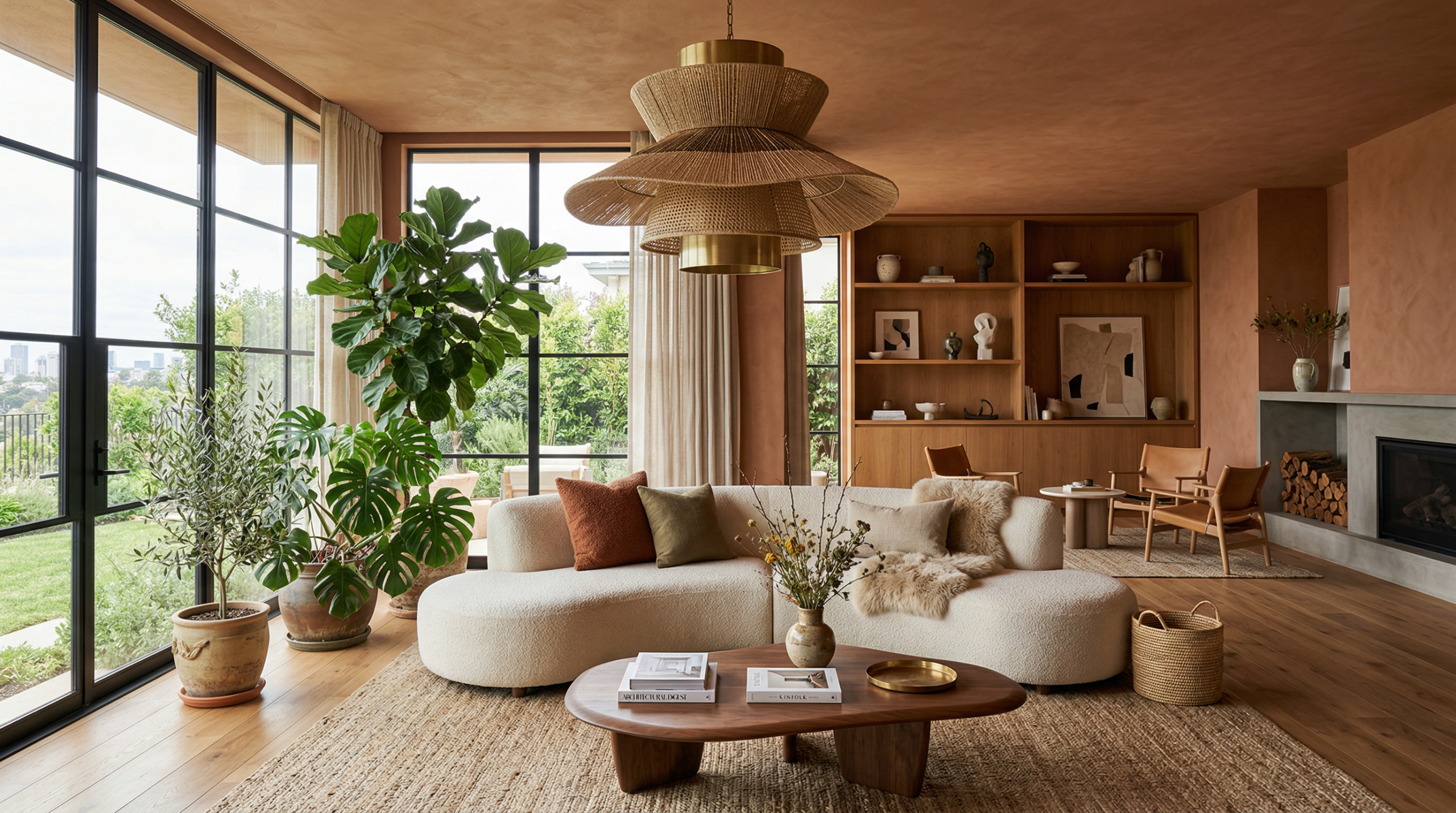
Americans spent an estimated $603 billion on home remodeling projects in 2024, according to NARI’s 2025 Remodeling Impact Report, and the home improvement market is projected to reach $688 billion by 2029. Home improvement trends 2026 are shifting hard toward warmth, wellness, and function over flash. Tighter budgets and longer homeowner tenures mean people want upgrades with measurable returns, not upgrades built for photos. This guide covers 15 trends across every room, with real cost ranges, ROI estimates, and DIY difficulty ratings so you know exactly where to spend your time and money.
Kitchen Trends for 2026
The kitchen leads all remodeling categories in 2026, with 41% of professionals identifying it as the top project and minor remodels delivering an average 113% ROI. Homeowners are moving away from cold, uniform aesthetics toward warm materials and smarter storage.
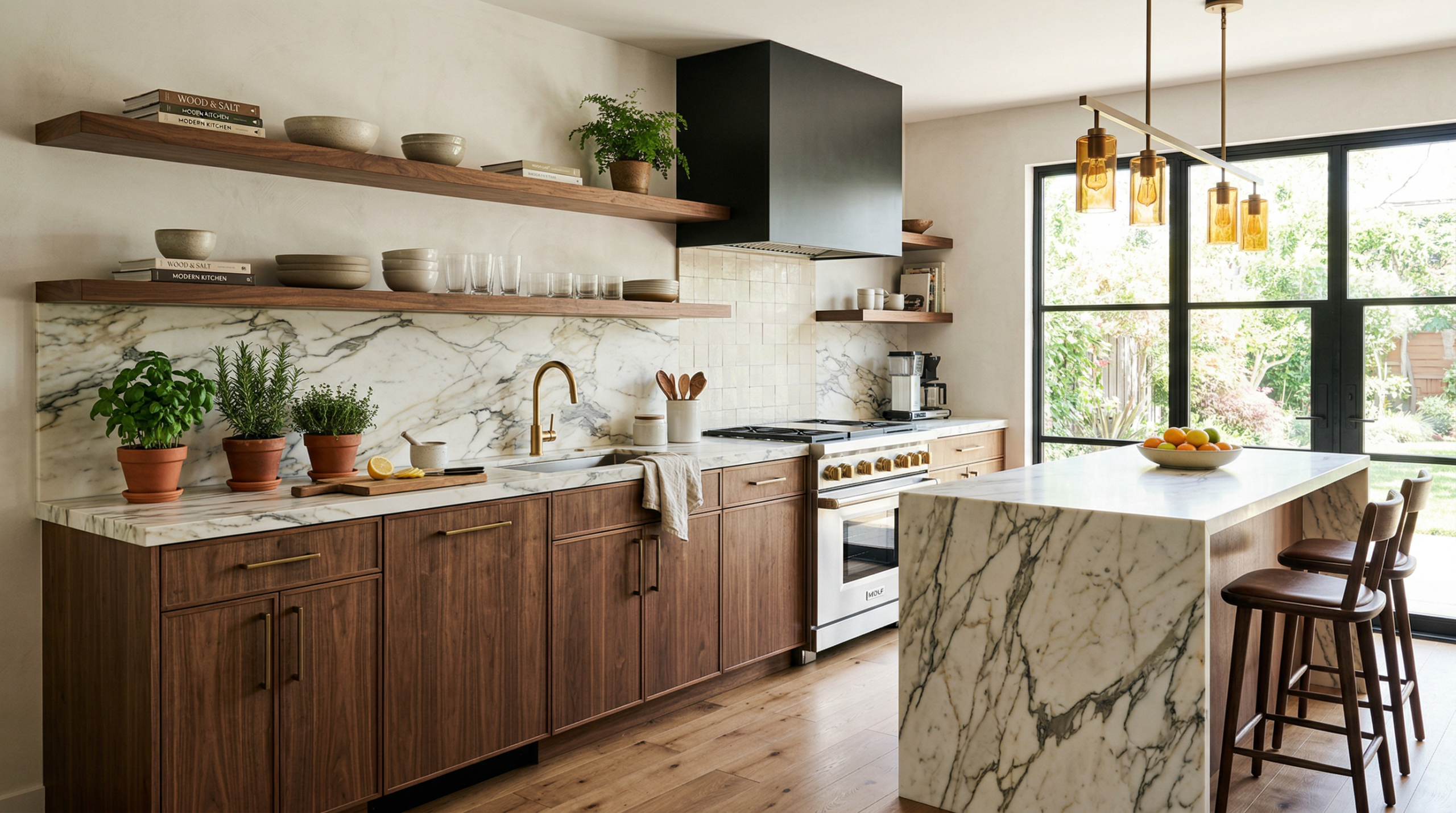
1. Warm Wood Cabinets Replace All-White
Wood cabinets now top the preference list for the first time in years, edging out white for the first time, per Houzz’s survey of 1,700+ homeowners. Medium-toned and natural finishes lead the shift. A reface using wood-veneer doors keeps your existing cabinet boxes and runs $3,000 to $8,000, versus $20,000+ for full replacement.
- Estimated cost: $3,000–$8,000 (reface) / $15,000–$30,000 (full replacement)
- ROI: ~113% for minor kitchen updates
- DIY difficulty: 3/5. Cabinet door swaps are weekend-friendly; full replacements require professional installation.
- Takeaway: Reface cabinet boxes with warm wood-tone doors before spending on a full replacement.
2. Statement Countertops with Bold Veining
Uniform quartz is giving way to natural stone with dramatic veining. Blue-veined quartzite and marble are the standout materials for 2026, per Pacific Shore Stones’ kitchen trend report. Quartzite slabs run $70 to $200 per square foot installed; a 40-square-foot counter costs $2,800 to $8,000 depending on stone choice.
- Estimated cost: $2,800–$8,000
- ROI: High visual impact; contributes to the overall kitchen ROI of 113%
- DIY difficulty: 1/5. Stone fabrication and installation require professional tools.
- Takeaway: Budget 10% extra when ordering stone slabs; veined material wastes more in cutting.
3. Butler’s Pantries and Prep Kitchens
More than three-quarters of renovating homeowners are adding specialty storage in 2026, with 7% adding butler’s pantries or full prep kitchens, per Houzz. A prep kitchen hides appliances and clutter from the main entertaining space. Converting an existing closet into a basic pantry runs $5,000 to $15,000.
- Estimated cost: $5,000–$15,000
- ROI: Strong appeal to buyers; adds functional square footage
- DIY difficulty: 4/5. Requires electrical, plumbing, and finish carpentry skills.
- Takeaway: A dedicated coffee bar with open shelving and a mini-fridge costs under $1,500 and delivers the same benefit.
Bathroom Trends for 2026
Bathroom spending delivers a 74% ROI at resale, and targeted updates like glass enclosures and fixture swaps deliver strong visual payoff without a full remodel. Spa-like features, organic materials, and open layouts are the three pillars of 2026 bathroom design.
4. Frameless Glass Shower Enclosures
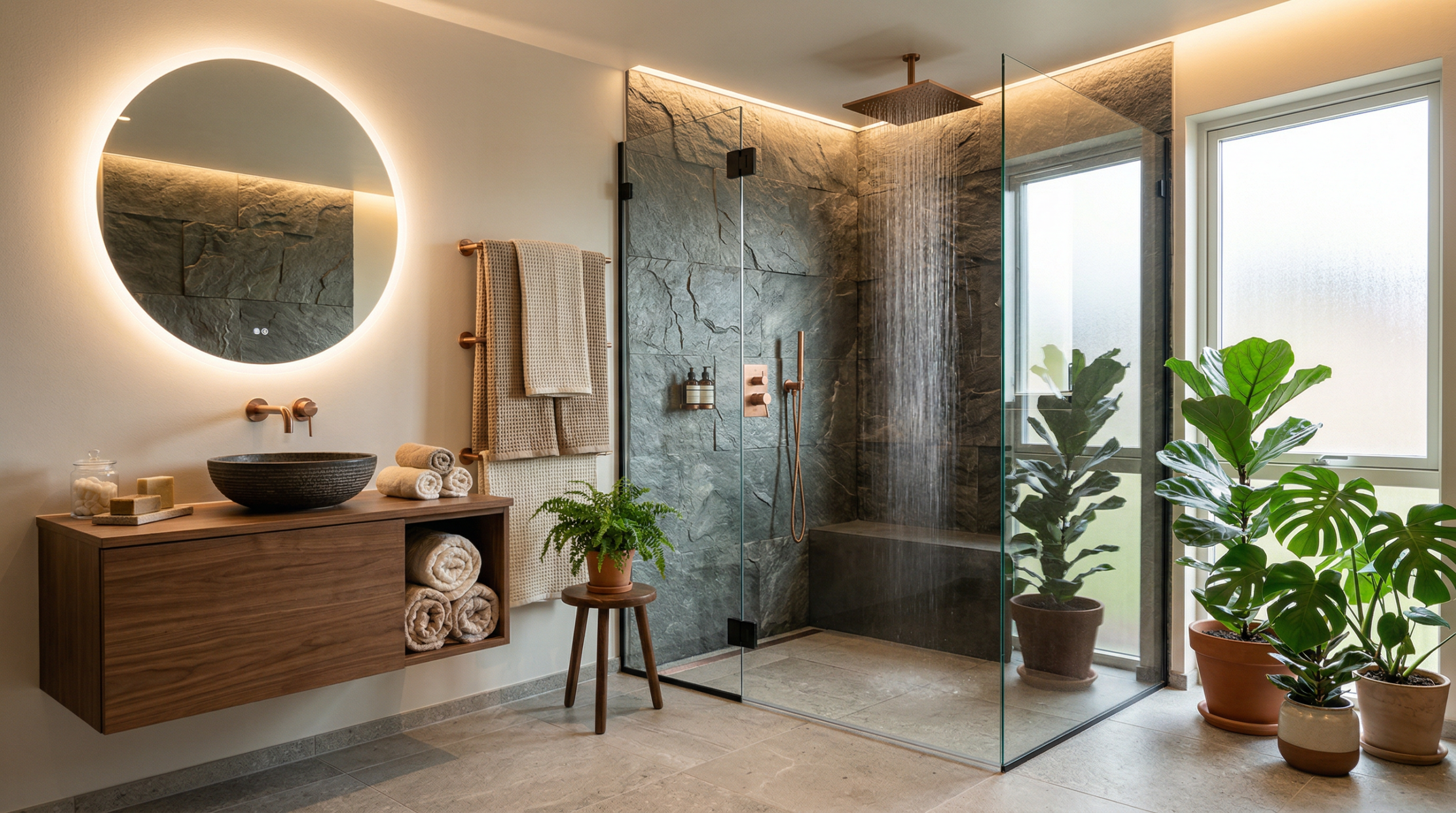
Barrier-free showers and frameless glass enclosures are among the top bathroom upgrades for 2026, per Re-Bath’s trend guide. Replacing a shower curtain or framed enclosure with a frameless glass panel makes a bathroom feel larger without moving any plumbing. Installation runs $900 to $3,500 depending on size and glass thickness.
- Estimated cost: $900–$3,500
- ROI: High visual return; no plumbing changes required
- DIY difficulty: 2/5. Pre-made frameless panels are installable by a confident DIYer; custom glass requires professional measurement and installation.
- Takeaway: Order tempered safety glass; the price difference over standard glass is minor.
5. Nature-Inspired Materials: Stone and Textured Tile
Limestone- and travertine-inspired tiles are the most requested bathroom patterns for 2026, per Porcelanosa’s trend report. Large-format stone-look tiles on both floors and walls create a seamless carved-from-stone effect. Porcelain stone-look tile runs $3 to $12 per square foot in materials, plus $8 to $15 per square foot for installation.
- Estimated cost: $1,500–$5,000 for an average bathroom
- ROI: Contributes to the overall bathroom remodel ROI of 74%
- DIY difficulty: 3/5. Floor tile is manageable for an experienced DIYer; wall tile in wet areas requires precise waterproofing.
- Takeaway: Use 24×24 or larger tiles to minimize grout lines and achieve a seamless stone look.
6. Warm Metallic Fixtures: Brushed Copper and Matte Bronze
Cool chrome and polished nickel fixtures are losing ground to warmer metallic finishes in 2026. Brushed copper, graphite, and bronze faucets and showerheads add warmth without a full remodel, per Porcelanosa. Sherwin-Williams named Universal Khaki its 2026 Color of the Year, a grounded mid-tone tan pairing directly with these warm metal tones. Swapping a faucet and towel hardware costs $150 to $600 in materials and roughly 2 hours of labor.
- Estimated cost: $150–$600
- ROI: High visual impact for low investment
- DIY difficulty: 2/5. Faucet replacement is a standard DIY task with basic plumbing knowledge.
- Takeaway: Pick one finish and use it across faucets, towel bars, and toilet hardware.
Living Room and Bedroom Trends
Living rooms in 2026 prioritize warmth, texture, and layouts built for actual use. Homes and Gardens reports designers are steering clients away from cold palettes and matchy-matchy furniture sets toward warmer tones and mixed materials.
7. Earth-Tone Color Drenching
Color drenching, painting walls, trim, and ceiling in the same saturated tone, is one of the defining design moves of 2026. House Beautiful reports deep blues, muted greens, and soft corals are replacing single-note beige walls. A color-drenched room costs $200 to $600 in paint and supplies for an average room. Doing it yourself takes one weekend.
- Estimated cost: $200–$600 DIY / $800–$1,500 professional
- ROI: Paint delivers some of the highest visual return per dollar spent
- DIY difficulty: 1/5. Anyone comfortable with a roller and painter’s tape achieves professional results.
- Takeaway: Test color on a 12-inch patch in morning and evening light before painting full walls.
8. Curved and Low-Profile Furniture
Sculptural sofas with rounded edges and low architectural profiles are defining living room silhouettes for 2026, according to Domkapa’s designer trend guide. These pieces visually elongate rooms and create a calming, fluid presence. Entry-level curved sofas start around $800 to $1,500; designer versions run $3,000 to $8,000.
- Estimated cost: $800–$8,000 depending on quality
- ROI: Aesthetic investment; no direct resale return, but improves daily quality of life
- DIY difficulty: N/A. Purchase, not a build project.
- Takeaway: Choose performance linen or stain-resistant fabric over bouclé for longevity.
9. Statement Lighting as a Primary Design Element
Lighting moved from afterthought to anchor in 2026. Homeowners are replacing overhead recessed-only setups with layered systems: warm pendant lights, wall sconces, and under-cabinet strips creating depth and highlighting architectural features, per Jones Paint and Glass. A bedroom or living room lighting upgrade with 2-3 new fixtures costs $300 to $1,200 in materials and 3 to 5 hours of work if you have basic electrical knowledge.
- Estimated cost: $300–$1,200
- ROI: Strong staging and resale value; buyers notice good lighting immediately
- DIY difficulty: 2/5. Fixture swaps are straightforward; adding new circuits requires an electrician.
- Takeaway: Swap bulbs to warm white (2700K to 3000K) before buying new fixtures.
Outdoor and Curb Appeal Trends
Exterior projects deliver the highest ROI of any improvement category. Garage door replacement leads all 2026 projects at 268% ROI, with steel entry doors at 216%. Outdoor living spaces are also evolving into year-round functional rooms.
10. Garage Door Replacement
No other single home improvement project returns more money per dollar spent. Replacing an outdated garage door with a modern insulated model adds an average of $2.68 in home value for every $1 spent, per Amerisave’s 2026 ROI analysis. Popular 2026 styles blend modern farmhouse and contemporary design with clean panels, wood-look finishes, and glass accents. A standard two-car insulated garage door with installation runs $1,500 to $4,000.
- Estimated cost: $1,500–$4,000
- ROI: 268% (highest of any home improvement in 2026)
- DIY difficulty: 4/5. Spring tension systems are dangerous; professional installation is strongly recommended.
- Takeaway: Choose R-12 or higher insulated doors on attached garages for added energy savings beyond resale ROI.
11. Outdoor Kitchens and Multi-Functional Patios
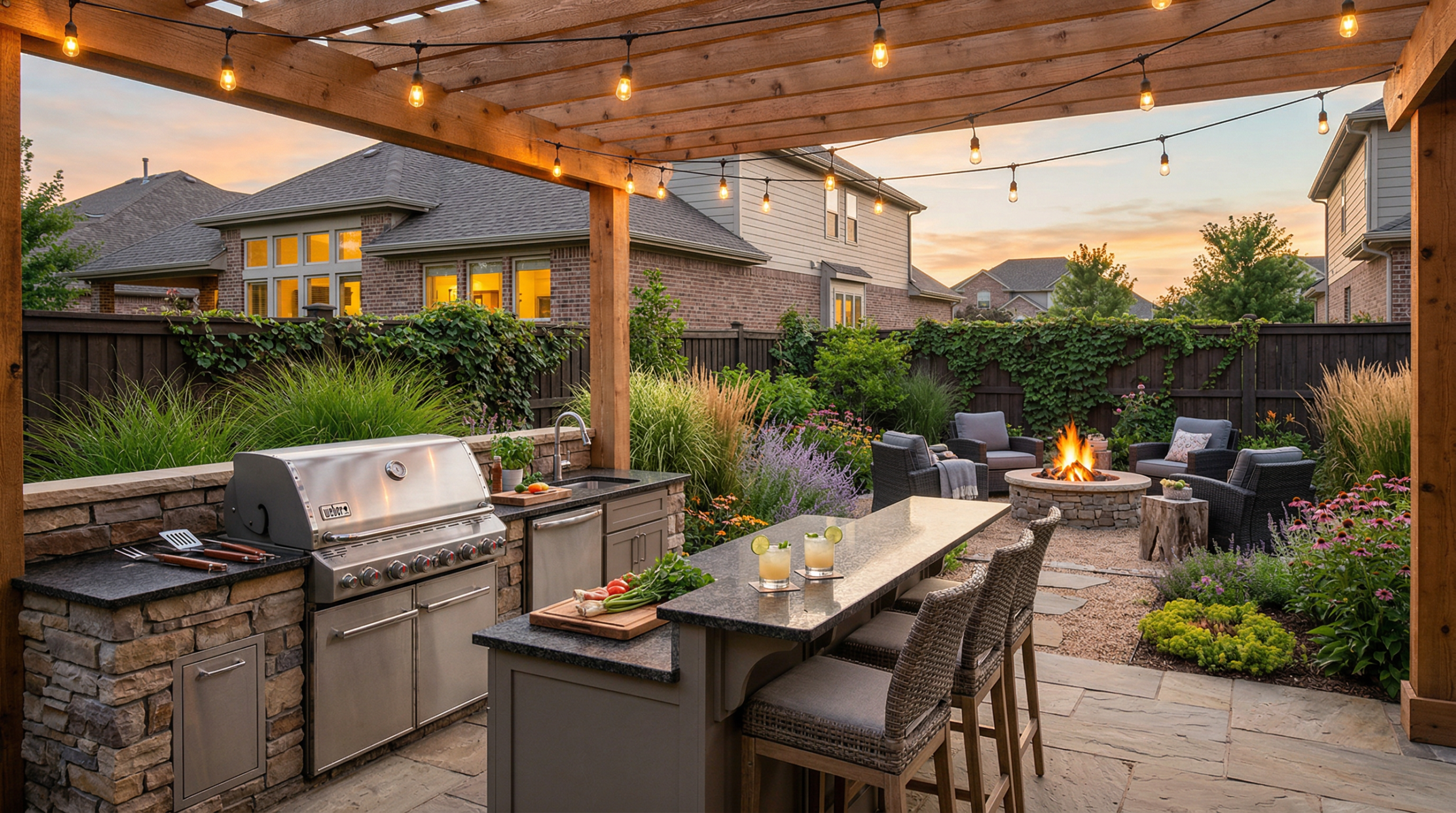
Outdoor kitchens have evolved from a grill on a concrete pad into fully functional culinary stations with countertops, weatherproof cabinetry, and built-in refrigeration, according to DripWorks’ 2026 outdoor living guide. Covered pergola setups extend usability into cold or rainy months. A basic built-in grill island with counter and storage runs $3,000 to $8,000; a full outdoor kitchen with refrigerator and pizza oven runs $15,000 to $40,000.
- Estimated cost: $3,000–$40,000 depending on scope
- ROI: 68–83% for outdoor living additions
- DIY difficulty: 3/5. Basic grill islands with pre-fabricated frames are DIY-able; gas line connections require a licensed professional.
- Takeaway: Start with a modular grill island kit ($1,500 to $3,000) before committing to a full built-in kitchen.
12. Native Plant Landscaping and Eco-Friendly Hardscaping
Sustainable landscaping is a defining outdoor trend for 2026, with homeowners choosing drought-tolerant native plants, permeable pavers, and drip irrigation systems, per DripWorks. Native plants reduce water bills by 30 to 50% compared to traditional grass lawns and require far less maintenance after the first growing season. A basic native plant front-yard conversion costs $1,500 to $5,000 installed or $400 to $1,000 as a DIY project.
- Estimated cost: $400–$5,000 depending on yard size and materials
- ROI: Strong curb appeal contribution; reduces ongoing maintenance costs
- DIY difficulty: 2/5. Plant selection and installation are approachable for beginners with good research on regional native species.
- Takeaway: Contact your local cooperative extension office for a free native plant list suited to your climate.
Smart Home and Tech Trends
Smart home tech shifted from novelty to practicality in 2026. Per NAR’s CES 2026 Smart Home coverage, the best new products work in the background rather than demanding attention, improving comfort and security without requiring a tech-savvy household to operate them.
13. AI-Powered Local Security Cameras
Local AI camera systems analyze footage on your home network rather than sending it to a cloud server, delivering faster alerts and better privacy, per Forbes’ CES 2026 smart home coverage. Entry-level 4-camera setups start at $300 to $600; premium systems with local NVR processing run $800 to $2,000.
- Estimated cost: $300–$2,000
- ROI: Insurance discount potential of 5–15%; strong buyer appeal
- DIY difficulty: 2/5. Wireless camera systems install in a few hours with no wiring skills required.
- Takeaway: Choose cameras supporting the Matter standard for cross-platform compatibility.
14. Smart Locks with Ultra-Wideband Access
Ultra-wideband (UWB) smart locks opening hands-free as you approach were among the most discussed products at CES 2026, according to NAR’s CES recap. New designs from Kwikset and competitors are also more architecturally refined, so buyers no longer see them as eyesores. A smart lock runs $150 to $400 and replaces your existing deadbolt with no door modifications in most cases.
- Estimated cost: $150–$400
- ROI: Moderate direct resale value; high convenience benefit
- DIY difficulty: 1/5. Standard deadbolt replacement; most homeowners finish in under 30 minutes.
- Takeaway: Look for Aliro-certified locks for cross-platform compatibility with iPhone, Android, and Apple Watch.
15. Smart Thermostats and Induction Cooking
Energy-efficiency technology rounds out the 2026 smart home trend list. Smart thermostats save homeowners an average of $150 to $180 per year on heating and cooling, according to the EPA. Induction cooktops are also surging in kitchen renovations: 72% of designers include them in project specs for their energy efficiency, safety, and easy cleanup, per Pacific Shore Stones. A smart thermostat costs $150 to $300 installed; induction cooktops run $500 to $2,500.
- Estimated cost: $150–$300 (thermostat) / $500–$2,500 (induction cooktop)
- ROI: Energy savings pay back a smart thermostat in 12–18 months
- DIY difficulty: 2/5 (thermostat) / 3/5 (cooktop, requires electrical upgrade to 240V in some homes).
- Takeaway: Confirm 240V wiring before ordering an induction cooktop; adding a circuit costs $300 to $600.
What Is Fading in 2026
Trends go out as fast as they come in. Knowing what to avoid saves you from spending money on updates buyers and design professionals already consider dated. Here are four home design directions losing momentum in 2026.
The All-White Kitchen
White cabinets, white quartz, and white subway tile defined the last decade. In 2026, the combination reads as dated. Forbes reports designers expect 2026 to finally replace all-white kitchens with warmer, material-rich alternatives.
Open-Concept Everything
Open-concept layouts peaked before the pandemic. Remote work made defined, purposeful rooms more valuable than one undivided space. Designers interviewed by Forbes confirm clients are adding archways and partial walls rather than knocking more down.
Oversaturation of White Oak
White oak dominated interiors for five years. Designers are steering away from rooms where every surface uses the same material. Designer Leigh Lincoln, quoted in Forbes, says: “The era of kitchens featuring white oak floors, cabinetry, and furniture is over.” Mixing wood tones and painted cabinets is the current direction.
Bouclé Overload and Exaggerated Curves
Bouclé sofas and oversized kidney shapes dominated living rooms from 2022 to 2024. Design professionals note the aesthetic now reads as repetitive. Soft curves remain appealing, but cleaner silhouettes and performance fabrics are replacing them.
Frequently Asked Questions
What home improvement trends 2026 add the most resale value?
Garage door replacement leads with 268% ROI, followed by steel entry door replacement at 216%, per Amerisave’s 2026 ROI analysis. For interior projects, minor kitchen remodels deliver 113% ROI, the highest return of any interior upgrade.
Which 2026 home renovation trends are easiest for DIYers?
Color drenching, smart thermostat installation, and smart lock replacement are all rated 1 to 2 out of 5 for DIY difficulty. Faucet swaps and frameless glass shower enclosures are manageable at a 2 to 3 difficulty level with basic tools.
Are kitchen renovations worth it in 2026?
Minor kitchen remodels deliver 113% ROI in 2026; major overhauls return only 24 to 36%, per Amerisave. Focus on cabinet refacing, new countertops, and hardware rather than gutting the room.
What are the home design trends going out of style in 2026?
All-white kitchens, open-concept layouts, uniform white oak, and oversaturated bouclé furniture are the top fading trends, per Forbes’ survey of eight interior designers. These styles peaked and now read as dated.
How much do homeowners spend on DIY home improvement projects in 2026?
Most homeowners plan to keep 2026 projects under $5,000, per HIRI’s Q2 2025 Homeowner Readiness report. The overall market is projected to grow 4% annually through 2029. Concentrating on high-ROI exterior projects and targeted interior upgrades delivers the best financial return regardless of budget size.
Home improvement trends 2026 reward homeowners who prioritize function and measurable return. Start outside: a garage door or steel entry door delivers more value per dollar than almost any interior project. Work inward with kitchen cabinet updates, bathroom fixture swaps, and layered lighting. Use the DIY difficulty ratings above to match projects to your skill level, and build in a 10 to 15% budget contingency for any job involving plumbing or electrical work.

Leave a Reply