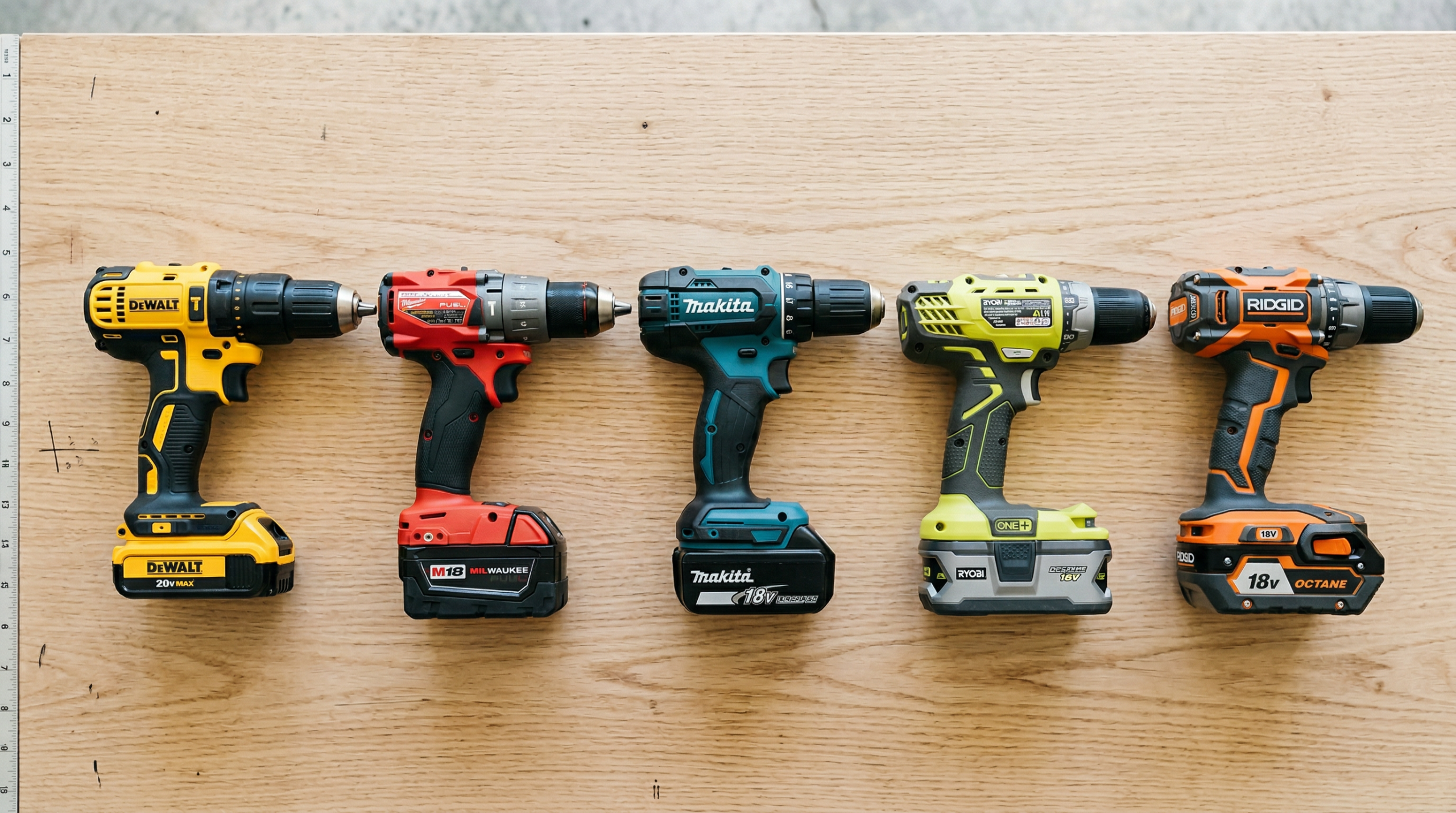
A quality cordless drill costs between $60 and $200 and is the single most-used tool in any DIY toolkit. Whether you are assembling furniture, hanging cabinet hardware, or boring holes through studs, the right drill saves hours. This guide to the best cordless drill 2026 has you covered: we tested and ranked 10 top models so you spend less time researching and more time building.
Table of Contents
- Drill vs Drill/Driver vs Hammer Drill: Which Do You Need?
- Our Top 10 Picks
- Comparison Table
- Battery Ecosystem Guide: Why It Matters
- What to Look for When Buying
- FAQ
Drill vs Drill/Driver vs Hammer Drill: Which Do You Need?
Three categories dominate the cordless drill market, and choosing the wrong one wastes money. A standard drill bores holes in wood and light metal. It works well for hanging shelves, assembling flat-pack furniture, or running screws into drywall. Because it lacks a clutch, however, it strips screws more easily than a dedicated driver.
A drill/driver adds an adjustable clutch with numbered torque settings, typically 20 to 24 positions. The clutch disengages the motor when resistance hits the set threshold, preventing stripped screws and over-driven fasteners. For most DIYers, a drill/driver handles 90 percent of home repair tasks and is the best starting point.
A hammer drill adds a percussive action (measured in blows per minute, or BPM) on top of rotation. This percussive function is essential for drilling into concrete, brick, or tile. Milwaukee’s M18 Fuel, for example, delivers 34,000 BPM, which makes masonry work manageable. If your projects include anchor bolts in concrete floors or tiling work, invest in a hammer drill from the start. Otherwise, a drill/driver covers everything else.
The practical takeaway: buy a drill/driver for general home use, and step up to a hammer drill if masonry work appears anywhere on your project list.
Our Top 10 Picks for the Best Cordless Drill 2026
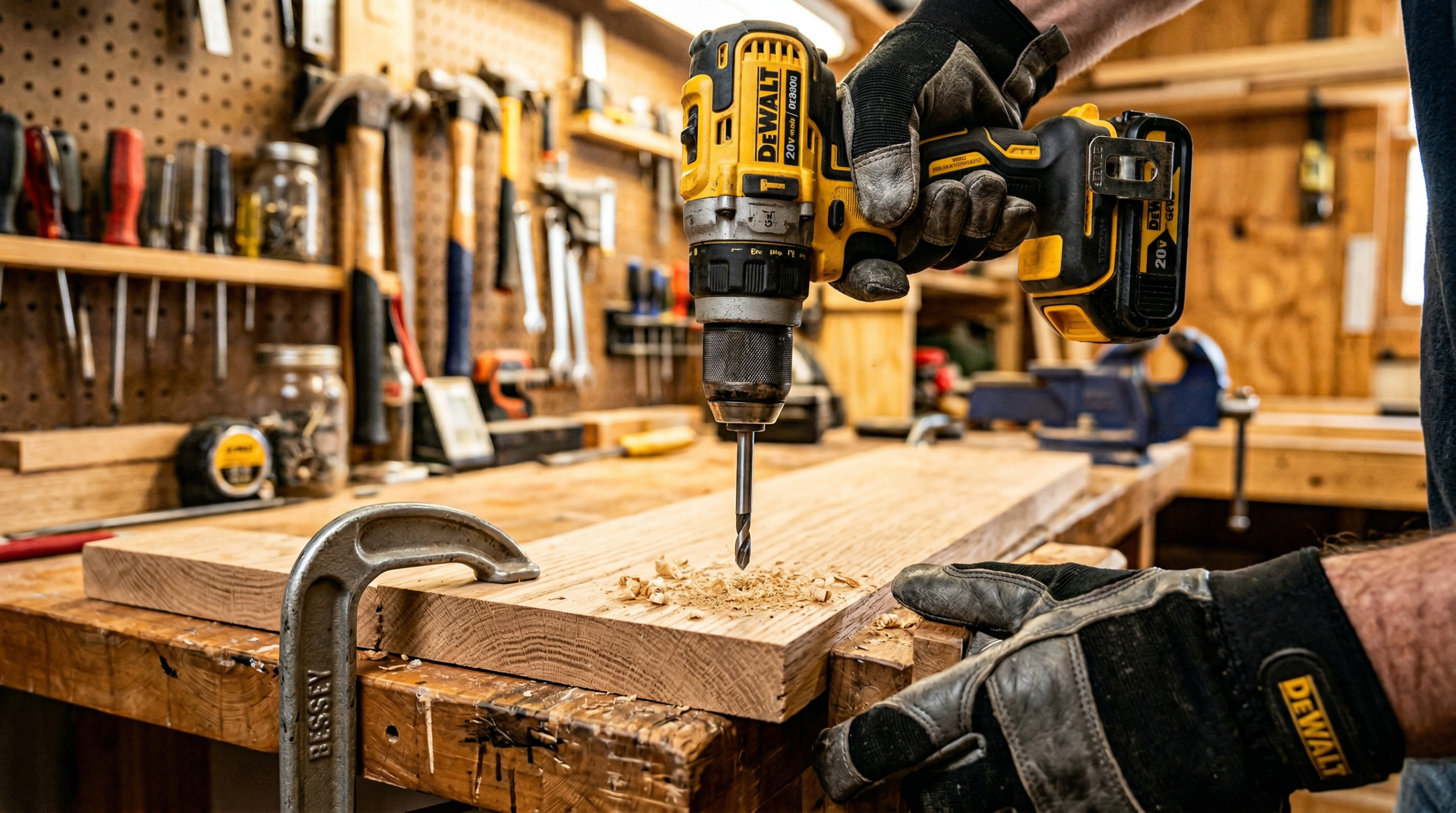
1. Milwaukee M18 Fuel 2904-20: Best Overall
The Milwaukee M18 Fuel delivers 1,400 inch-pounds of torque at 3.2 pounds bare weight, making it the fastest and most powerful drill in our head-to-head tests. Two speed settings (0–500 / 0–2,100 RPM) cover both precise screw driving and aggressive boring. At roughly $229 bare or $329 as a kit, it costs more than mid-range options, though professionals and serious DIYers consistently rate it worth the premium. The M18 platform covers over 300 tools, so every battery you own charges the same drill. For anyone who does frequent framing, cabinetry, or concrete anchoring, this is the tool to own.
- Voltage: 18V (M18)
- Torque: 1,400 in-lbs
- Weight: 3.2 lbs (bare)
- Price: ~$229 bare / ~$329 kit
- Best for: Professionals and serious DIYers who want top-tier performance
2. DeWalt 20V MAX XR DCD1007: Best Runner-Up
The DeWalt DCD1007 earned runner-up status in Pro Tool Reviews testing with 1,530 UWO of output power and three speed settings (0–450 / 0–1,300 / 0–2,000 RPM). The three-speed gearbox gives finer control across different materials than most two-speed drills. At 4.2 pounds bare, it sits on the heavier side, though the grip ergonomics offset fatigue during extended sessions. Priced at approximately $249 bare or $349 as a kit, it fits the DeWalt 20V MAX ecosystem used by millions of homeowners. The XR brushless motor extends both runtime and motor life significantly over brushed alternatives.
- Voltage: 20V MAX
- Torque: 1,530 UWO
- Weight: 4.2 lbs (bare)
- Price: ~$249 bare / ~$349 kit
- Best for: Existing DeWalt battery owners wanting a professional-grade upgrade
3. FLEX 24V Brushless FX1271T: Best for Power
FLEX earned best-in-class honors at Pro Tool Reviews with the FX1271T, matching Milwaukee’s 1,400 inch-pounds of torque on a 24V platform. The two-speed gearbox runs 0–700 / 0–2,500 RPM, and the “Turbo” mode pushes peak output above what most 18V tools achieve. At 3.7 pounds bare weight, it handles surprisingly well for a high-output drill. A bare tool runs approximately $149, making it one of the better performance-per-dollar options in the premium tier. FLEX’s 24V battery platform is newer, however, so existing tool collections on M18 or 20V MAX will require separate battery purchases.
- Voltage: 24V
- Torque: 1,400 in-lbs
- Weight: 3.7 lbs (bare)
- Price: ~$149 bare / ~$249–$279 kit
- Best for: Power-hungry users comfortable starting a new battery ecosystem
4. Makita 18V LXT XPH14: Best for Tradespeople
The Makita XPH14 produces 1,250 inch-pounds of torque on the widely supported 18V LXT platform. Two speed settings (0–400 / 0–1,500 RPM) and a half-inch chuck handle large-diameter bits in hardwood with no straining. At 5.5 pounds bare, it is the heaviest tool on this list, which reflects its robust all-metal construction. Pricing typically lands near $119 for the bare tool. Makita’s LXT battery line covers over 225 tools, making it the strongest platform choice for tradespeople who already own Makita circular saws, reciprocating saws, or angle grinders.
- Voltage: 18V LXT
- Torque: 1,250 in-lbs
- Weight: 5.5 lbs (bare)
- Price: ~$119 bare
- Best for: Tradespeople on the Makita LXT platform
5. Ryobi 18V ONE+ HP Brushless PBLHM102: Best for Speed
Ryobi’s HP brushless model runs at 0–700 / 0–2,150 RPM and delivers 850 inch-pounds of torque, sufficient for decking, cabinet installs, and everyday repairs. Popular Mechanics ranked it best for speed in 2026 testing, noting its consistently fast drilling times. At 3.1 pounds bare and approximately $129 bare or $179 as a kit, it costs less than Milwaukee and DeWalt equivalents. The ONE+ ecosystem is the largest battery platform in existence, with over 300 compatible tools. Existing Ryobi tool owners add this drill to their collection with no new battery cost.
- Voltage: 18V
- Torque: 850 in-lbs
- Weight: 3.1 lbs (bare)
- Price: ~$129 bare / ~$179 kit
- Best for: Speed and homeowners already on the Ryobi ONE+ platform
6. Bosch 18V Profactor GSB18V-1330CN: Best Controls
Bosch’s Profactor series drill produces 1,330 inch-pounds of torque and offers two-speed operation (0–550 / 0–2,200 RPM) with one of the most refined clutch systems tested. The electronic clutch provides exceptionally consistent stopping behavior, reducing stripped screws across repeated fastening tasks. At 4.1 pounds bare weight, it feels dense but well balanced. Pricing sits around $249 bare or $359 as a kit. Bosch’s 18V platform is mature with strong support for both hobbyist and professional tool lines, and the Core18V high-capacity batteries deliver long runtime between charges.
- Voltage: 18V
- Torque: 1,330 in-lbs
- Weight: 4.1 lbs (bare)
- Price: ~$249 bare / ~$359 kit
- Best for: Users who prioritize precision driving and clutch performance
7. Ridgid 18V Brushless R861152: Best Value at Pro Level
Ridgid’s R861152 delivers 1,250 inch-pounds of torque at 3.5 pounds bare weight for approximately $169 bare, which is significantly less than Milwaukee or DeWalt at similar output levels. The two-speed gearbox (0–550 / 0–2,000 RPM) covers the full range of fastening and boring tasks. Ridgid’s lifetime service agreement (LSA) provides free battery replacements and service as long as you register the tool, which is an unmatched warranty in this category. For homeowners who want professional-grade torque without the premium brand price, the R861152 represents the strongest value at this output tier.
- Voltage: 18V
- Torque: 1,250 in-lbs
- Weight: 3.5 lbs (bare)
- Price: ~$169 bare
- Best for: Value shoppers wanting pro-level torque with a lifetime warranty
8. Skil PWRCORE 20 Brushless: Best Value Kit
The Skil PWRCORE 20 includes a drill, two batteries, and a charger for approximately $80 to $89, a kit price most competitors charge for a bare tool alone. At 2.23 pounds, it is the lightest 20V drill on this list, making overhead work and all-day use noticeably less tiring. Torque checks in at 400 inch-pounds, which handles furniture assembly, picture hanging, and light construction tasks without issue. Speed settings run two-position (0–450 / 0–1,800 RPM). Skil’s PWRCore 20 ecosystem is smaller than Ryobi’s, however, so platform expansion options are more limited.
- Voltage: 20V (PWRCore 20)
- Torque: 400 in-lbs
- Weight: 2.23 lbs (bare)
- Price: ~$80–$89 kit
- Best for: Budget buyers and beginners who want a complete kit under $90
9. Bosch 12V Max PS21-2A: Best Compact and Beginner Pick
The Bosch PS21-2A weighs 1.8 pounds with a 12V battery attached, making it the most manageable drill on this list for tight spaces, overhead fastening, and users new to power tools. Torque reaches 265 inch-pounds across two speed settings, adequate for all screw-driving tasks and light drilling in wood and drywall. Pricing runs approximately $129 as a two-battery kit. The compact form factor fits in a kitchen drawer, which encourages using it for small repairs rather than leaving it in the garage. First-time drill owners and apartment dwellers find this the ideal starting point.
- Voltage: 12V MAX
- Torque: 265 in-lbs
- Weight: 1.8 lbs (bare)
- Price: ~$129 kit
- Best for: Beginners, light-duty users, and anyone prioritizing compact size
10. Hercules 24V Brushless HCB92B: Best Budget Performance
Available exclusively at Harbor Freight, the Hercules HCB92B delivers 1,200 inch-pounds of torque for $79.99 bare, a figure rivaling tools costing twice as much. At 3.3 pounds bare weight and a two-speed gearbox (0–550 / 0–2,000 RPM), the specs match mid-tier competitors on paper and in testing. Pro Tool Reviews confirmed strong real-world performance against drills priced significantly higher. The Hercules 24V platform is limited compared to Milwaukee or DeWalt, however, so it works best for homeowners buying their first high-torque drill who do not plan to build a large tool collection.
- Voltage: 24V
- Torque: 1,200 in-lbs
- Weight: 3.3 lbs (bare)
- Price: ~$79.99 bare
- Best for: Budget buyers wanting high torque without a premium brand price
Comparison Table
| Model | Voltage | Torque | Weight (bare) | Speed Settings | Price (approx.) | Best For |
|---|---|---|---|---|---|---|
| Milwaukee M18 Fuel 2904-20 | 18V | 1,400 in-lbs | 3.2 lbs | 0–500 / 0–2,100 RPM | $229 bare | Best Overall |
| DeWalt 20V MAX XR DCD1007 | 20V | 1,530 UWO | 4.2 lbs | 0–450 / 0–1,300 / 0–2,000 RPM | $249 bare | DeWalt platform users |
| FLEX 24V FX1271T | 24V | 1,400 in-lbs | 3.7 lbs | 0–700 / 0–2,500 RPM | $149 bare | Maximum power |
| Makita 18V LXT XPH14 | 18V | 1,250 in-lbs | 5.5 lbs | 0–400 / 0–1,500 RPM | $119 bare | Makita LXT users |
| Ryobi 18V ONE+ HP PBLHM102 | 18V | 850 in-lbs | 3.1 lbs | 0–700 / 0–2,150 RPM | $129 bare | Speed and Ryobi owners |
| Bosch 18V Profactor GSB18V-1330CN | 18V | 1,330 in-lbs | 4.1 lbs | 0–550 / 0–2,200 RPM | $249 bare | Precision driving |
| Ridgid 18V R861152 | 18V | 1,250 in-lbs | 3.5 lbs | 0–550 / 0–2,000 RPM | $169 bare | Value + lifetime warranty |
| Skil PWRCORE 20 Brushless | 20V | 400 in-lbs | 2.23 lbs | 0–450 / 0–1,800 RPM | $80–$89 kit | Budget kit buyers |
| Bosch 12V Max PS21-2A | 12V | 265 in-lbs | 1.8 lbs | 2-speed | $129 kit | Beginners, compact use |
| Hercules 24V HCB92B | 24V | 1,200 in-lbs | 3.3 lbs | 0–550 / 0–2,000 RPM | $79.99 bare | Budget performance |
Battery Ecosystem Guide: Why It Matters
Battery ecosystem compatibility is the single most overlooked factor in a cordless drill purchase, and it is the reason your second and third power tool purchases should match your first. Each major brand runs a proprietary battery platform: Milwaukee uses M18, DeWalt uses 20V MAX, Makita uses 18V LXT, and Ryobi uses ONE+. Batteries are not cross-compatible between brands, so mixing platforms means buying and charging extra battery sets.
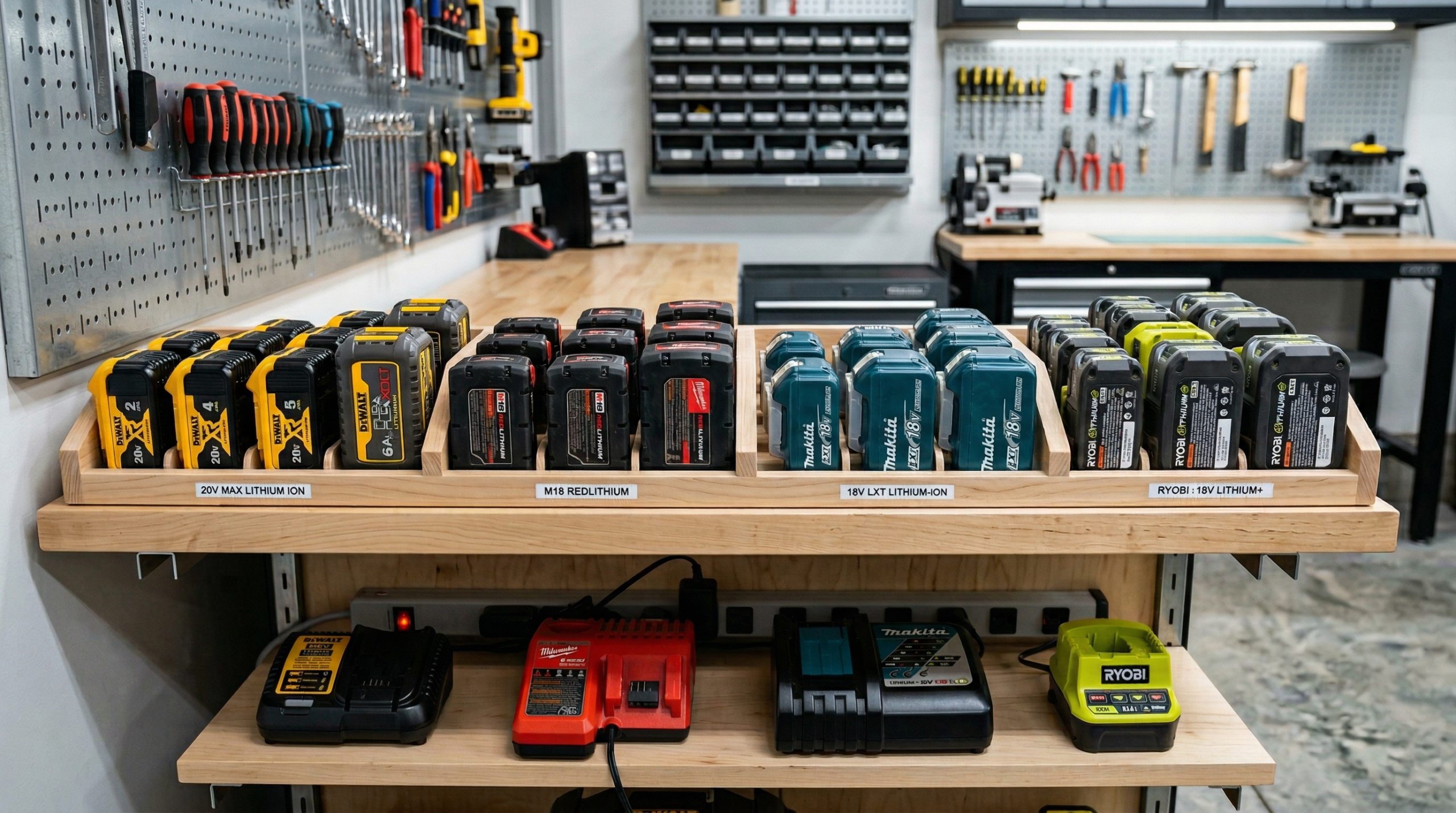
Ryobi’s ONE+ platform is the largest, covering over 300 tools from drills to leaf blowers and push mowers. If you already own two or three Ryobi tools, adding the PBLHM102 drill costs only $129 bare because you use batteries already in your possession. Milwaukee’s M18 platform covers over 300 professional-grade tools as well, making it the preferred choice for tradespeople building a long-term collection. DeWalt’s 20V MAX platform is similarly broad and supports FLEXVOLT batteries, which step up to 60V when used with compatible saws.
Newer platforms like FLEX 24V and Hercules 24V offer strong drill performance at competitive prices, but their ecosystems currently cover fewer than 50 tools each. For a homeowner buying a first cordless tool, Ryobi or DeWalt provides the most growth runway. For professionals, Milwaukee or Makita LXT offers the deepest professional-grade tool libraries. The practical takeaway: pick a platform before picking a drill model, because batteries typically cost $50 to $100 each and quickly exceed the drill’s purchase price if you switch brands later.
What to Look for When Buying a Cordless Drill
Five specifications determine whether a drill fits your needs. Each one affects a different aspect of how the tool performs in daily use.

Voltage indicates available power reserve. Higher voltage batteries hold more energy, which sustains peak torque longer under load. For most homeowners, 18V or 20V is sufficient. A 12V drill like the Bosch PS21 handles all fastening and light drilling with no issues; a 40V Makita GPH01 is designed for masonry and heavy-duty framing work. Choose 18V or 20V for a balance of runtime and weight.
Torque, measured in inch-pounds, determines how much force the drill applies to a fastener or bit. General assembly work requires 250 to 400 inch-pounds. Deck building and framing benefit from 800 to 1,000 inch-pounds. Concrete anchoring and large-bit work in hardwood require 1,200 inch-pounds or more. Avoid buying more torque than your typical project demands, because higher-torque drills are heavier.
Weight affects fatigue directly. A 1.8-pound compact drill feels effortless for 30 minutes of overhead work; a 4.2-pound drill causes shoulder fatigue in the same scenario. Because the battery adds 0.5 to 1.5 pounds depending on capacity, always check the total loaded weight listed in manufacturer specs.
Chuck size controls which bit diameters the drill accepts. A 3/8-inch chuck covers the majority of standard twist bits and driver bits. A 1/2-inch chuck accepts larger spade bits, hole saws, and forstner bits. For general home use, 3/8-inch is adequate; for carpentry and rough framing, 1/2-inch is preferable.
Speed settings determine versatility. Two-speed drills switch between a low-speed/high-torque mode and a high-speed/lower-torque mode. Three-speed models like the DeWalt DCD1007 add a middle setting for intermediate material types. Multiple speeds allow one drill to handle both delicate screw driving and aggressive boring without over-speeding into soft materials.
FAQ
What is the best cordless drill for a beginner in 2026?
The Bosch 12V Max PS21-2A is the top beginner pick because it weighs only 1.8 pounds, includes two batteries in the kit for $129, and handles all common home repair tasks. The Skil PWRCORE 20 kit is a strong alternative at $80 to $89 for users who want a 20V platform with more expansion options.
How much torque do I need for general DIY work?
Most DIY tasks, including furniture assembly, cabinet hanging, and deck screwing, require 400 to 850 inch-pounds of torque. Drills in the 800-to-1,200 inch-pound range handle tougher tasks like drilling into hardwood or driving long lag screws without the motor bogging down.
Is a brushless motor worth the extra cost?
Yes. Brushless motors last two to three times longer than brushed motors because there are no carbon brushes to wear down, and they run cooler under sustained load. The efficiency gains also produce roughly 25 to 50 percent more runtime per battery charge. For any drill you plan to use regularly, brushless is worth the price difference.
Do I need a hammer drill or a standard drill/driver?
A standard drill/driver handles wood, drywall, plywood, and light metal with no issues. For drilling into concrete, brick, block, or ceramic tile, a hammer drill’s percussive action reduces effort significantly and extends bit life. If masonry work is on your list at any point, buy a hammer drill from the start rather than buying twice.
Are 20V and 18V batteries the same?
No. DeWalt labels its batteries 20V MAX based on peak open-circuit voltage; the working voltage under load is 18V. Milwaukee, Makita, and Ryobi all use 18V nominal ratings. The practical performance difference between a 20V MAX DeWalt and an 18V Milwaukee is minimal, but the battery packs are physically incompatible across brands.
The best cordless drill of 2026 for most homeowners is the Milwaukee M18 Fuel 2904-20 for its unmatched torque-to-weight ratio and enormous battery platform, or the Ryobi 18V ONE+ HP PBLHM102 if you prioritize value and platform breadth. Beginners and light-duty users get everything they need from the Bosch 12V Max or Skil PWRCORE 20 kit at a fraction of the cost. Before adding any drill to your cart, confirm which battery platform your existing tools use. Buying one 18V drill with spare batteries costs less than owning two drills on two separate ecosystems, and keeping a consistent platform means every battery serves every tool in your collection.

Leave a Reply