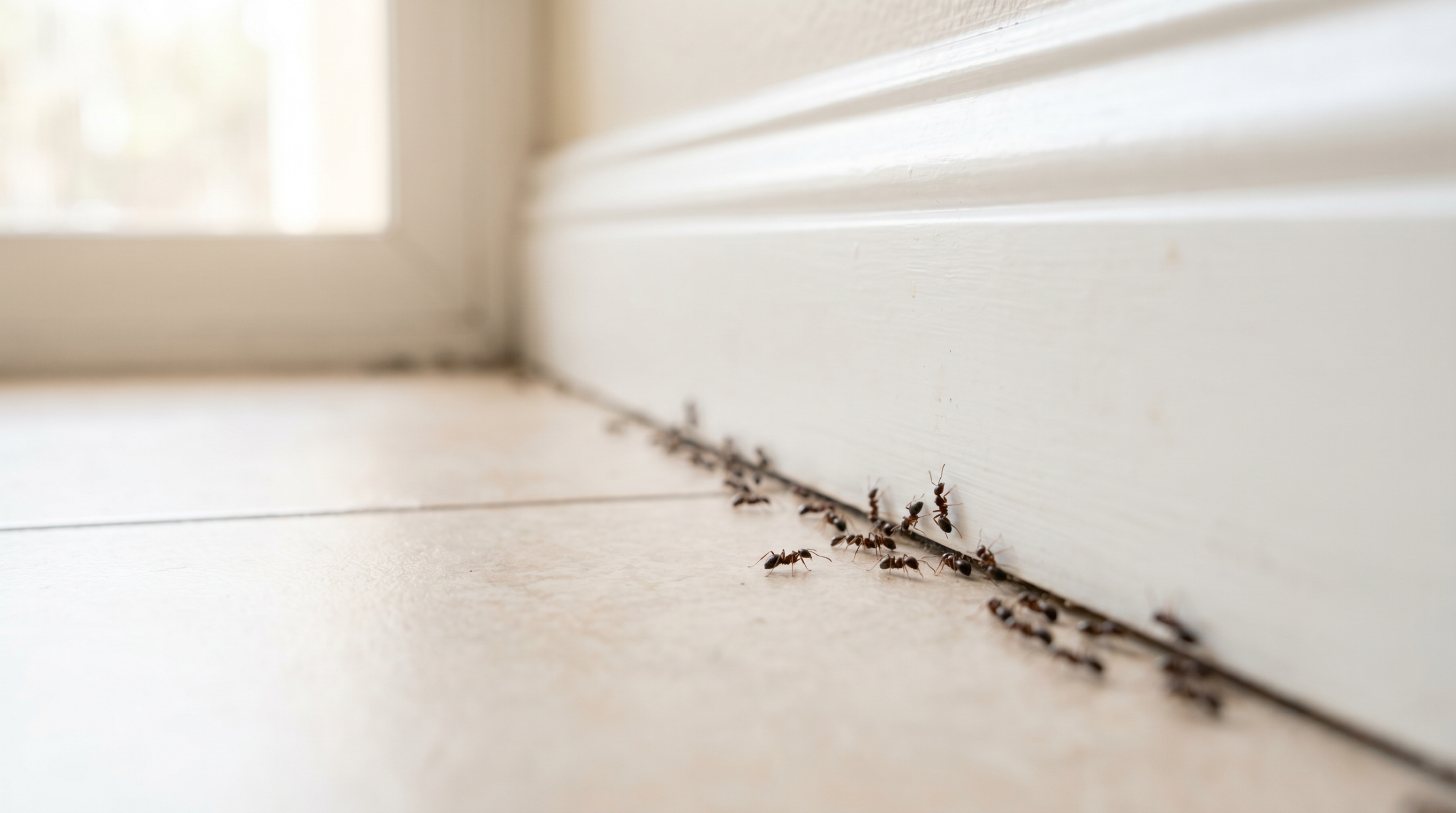
Quick Verdict: Bugs in your house rarely arrive by accident. They follow food, water, and a clear path inside. After 30 years of DIY work and living since 1997 on a Southern California property built directly on top of an Argentine ant hill, I’ve worked through every fix on this list. These 14 actions handle the real causes of indoor pests: food sources, moisture, entry points, outdoor harborage, and lighting. Most fixes cost under $30 and take under an hour.
Last updated: April 2026 | 13 min read
In This Guide
- Why Bugs in Your House Suddenly Spike
- Key Pest Facts at a Glance
- Cut Off Their Food Supply (5 Fixes)
- Seal the Walls and Foundations (3 Fixes)
- Eliminate Their Water Source (2 Fixes)
- Move the Outdoor Buffet Away (2 Fixes)
- Switch Your Outdoor Lights (1 Fix)
- Know When to Call a Pro (1 Fix)
- DIY vs. Professional Help for Bugs in Your House
- Pros and Cons of the DIY-First Approach
- Final Verdict
- Frequently Asked Questions
Why Bugs in Your House Suddenly Spike
Bugs in your house seem to multiply overnight, but the spike is rarely random. Insects need three things from your home: a way in, a food source, and a place with steady moisture. When even one of those conditions tips in their favor, populations explode. Spring temperature swings, summer humidity, and seasonal supercolony movements drive a sharp rise in insect activity each year, according to university extension entomologists.
I’ve lived in Irvine, California since 1997, and our property sits squarely on an Argentine ant hill. Argentine ants are the number-one nuisance pest in Orange County, and our region’s reclaimed-water irrigation pumps nutrients into the soil feeding these supercolonies year-round. For a deeper regional take, our sister site LivingInCalifornia.com covers California-specific pest seasons in detail. Spring and fall send waves of foragers straight at our baseboards. Add the predictable summer fruit fly battle around the kitchen banana bowl, and most years I run through every defense in this article at least once.
Indoor pests almost never disappear from a single bug spray. Instead, the real fix is a combination of cleanup, entry-point sealing, moisture control, and lighting changes when you’re seeing more indoor pests than usual. Each of the 14 actions below addresses a specific entry route or attractant. For example, five handle food, three handle entry points, two handle water, two handle outdoor harborage, one handles lighting, and one handles the moment when professional help is warranted.
From a seasonal angle, our recent spring home maintenance checklist overlaps directly with several of these pest fixes. Pair the two for a full April-through-June home-defense rhythm.
Key Pest Facts at a Glance
| Pest | Common Trigger | Fastest DIY Fix | Cost |
|---|---|---|---|
| Argentine ants | Pheromone trails through wall cracks | Seal entry + bait stations | $15 to $25 |
| Fruit flies | Overripe fruit, sugary spills | Vinegar trap + remove fruit | $3 |
| Drain flies | Biofilm in P-traps | Enzymatic drain cleaner | $12 to $20 |
| Cockroaches | Cardboard, food spills, moisture | Remove cardboard + gel bait | $10 to $25 |
| Pantry moths | Infested grain packaging | Sealed glass containers | $20 to $40 |
| Mosquitoes | Standing water within 100 ft | Drain water + dehumidifier | $0 to $200 |
| Carpenter ants | Damp wood, firewood piles | Move firewood 20+ ft from house | $0 |
Featured on Amazon
Yellow Bug LED Light Bulbs
Most insects cannot see wavelengths around 650 nm. Swap your white porch bulbs for warm-yellow LEDs and watch your patio bug count drop by roughly half.
Cut Off Their Food Supply (5 Fixes)
Most bugs in your house are foragers, scouts looking for sustenance for the colony or the swarm. Therefore, pull the food and you pull the reason for the visit. Specifically, these five fixes target the most common indoor food sources.
1. Wipe Up Every Spill, Every Time
Toaster crumbs, sticky countertops, a forgotten splash of red wine on the dining table, all of these draw ants, roaches, and fruit flies within hours. After every meal, wipe surfaces with hot soapy water. For ant trails specifically, wipe with a 50/50 vinegar and water mix because vinegar erases the pheromone scent the foragers laid down. Without the scent, the next wave loses the path entirely.
2. Refresh Your Fruit Bowl on a 3-Day Cycle
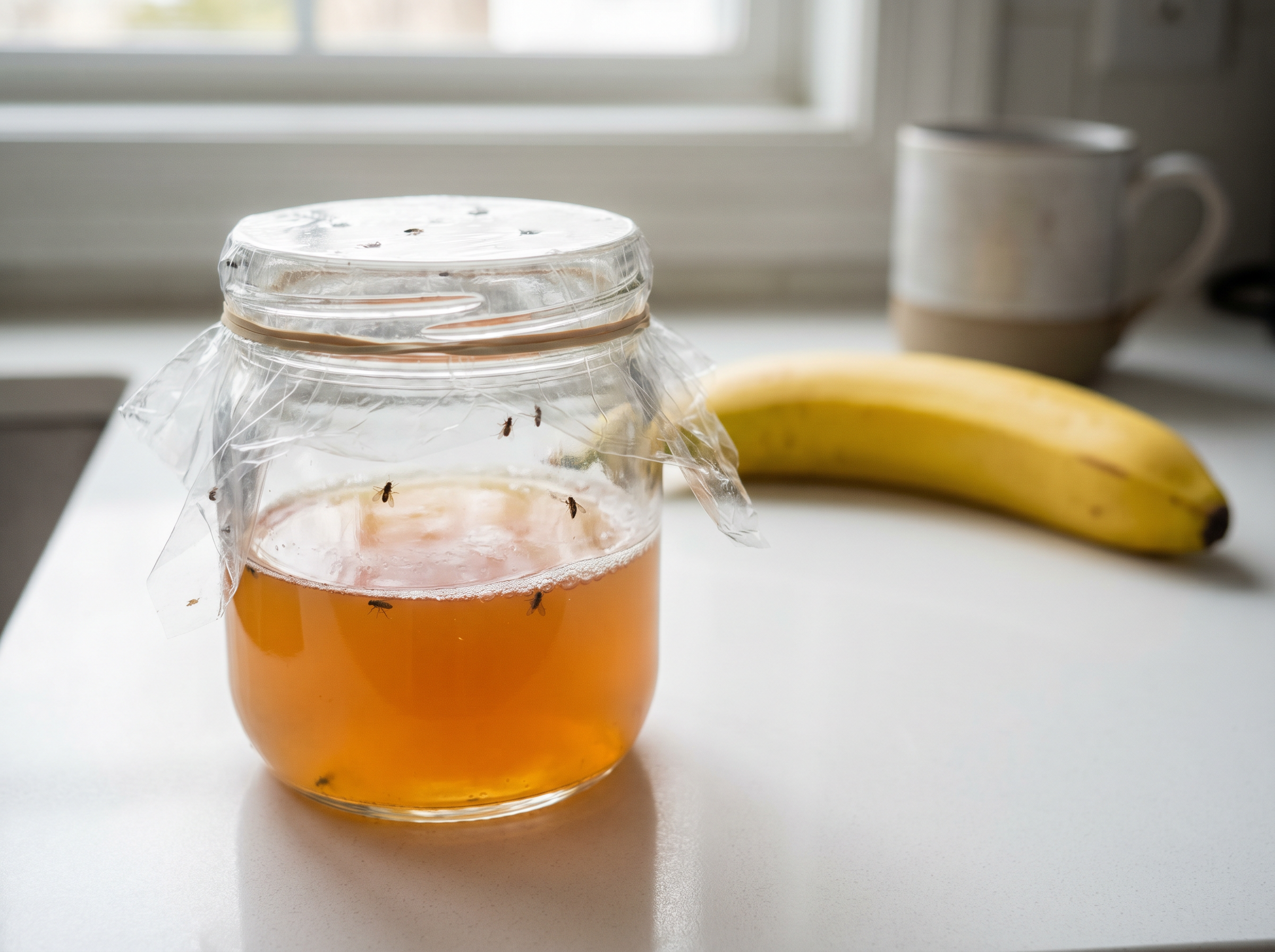
Fruit flies are absurdly fast breeders. A single female lays roughly 50 to 70 eggs per day, and one fly produces up to 500 eggs in her first 10 days. By the time you see two fruit flies, the next generation is already in motion. Therefore, toss any overripe banana, apple, or peach within three days of purchase. Take the trash bag outside immediately because flies will swarm out the moment you lift a kitchen lid. For active infestations, set a cider vinegar trap covered with plastic wrap and a few pinpricks. The flies enter, drown, and the wave breaks within 48 hours.
3. Lift Pet Food Bowls Between Meals
A bowl of kibble sitting out for hours is a buffet for ants, roaches, pantry beetles, and weevils. Instead, switch to a timed feeding schedule, picking up the bowl 20 minutes after your dog or cat finishes. Sweep the surrounding floor weekly because spilled kibble crumbs are equally attractive. Store the bag itself in a sealed plastic bin since cardboard and paper bags wick scent into the air around them.
4. Audit and Re-Seal the Pantry
Pantry moths and grain weevils enter your home inside the packaging from the grocery store. They do not need a wall crack. To stop them, transfer flour, rice, oats, pasta, and cereal into airtight glass or BPA-free plastic containers within an hour of buying. Also, inspect produce weekly and discard any onion, potato, or garlic showing soft spots. While you’re in the pantry, wipe shelves with vinegar to break any pheromone trails ants laid earlier in the season.
5. Empty and Wash Your Trash Bin Monthly
Dried fruit juice, meat drippings, and compostable scraps coat the bottom of your kitchen bin and turn it into an indoor pheromone beacon. Once a month, hose the bin out with hot soapy water, scrape stuck residue with a putty knife, and finish with a vinegar rinse. Tight-fitting lids matter, especially for outdoor cans because raccoons and rodents pry off loose lids and create new bug routes overnight.
Seal the Walls and Foundations (3 Fixes)
The fastest, most permanent way to drop the bug count is to close the pest entry points they walk through. After building custom homes during my college years, I learned exactly how many penetrations a typical wall has, and most homeowners miss 80 percent of them.
6. Hunt and Seal Entry Points
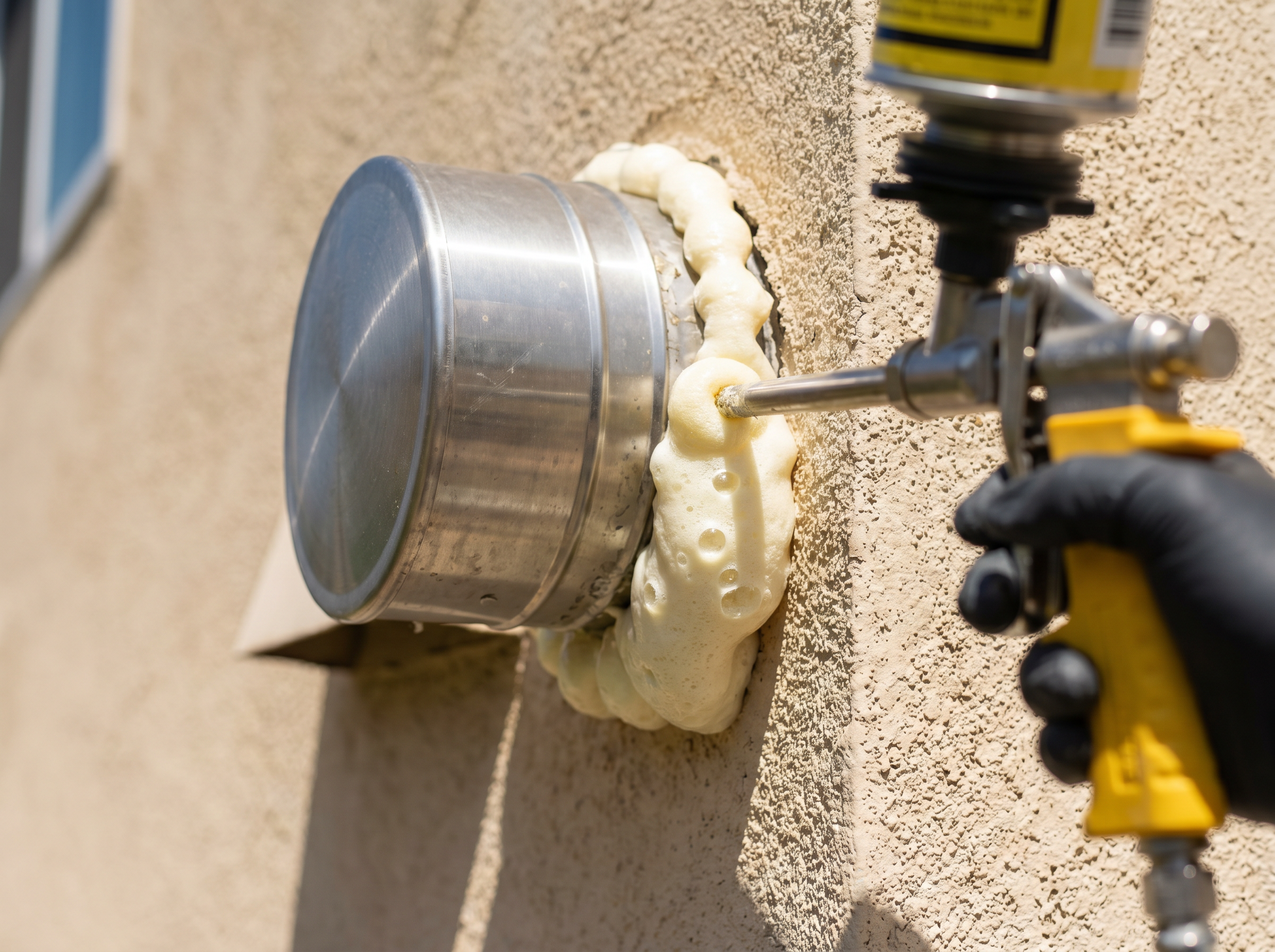
First, walk your home perimeter slowly. Look at sill plates where the foundation meets the framing, check around hose bibs, dryer vents, gas line entries, cable/coax penetrations, and weep holes in brick veneer. Each gap, even one as thin as a credit card, lets ants and roaches inside. Then use expanding foam for gaps over 1/4 inch and silicone caulk for hairlines. For larger holes around plumbing, stuff copper mesh in first because rodents and ants both fail to chew through copper.
7. Fix Every Leak Within 24 Hours
Ghost ants, silverfish, booklice, sowbugs, and several roach species all thrive in damp wood and steady moisture. A dripping P-trap under your kitchen sink, a slow leak behind the washing machine, or a sweating cold-water pipe in the basement will launch a colony in two weeks. Check under every sink monthly. If a fitting drips, replace the washer or compression ring the same day. For chronic humidity zones like basements and crawlspaces, run a dehumidifier set to 50 percent because most pests struggle below this threshold.
8. Build a 12-Inch Mulch-Free Buffer at the Foundation
Mulch and dense shrubs piled against your siding give ants, termites, and pillbugs the perfect launch pad into your walls. Pull the mulch back 12 to 18 inches from the foundation and replace the strip with crushed stone, gravel, or a simple soil border. The buffer dries fast after rain, signals “hostile habitat” to bugs, and gives you clear sightlines to spot foundation cracks before they grow.
Eliminate Their Water Source (2 Fixes)
Insects survive weeks without food, but most die within days without water. As a result, drying out their water sources is one of the highest-leverage indoor pest control moves available to you.
9. De-Sludge Drains to Kill Drain Flies
Drain flies breed exclusively in the gelatinous biofilm coating the inside of your kitchen and bathroom drains. Females lay 30 to 100 eggs at a time directly onto this sludge, and the eggs hatch in 32 to 48 hours. To break the cycle, pour an enzymatic drain cleaner like Bio-Clean or InVade Bio Drain into every drain weekly for three weeks. For an emergency overnight fix, first drop in 1/2 cup baking soda, then add 1 cup white vinegar, wait 30 minutes, and finally flush with a kettle of boiling water. The biofilm dissolves and the breeding ground vanishes.
10. Drain or Treat Standing Water Within 100 Feet
Mosquitoes need only a quarter-inch of standing water to breed, and they fly up to 100 feet from the source to find a host. After every rain, walk your yard. Tip out kiddie pools, swap water in pet bowls daily, clear gutter clogs, and check upturned planters and old tires. For ornamental ponds and fountains, drop in a Bti mosquito dunk because the bacteria target only mosquito larvae and stay safe around fish, pets, and pollinators.
Featured on Amazon
Expanding Foam Sealant Kit
A pro-grade foam gun and a few cans of pest-blocking foam handle every wall penetration in a typical home. The single best one-time investment for keeping bugs out long-term.
Move the Outdoor Buffet Away (2 Fixes)
What sits within 10 feet of your house determines what gets inside. Two outdoor cleanups solve roughly half of recurring indoor pest problems.
11. Relocate Firewood at Least 20 Feet From the House
Firewood piles host carpenter ants, termites, wood-boring beetles, and the occasional rodent family. Stacking the pile against your siding hands those bugs a direct path into your structural lumber. Move the stack at least 20 feet from any wall and elevate it 6 inches off the ground on a metal rack. Inspect the wood before you carry it inside because hollowed sections, sawdust piles at the base, or visible tunnels signal active termite activity. Never store kindling indoors overnight.
12. Trim Overhanging Branches and Foundation Plantings
Tree branches touching your roofline, gutters, or siding act as bug bridges. Stink bugs, lady beetles, ants, seed bugs, spiders, and even mice use them to bypass every entry-point seal you installed. Likewise, maintain a 12 to 18 inch clear zone between any tree, shrub, or vine and your house. Prune annually because California suburban yards see fast spring growth. After pruning, sweep any clipping piles away from the foundation since ants will use the debris for shelter.
Switch Your Outdoor Lights (1 Fix)
13. Replace Bright White Bulbs With Yellow LEDs
Insects see ultraviolet, blue, and green light far better than yellow or red. Most bugs cannot detect wavelengths around 650 nm, which is why traditional bug lights look amber. Therefore, replace incandescent and cool white LED porch bulbs with warm yellow LEDs rated 2200K or below. Field studies show incandescent bulbs attract roughly 8 insects per hour while warm yellow LEDs draw closer to 4. For pure relaxation areas, layer in citronella candles and patio plants like lemongrass, lavender, and chives because their natural oils repel mosquitoes, flies, and several beetle species.
Know When to Call a Pro (1 Fix)
14. Recognize the 4 Situations Needing an Expert
DIY pest control handles roughly 80 percent of household pest activity. The remaining 20 percent need a licensed exterminator. Specifically, call a pro for any of these four scenarios. First, suspected termites, signaled by mud tubes on foundation walls, hollow-sounding studs, or piles of frass near baseboards. Second, an established cockroach colony with daytime sightings (roaches normally stay hidden during daylight hours). Third, dangerous spider species like black widows or brown recluse, especially near play areas or bedrooms. Fourth, wasp, hornet, or yellow jacket nests larger than a baseball, particularly inside walls or attic spaces. The cost of a single professional visit (typically $150 to $300) beats the cost of structural damage or a hospital trip every time.
DIY vs. Professional Help for Bugs in Your House
The DIY-first approach to indoor pest control makes sense for most scenarios. Specifically, sealing entry points, fixing leaks, swapping bulbs, and removing food sources address the root cause rather than masking symptoms. Most homeowners spend $100 to $300 across the 14 fixes above and stop the cycle for years.
However, professionals win on three specific jobs. First, integrated termite treatment requires soil injection of termiticides like Termidor and licensing in most states. Second, a full-house cockroach treatment uses insect growth regulators and targeted baits placed in voids most homeowners cannot access safely. Third, mosquito misting systems and large-scale yard fogging require commercial equipment.
For everything else, the homeowner has the upper hand. After 30 years of pulling things apart and rebuilding them, including custom homes during college, I’ve found 80 percent of indoor pest problems trace back to one of three causes: a missed wall penetration, a slow plumbing leak, or food sitting out longer than it should. Fix those three, and the bugs in your house drop by an order of magnitude.
Pros and Cons of the DIY-First Approach
Pros
- Total cost typically $100 to $300 vs. $400+ per pro visit
- Addresses root causes, not only visible insects
- Most fixes finish in under an hour each
- Reduces chemical exposure inside the home
- Builds a permanent home-defense routine you control
- Each fix improves general home maintenance, too
- Works against multiple pest species simultaneously
Cons
- Requires consistent maintenance, not a one-time fix
- Identifying entry points takes patience and a flashlight
- Some fixes (foam sealing, drain treatment) need repeat applications
- Established colonies still need professional treatment
- Dangerous species (black widows, wasp nests) are not DIY territory
Final Verdict
Indoor pest control comes down to a few predictable causes when bugs in your house suddenly spike: open food, exposed water, unsealed entry points, outdoor harborage, and bug-friendly lighting. Address all five, and the random ant trail along your kitchen baseboard becomes a once-a-year curiosity instead of a weekly battle. Above all, the food and entry-point sections deliver the biggest first-week wins because those two cover roughly 70 percent of typical indoor pest activity.
Living for nearly three decades on a property built on top of an Argentine ant hill in Southern California has taught me one thing above all. Persistence beats panic every time. The ants come back every spring no matter what I do. Likewise, the fruit flies always find the bananas if I leave them out too long. The 14 fixes in this article do not eliminate insects entirely. Instead, they reduce indoor activity to a level you barely notice, even on properties like mine sitting on top of a supercolony.
Value-wise, the math favors DIY for almost every homeowner. A $25 tube of pest-block foam and a $15 enzymatic drain cleaner outlast $300 monthly exterminator contracts on most properties. Reserve the pro call for termites, dangerous spiders, large wasp nests, and established roach colonies. Otherwise, handle the rest yourself.
For broader home-defense context, our 23 tested uses for WD-40 covers a few overlapping fixes including how a quick spray on door tracks discourages ants from following the threshold. Combine the two articles for a complete spring-into-summer pest playbook.
Natural Pest Defense
Food-Grade Diatomaceous Earth
Sprinkle along baseboards, under sinks, and around foundation perimeters. Kills ants, roaches, and silverfish through dehydration. Safe around kids and pets.
Frequently Asked Questions
Why am I suddenly seeing more indoor pests this spring?
First, spring temperature swings activate dormant colonies, and reproductive cycles ramp fast. Argentine ants in particular send out massive forager waves throughout the spring months. Add fruit fly populations doubling every 10 days and you get the classic April spike. The fixes above target every common driver, so cycling through them once each spring resets the baseline for the season.
What kills ants without harsh chemicals?
Boric acid powder mixed with sugar water as a homemade bait kills ants slowly enough to spread back to the colony, which most homeowners find more effective than spray-based indoor pest control. A 50/50 vinegar and water spray erases pheromone trails along baseboards. Diatomaceous earth sprinkled along entry points dehydrates any ant crossing it. For Argentine ants specifically, sealing cracks with foam matters more than any spray because their colonies span entire neighborhoods.
How do I know if it’s drain flies or fruit flies?
Drain flies have fuzzy moth-like wings, hold them roof-style over their bodies when at rest, and stay near sinks and tubs. Fruit flies look smooth, hover around fruit and trash, and have red eyes. The fix differs sharply: drain flies need enzymatic drain cleaner, while fruit flies need fruit removal plus a vinegar trap.
Are essential oils effective against indoor pests?
Some essential oils repel certain bugs but rarely kill established colonies. Peppermint oil deters ants and spiders, lavender pushes back moths, and citronella reduces mosquito activity outdoors. Use them as a complement to sealing and food removal, not a standalone solution. Never apply oils directly to areas pets walk because some oils, especially tea tree, are toxic to dogs and cats.
How long should it take to see fewer bugs after sealing pest entry points?
Most homeowners notice a 50 to 70 percent drop in indoor bug sightings within two weeks of sealing the major pest entry points and removing food sources. Stubborn populations like Argentine ant supercolonies in Southern California take longer because the foragers test new routes for several weeks before giving up. Stay consistent and the numbers keep falling through the season.
What’s the cheapest fix for bugs in your house?
Vinegar costs about $3 a gallon and handles three jobs at once: erasing ant pheromone trails, trapping fruit flies in a cider-vinegar dish, and breaking biofilm in drains when paired with baking soda. For under $10 total, a homeowner addresses ants, fruit flies, and drain flies in a single afternoon. Specifically, this is the highest ROI starting point on the entire list.
Leave a Reply