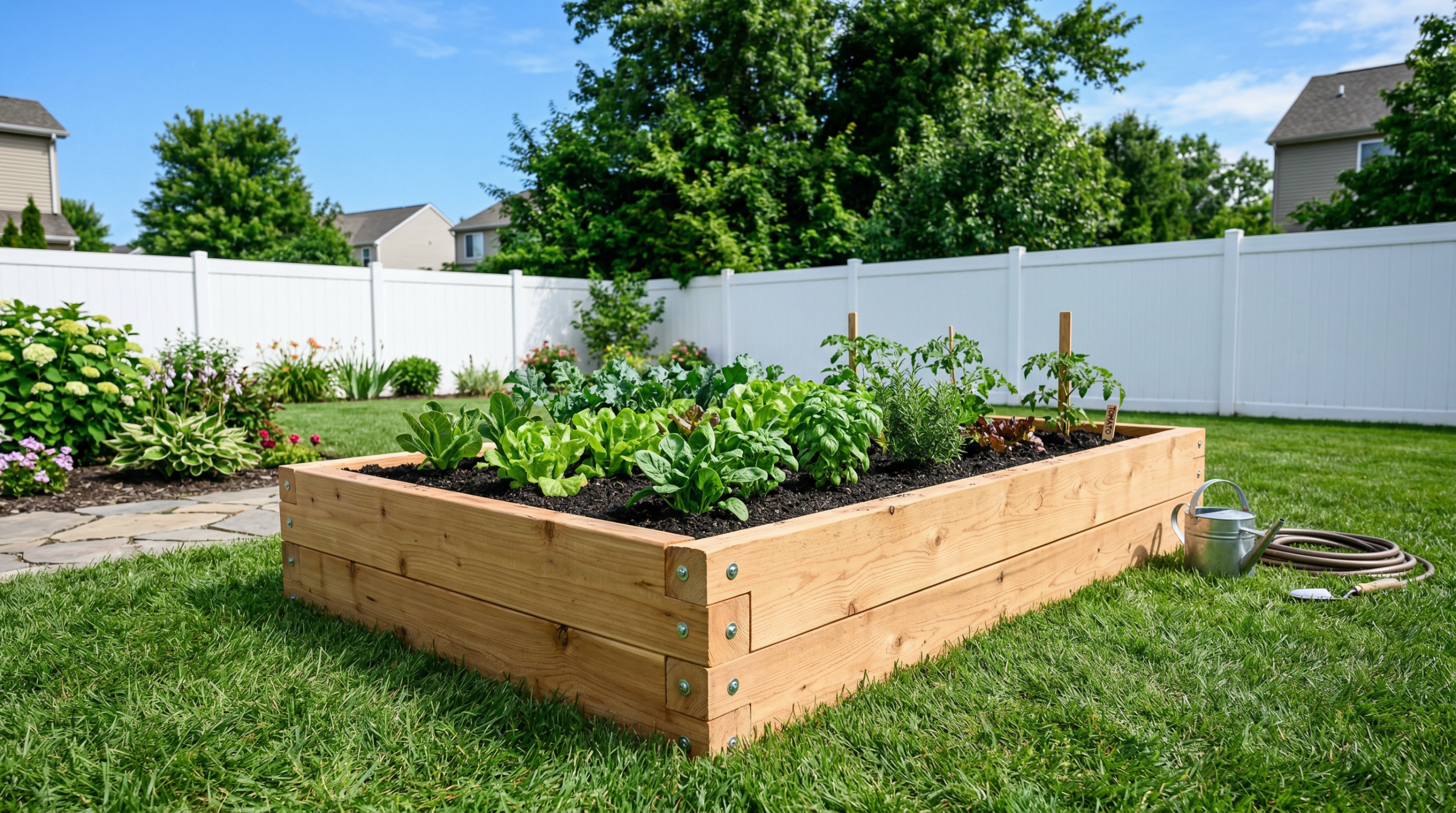
A 4×8 cedar raised garden bed costs between $75 and $120 in materials and takes about two hours to build from scratch. Knowing how to build a raised garden bed opens up serious growing space in any backyard, patio, or side yard, and the results last 10 to 15 years with zero maintenance. This guide gives you a complete cut list, exact dimensions, a material cost breakdown, and a proven soil mix recipe so you finish the project in a single weekend.
Table of Contents
- Materials and Tools List
- Choosing Your Wood
- Cut List and Dimensions
- Step-by-Step Assembly
- The Best Soil Mix for Raised Beds
- Where to Place Your Bed
- Total Cost Breakdown
- FAQ
Materials and Tools List
The standard 4×8 cedar raised bed uses eight boards and a handful of hardware. Prices below reflect current big-box store averages for 2024.
Lumber
- 4 boards: 2x6x8 cedar (long sides and end pieces), approximately $10 to $14 each
- 4 boards: 2x6x4 cedar (end sides), approximately $7 to $10 each, or rip the 8-foot boards
- 4 corner posts: 4x4x12 cedar, approximately $8 to $12 each
Hardware
- 3-inch exterior deck screws (box of 100), approximately $9
- Optional: galvanized corner brackets (4 sets), approximately $12
Tools Required
- Circular saw or miter saw
- Drill/driver with Phillips bit
- Tape measure and pencil
- Speed square
- Safety glasses
Most homeowners already own the tools, so total out-of-pocket stays near the lumber and hardware cost. Buy pre-cut lumber at the store to skip the saw entirely.
Choosing Your Wood
Cedar is the strongest choice for a raised garden bed because its natural oils resist rot without any chemical treatment. For food crops, untreated wood matters; pressure-treated lumber uses copper-based preservatives with no place near vegetables.
| Wood Type | Lifespan | Cost (4×8 bed) | Notes |
|---|---|---|---|
| Cedar (Western Red) | 10 to 15 years | $75 to $120 | Best rot resistance; food-safe; widely available |
| Pine (untreated) | 3 to 5 years | $35 to $55 | Cheapest upfront; degrades quickly in wet soil |
| Composite (wood-plastic) | 25 to 50 years | $180 to $300 | Longest lifespan; heavier; no rot ever |
| Redwood | 15 to 20 years | $130 to $200 | Excellent durability; harder to find outside the West |
Pine works for a one-season test bed, but cedar returns better value over a decade. Regional availability affects price: gardeners in the Southeast often find cypress at comparable rates to cedar, while Western U.S. gardeners frequently get redwood at lower prices. According to Gardenary, cedar lasts at least 10 years before showing any significant degradation, making it the standard recommendation for long-term vegetable gardens.
Cut List and Dimensions
The standard DIY raised bed is 4 feet wide by 8 feet long and 12 inches tall. A 4-foot width lets you reach the center from either side without stepping into the bed, and 12 inches of depth satisfies the minimum root depth for most vegetables, as recommended by University of Illinois Extension guidelines.
Finished Dimensions
- Outer length: 96 inches (8 feet)
- Outer width: 48 inches (4 feet)
- Height: 12 inches (two 2×6 boards stacked)
- Wall thickness: 1.5 inches (actual dimension of a 2×6)
Cut List
| Piece | Qty | Dimensions (actual) | Purpose |
|---|---|---|---|
| Long side boards | 4 | 1.5″ x 5.5″ x 93″ | Two rows per long side (2 sides) |
| Short end boards | 4 | 1.5″ x 5.5″ x 45″ | Two rows per short end (2 ends) |
| Corner posts | 4 | 3.5″ x 3.5″ x 12″ | One per corner |
The long sides run the full 93-inch length (96 inches minus the two 1.5-inch end boards). The end boards at 45 inches sit inside the long sides, and the corner posts flush with all four vertical corners. No cuts are needed on the 4×4 corner posts because you buy them at 12-inch lengths or cut a single 4x4x8 into six pieces with 12 inches left over.
Step-by-Step Assembly
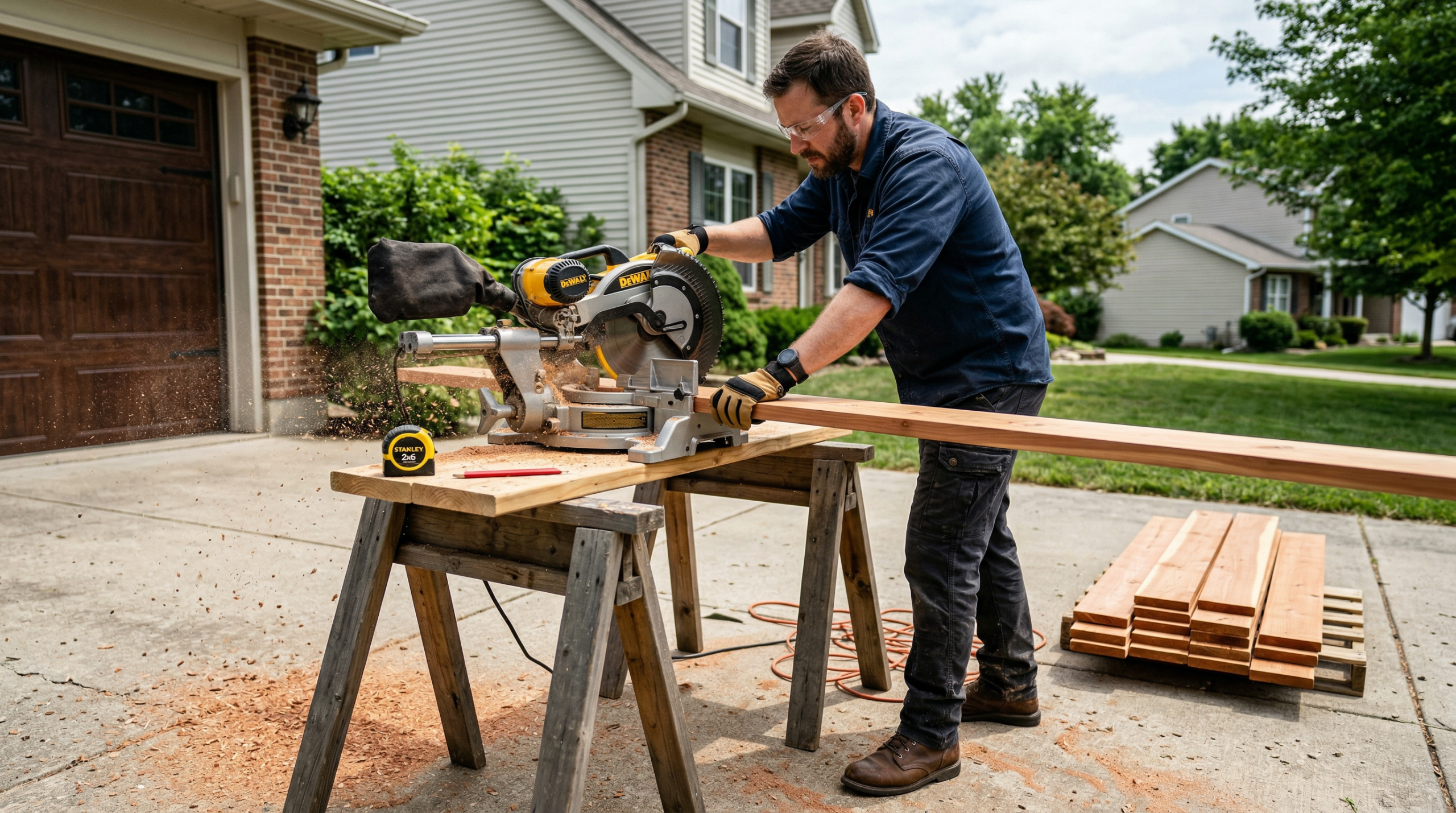
Assembly takes two people about 90 minutes, or one person about two hours. Work on a flat surface, such as a driveway or garage floor, and move the finished frame to the garden location before filling with soil.
- Cut lumber to length. Use a miter saw or have the lumber yard make cuts. Double-check measurements before cutting; measure twice, cut once.
- Lay out the four corner posts. Stand each 4×4 post upright on a flat surface and arrange them in a rectangle matching the outer bed dimensions.
- Attach the first long side board. Hold one 93-inch board flush with the outside face of two corner posts. Pre-drill two holes per post connection, then drive 3-inch deck screws through the board into the post. Pre-drilling prevents the cedar from splitting.
- Attach the opposite long side board. Repeat on the other side. Confirm the two long sides are parallel before moving forward.
- Attach the short end boards. The 45-inch end boards sit between the long sides, flush with the outside face of the corner posts. Secure with two screws per connection point.
- Stack and attach the second row. Repeat steps 3 through 5 for the second row of boards. Stagger screws vertically so they do not hit the first row of fasteners.
- Square the frame. Measure diagonally corner to corner in both directions. The numbers match when the frame is square. Adjust as needed before the screws fully seat.
- Move the frame into position. Carry the assembled bed to its permanent location before adding soil. Level the ground first; an unlevel bed stresses the joints over time.
Optional: line the bottom with hardware cloth (1/4-inch mesh) to block gophers and voles. Staple it to the bottom edges of the frame before moving the bed into place.
The Best Soil Mix for Raised Beds
The right soil mix is the single biggest factor in how well a raised bed produces. Never fill a raised bed with native garden soil; it compacts under repeated watering and cuts root growth by 50 percent or more within one season.
Mel’s Mix (Most Productive Option)
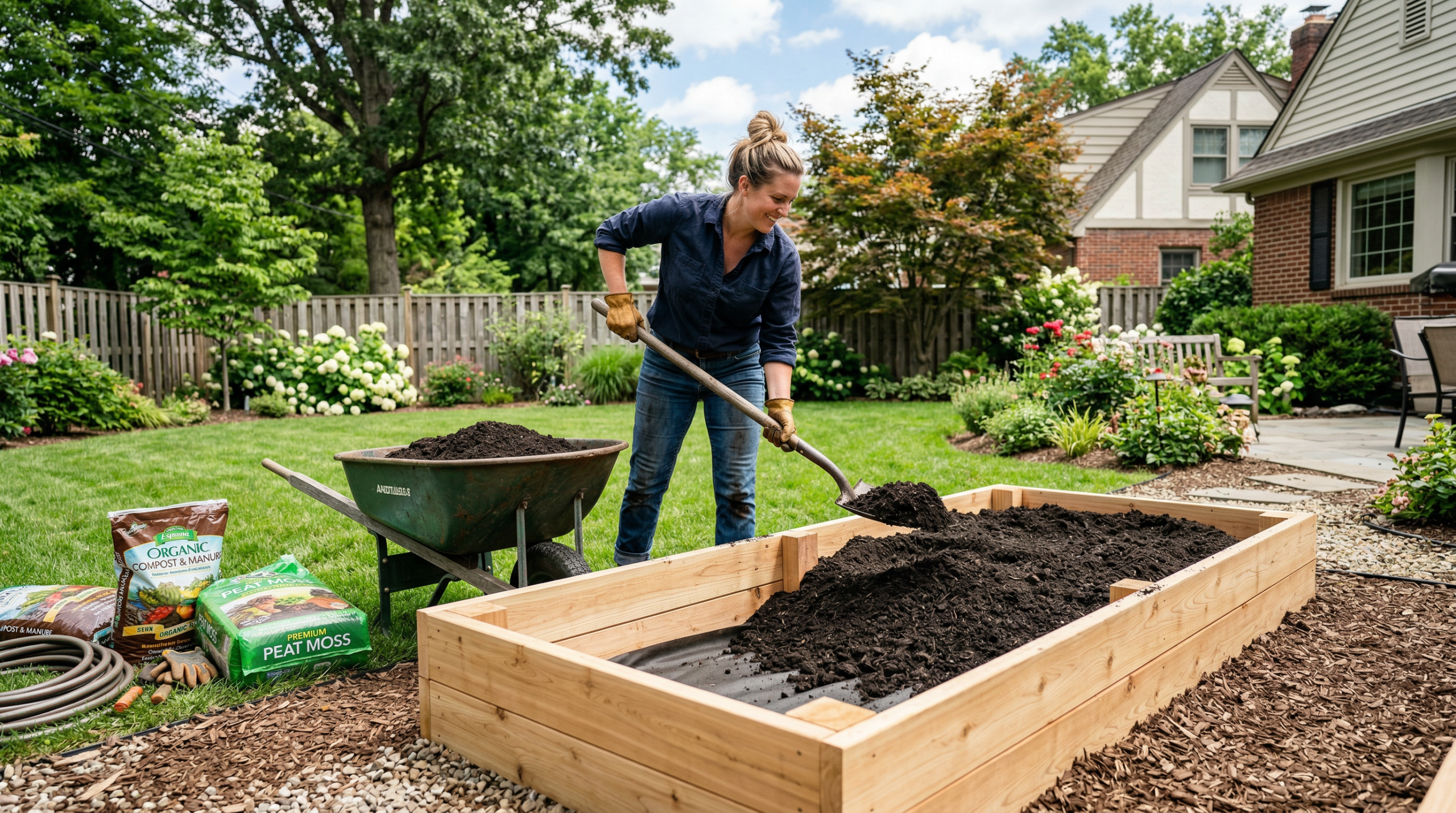
Mel Bartholomew’s formula from Square Foot Gardening remains the most widely tested recipe for raised beds. According to the Square Foot Gardening Foundation, the mix consists of equal thirds by volume:
- 1/3 finished compost (blend at least two sources: yard waste, aged manure, or mushroom compost)
- 1/3 peat moss or coco coir (moisture retention and aeration)
- 1/3 coarse vermiculite (drainage without compaction)
A 4x8x12-inch bed holds 32 cubic feet of mix. For Mel’s Mix, source approximately 11 cubic feet of each component. Reencle’s raised bed guide notes vermiculite costs $30 to $50 per cubic foot in some markets, so the budget alternative below saves significant money.
Budget Mix (Best Value)
- 1/2 finished compost
- 1/4 peat moss or coco coir
- 1/4 perlite (less expensive than vermiculite)
This budget mix performs close to Mel’s original formula. Monitor drainage; if water pools on the surface after watering, add another inch of perlite and fork it in lightly.
Never use products labeled “topsoil” or “garden soil” in a raised bed. Both compact significantly and block root penetration below 4 to 6 inches.
Where to Place Your Bed
Location determines how much your raised bed produces. Place the bed in the wrong spot and even the best soil mix will not compensate for poor sunlight or drainage.
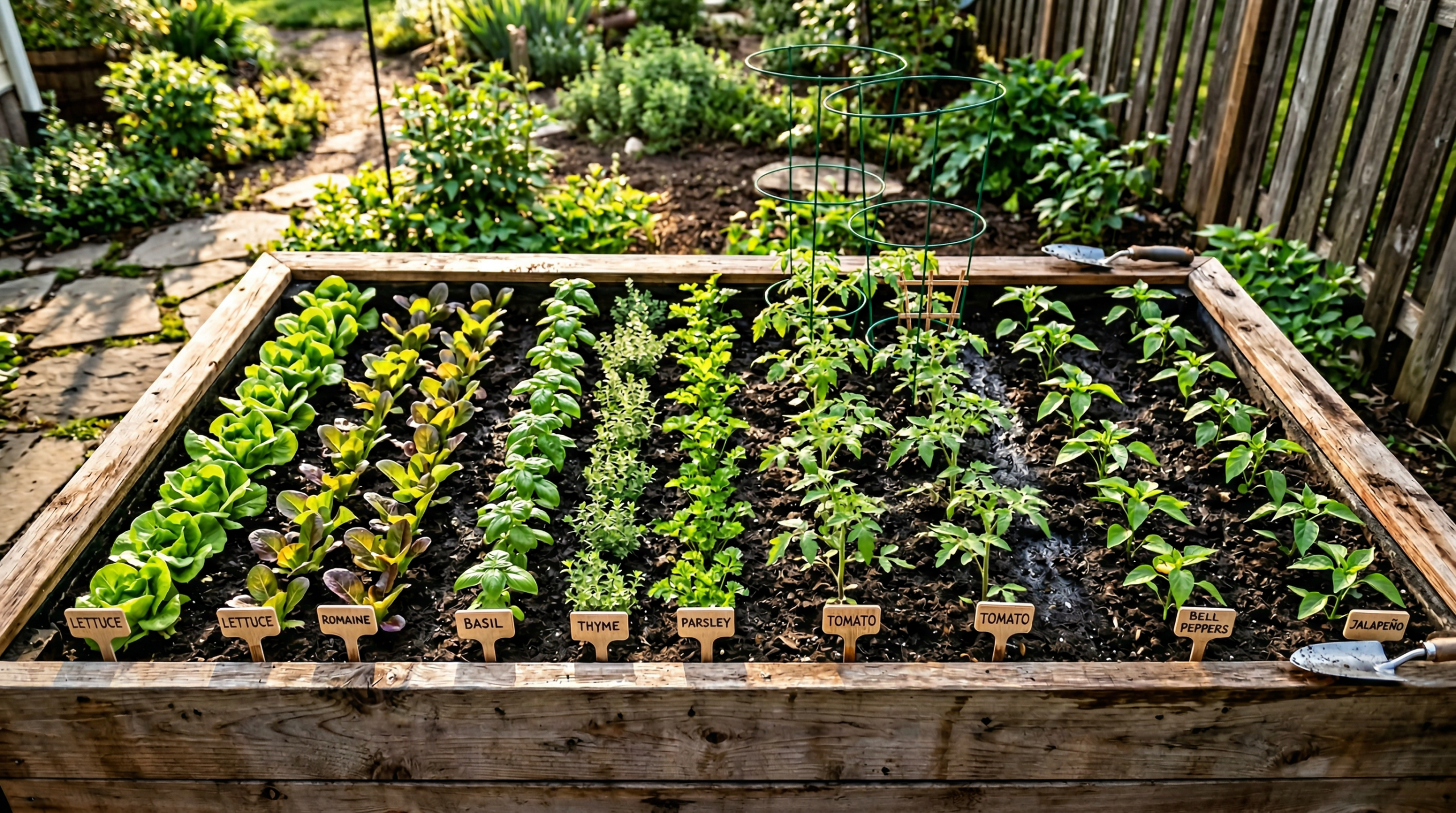
- Sun: Most vegetables need 6 to 8 hours of direct sunlight daily. Observe your yard at noon on a clear day and note where shade falls from trees, fences, or the house.
- Drainage: Avoid low spots where water pools after rain. Raised beds drain well on their own, but standing water below the frame prevents air from reaching roots.
- Access: Leave at least 18 inches on all four sides for walking and kneeling. Two feet of clearance per side makes maintenance comfortable.
- Water source: Position the bed within reach of a garden hose or irrigation line. A 4×8 bed needs 1 inch of water per week during the growing season, approximately 20 gallons.
- Level ground: A slope steeper than 1 inch per 4 feet causes uneven water distribution. Grade the soil flat before placing the frame, or set the frame on level ground and backfill the low side.
Orient the long side of the bed north to south. This alignment gives both sides of the bed equal sun exposure over the course of the day, which matters especially for crops planted in rows.
Total Cost Breakdown
Material costs vary based on lumber species, hardware store, and region. The three tiers below reflect real-world price ranges for a 4x8x12-inch raised garden bed plus soil fill.
| Item | Budget (Pine) | Mid-Range (Cedar) | Premium (Cedar + Hardware) |
|---|---|---|---|
| Lumber | $35 | $75 | $95 |
| Screws and hardware | $9 | $9 | $21 (includes corner brackets) |
| Soil mix (32 cu ft) | $45 | $65 | $95 (Mel’s Mix) |
| Hardware cloth (optional) | $0 | $0 | $18 |
| Total | $89 | $149 | $229 |
The budget build uses untreated pine and a compost-heavy soil mix. The mid-range cedar build is the recommended starting point for most homeowners. The premium build adds corner brackets, hardware cloth, and a full Mel’s Mix fill, giving the bed maximum structural integrity and soil performance from day one.
FAQ
How long does it take to build a raised garden bed?
A 4×8 cedar raised bed takes approximately two hours for a single person with basic tools. Two people working together finish in about 90 minutes. Most of the time goes to measuring, pre-drilling, and squaring the frame rather than the actual fastening.
Do I need to line the bottom of my raised garden bed?
Lining is optional but recommended if gophers or voles are active in your area. Use 1/4-inch hardware cloth stapled to the bottom of the frame. Avoid landscape fabric on the bottom; it restricts drainage and blocks beneficial earthworms from moving up into the bed over time.
How much soil do I need to fill a 4x8x12 raised bed?
A 4×8 bed measuring 12 inches deep holds 32 cubic feet of soil mix. When buying bagged products sold in 1.5-cubic-foot bags, plan on roughly 21 to 22 bags of each component for Mel’s Mix. Bulk delivery from a local soil supplier is more economical for a single bed this size.
Is cedar safe for growing vegetables?
Untreated cedar is completely safe for vegetable gardening. The natural oils in cedar resist rot without any chemical additives, unlike pressure-treated lumber, which uses copper-based compounds. Western Red Cedar and Atlantic White Cedar are the two most commonly available species at hardware stores, and both are food-safe.
How long will a cedar raised bed last?
A cedar raised bed lasts 10 to 15 years in most climates, according to Eartheasy’s materials comparison. Dry climates extend the lifespan significantly. Keeping the top edges of the boards free of standing water and mulching the soil surface reduces moisture contact with the wood, which slows decay.
Final Thoughts
A 4×8 cedar raised bed built this weekend gives you 32 square feet of productive growing space for less than $120 in materials. The cut list above works without specialty tools, and the two-layer 2×6 design holds soil securely through years of watering and seasonal freeze-thaw cycles. Start with mid-range cedar, fill with the budget soil mix, and add Mel’s Mix components in future seasons as the bed settles and soil volume drops. The first season’s harvest typically covers the full build cost.

Leave a Reply